
Using the wrong plywood outdoors can lead to rot, warping, or even structural failure. Choosing the correct grade ensures longevity and safety in exterior applications.
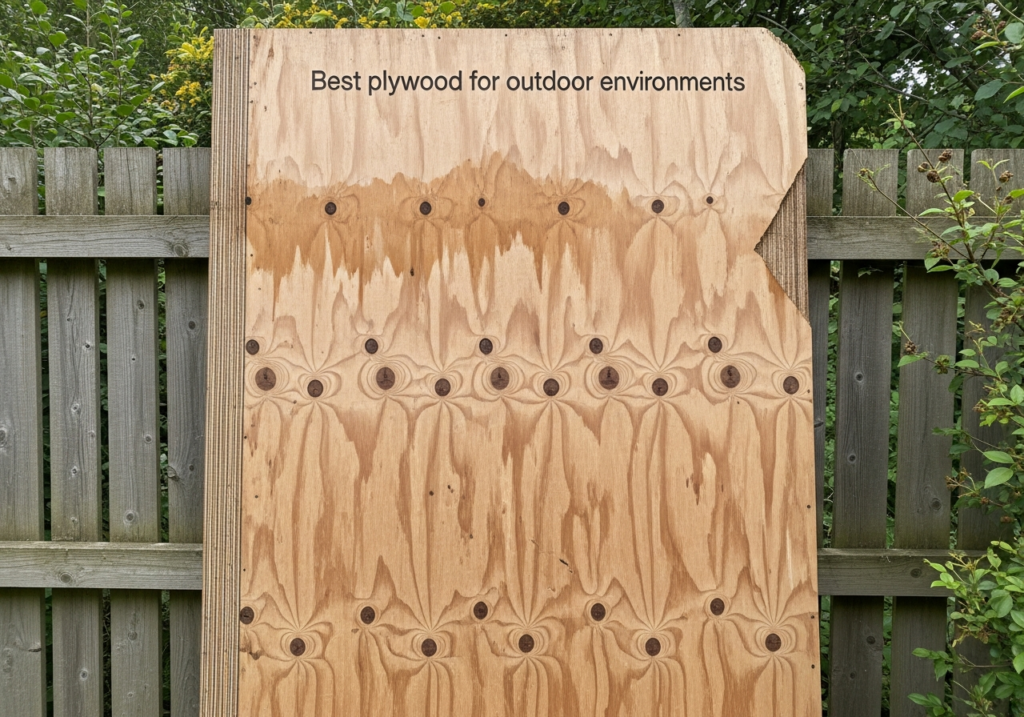
The best plywood for outdoor use is exterior-grade or marine-grade plywood. These panels are bonded with water-resistant adhesives and built to withstand moisture, humidity, and temperature changes.
Exterior plywood panels are commonly used in roofing, siding, garden furniture, and construction frameworks. Their durability depends on glue type, veneer quality, and treatment against water and pests.
What makes plywood suitable for outdoor conditions?
Outdoor plywood must resist water penetration, fungal decay, and delamination over time. Not all plywood products are designed for exterior performance.
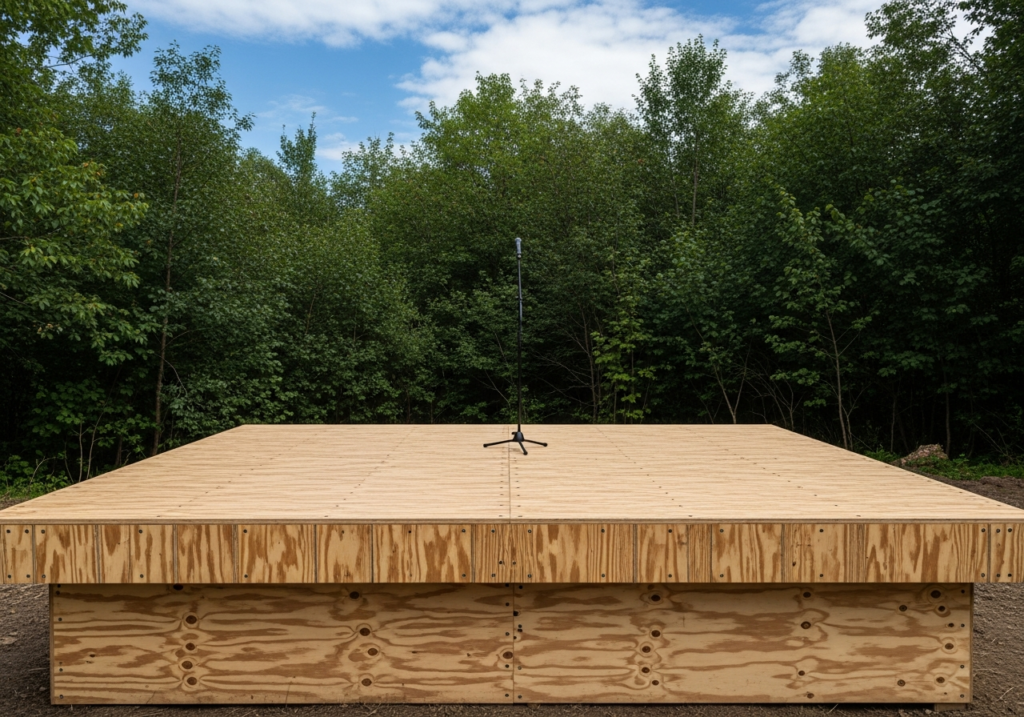
Outdoor-rated plywood is made with waterproof glue (usually phenol-formaldehyde) and features higher-grade veneers or preservative treatments for weather protection.
Key Features of Exterior Plywood
| Feature | Description |
|---|---|
| Water-Resistant Adhesive | Phenol-formaldehyde resin (WBP / BWP glue) |
| Veneer Quality | Fewer gaps, better compaction, consistent thickness |
| Surface Seal Options | Film-faced, primed, or resin-coated surfaces |
| Grading Standards | Meets EN 314 Class 3 or IS:710 for exterior use |
Exterior plywood should maintain its integrity even in wet-dry cycles. Resistance to swelling, edge separation, and fungal growth are essential for long-term performance.
What are the types of plywood used outdoors?
Multiple types of plywood exist for outdoor applications, depending on budget, structural requirements, and finish needs.
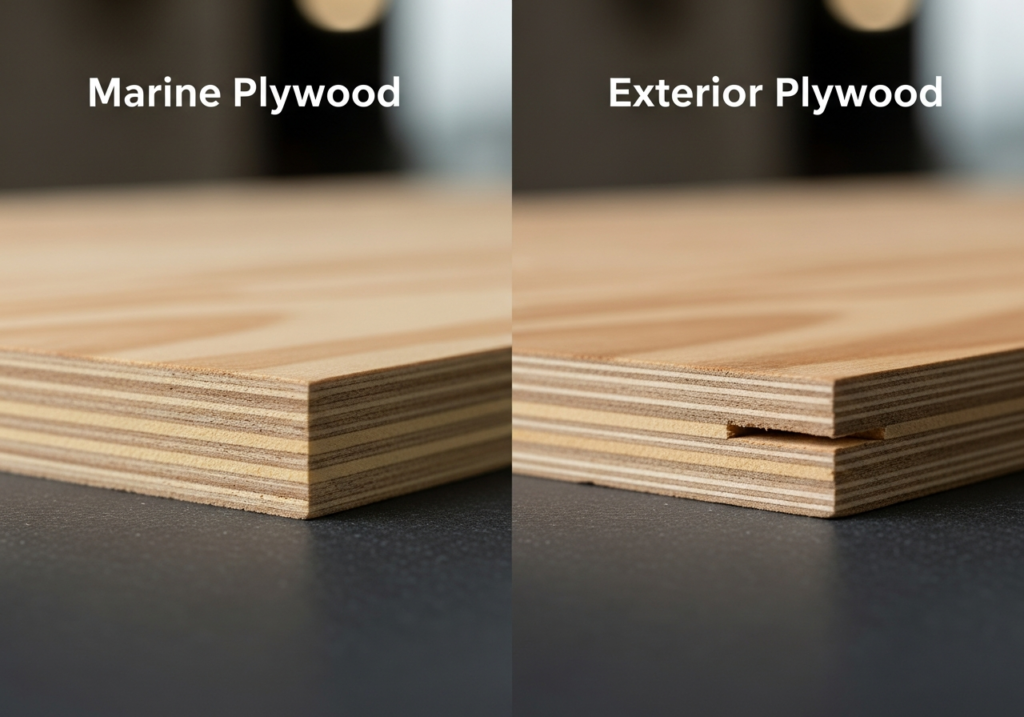
Marine plywood is the highest-grade option for outdoor use, while exterior-grade plywood is a cost-effective choice for most construction needs.
Common Outdoor Plywood Types
| Type | Best For | Key Features |
|---|---|---|
| Marine Plywood | Boats, facades, coastal construction | No core gaps, waterproof glue, multiple plies |
| Exterior Plywood (BWP) | Roofing, siding, structural walls | Boiling waterproof glue, treated against decay |
| Film-Faced Plywood | Concrete formwork, scaffolding | Waterproof resin film on both sides |
| Pressure-Treated Plywood | Deck bases, fences, sheds | Chemical treatment against rot and insects |
Marine plywood is built to the highest standard with no internal gaps. Film-faced plywood has excellent wear and moisture resistance for repeated outdoor use.
How to identify outdoor-grade plywood?
Correct identification ensures compliance with building codes and avoids performance failures after installation.
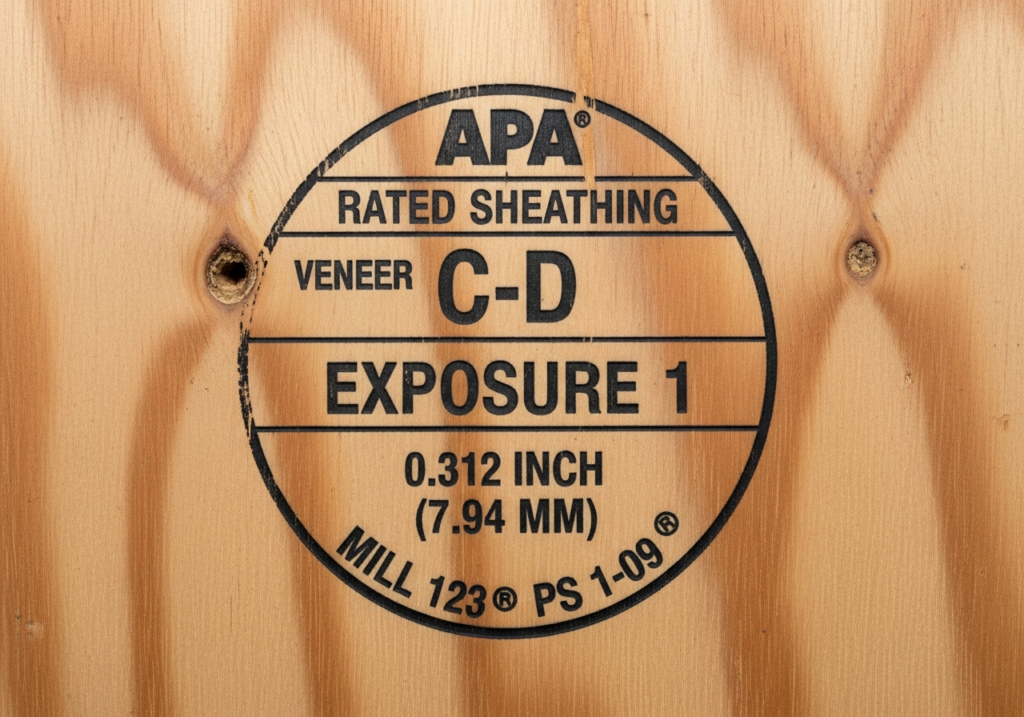
Outdoor plywood usually has a stamp showing adhesive class (WBP/BWP), moisture resistance level, and exterior suitability. Some panels also carry a preservative treatment tag.
What to Look For
| Label Item | Meaning |
|---|---|
| WBP / BWP Marking | Waterproof Boiling Proof adhesive |
| IS:710 or EN314-3 | Complies with outdoor plywood standards |
| Preservative Treated | Indicates chemical resistance against rot |
| Film Coating Mention | Identifies film-faced surface protection |
Some manufacturers also include edge-sealing, which improves weather resistance in cut sections. Third-party certifications (FSC, CE, etc.) also enhance export compliance.
What role does manufacturing quality play?
Outdoor plywood requires strict raw material selection and precise pressing to ensure stability under weather changes.
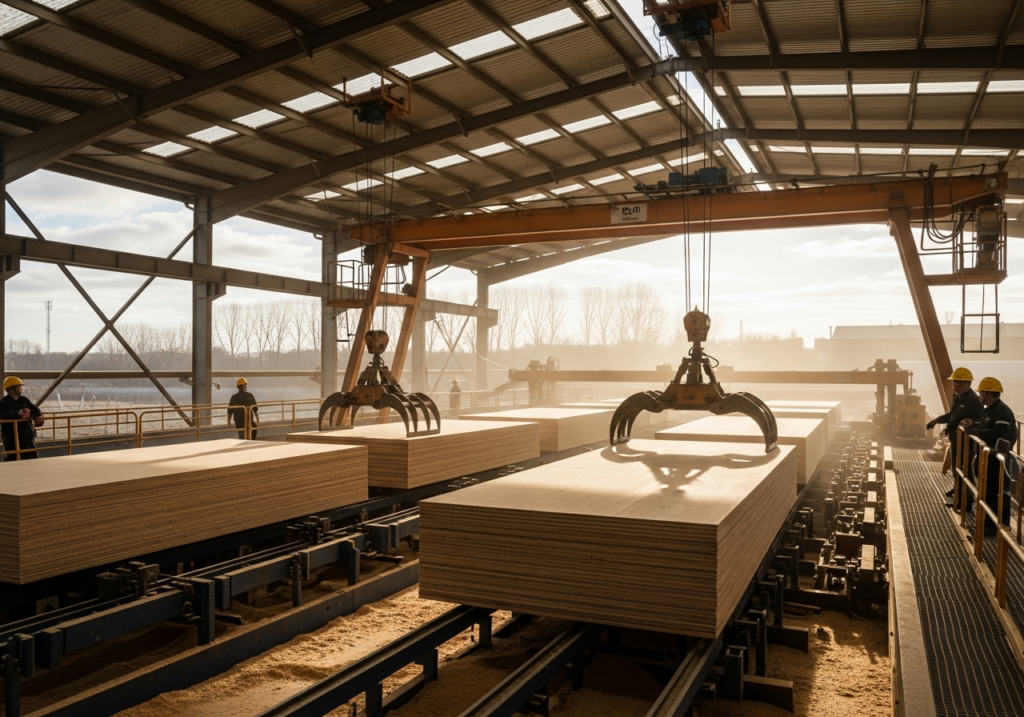
High-quality outdoor plywood is produced using selected hardwood veneers, calibrated hot pressing, and controlled resin application to prevent warping and core separation.
Key Manufacturing Parameters
| Process Control | Target Specification |
|---|---|
| Core Gap Control | No internal holes or overlaps |
| Glue Spreading Uniformity | 160–180 g/m² for phenolic resin |
| Press Temperature & Time | 120–140°C for 6–12 minutes |
| Moisture Content | 8–12% before packing |
| Edge Sealing | Optional waterproof coating post-processing |
Factories producing for export to high-humidity regions like the Middle East or Southeast Asia must ensure formaldehyde emission control, anti-delamination strength, and packaging suitable for sea transport.
Where is outdoor plywood commonly used?
Proper outdoor plywood is used in construction, landscaping, marine, and industrial applications that demand structural strength and weather resistance.
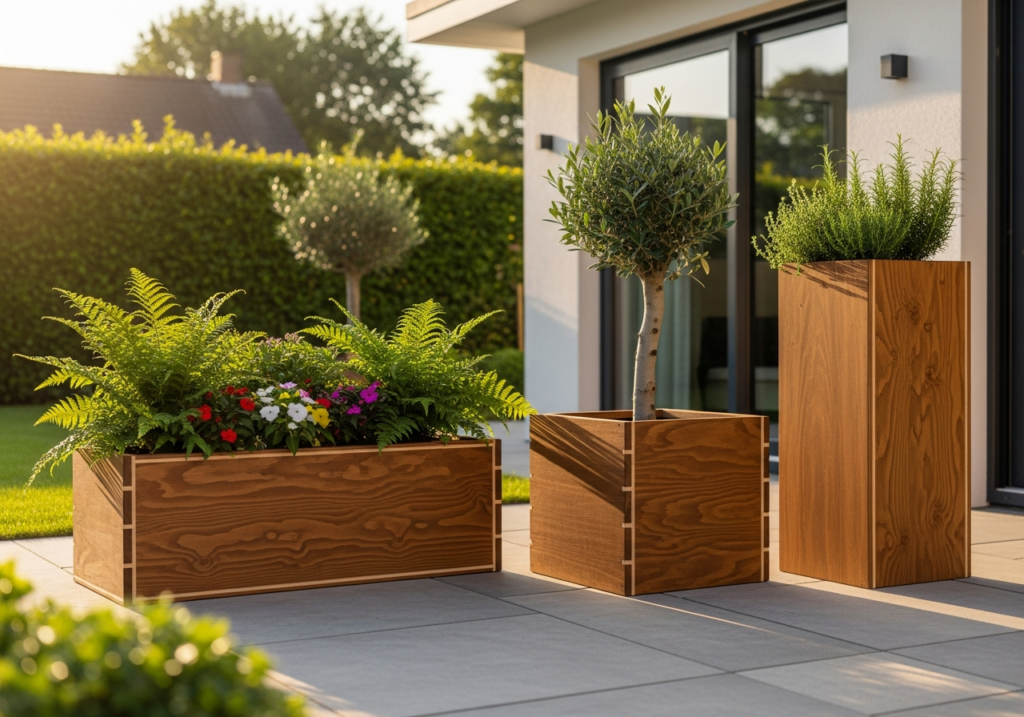
Applications include roofing, exterior walls, garden furniture, truck flooring, marine decks, and formwork systems.
Application Areas
| Industry | Application Example |
|---|---|
| Building Construction | Roof sheathing, fascia, exterior cladding |
| Furniture Manufacturing | Outdoor chairs, tables, garden benches |
| Marine Construction | Boat interior panels, dock platforms |
| Industrial & Logistics | Crates, truck floors, container linings |
| Concrete Formwork | Temporary molds, scaffolding boards |
Use of non-outdoor-grade plywood in exterior settings leads to peeling, fungus growth, and early failure—especially in tropical or rainy zones.
Conclusion
The best plywood for outdoor use is one designed with waterproof adhesives, durable veneers, and consistent pressing. Marine plywood offers premium reliability, while exterior-grade plywood meets most structural needs when built to standard.
Proper selection, combined with verified factory quality, ensures plywood performance in all weather conditions. For construction projects, outdoor furniture, or export packaging, investing in certified, weather-resistant plywood reduces maintenance costs and improves long-term safety.