
Birch plywood is widely used in interior furniture, cabinetry, millwork, and decorative paneling due to its fine grain, dimensional stability, and strength. However, when exposed to moisture or water, its structural and aesthetic properties can be compromised if not adequately protected.
When birch plywood gets wet, it absorbs moisture through its surface and edges, leading to swelling, surface degradation, delamination, and potential fungal growth. These changes reduce its dimensional stability, strength, and surface quality.
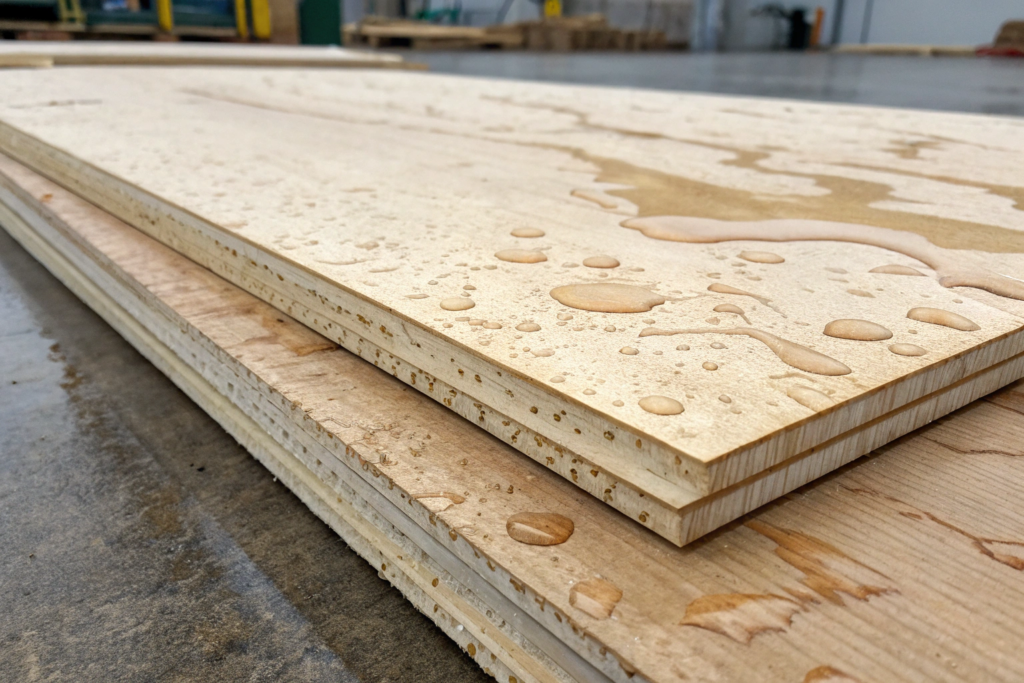
Moisture resistance depends heavily on panel type, adhesive system, edge protection, and exposure time.
Dimensional Changes and Swelling
Birch plywood is constructed with alternating veneer layers. When water penetrates these layers, the wood fibers expand.
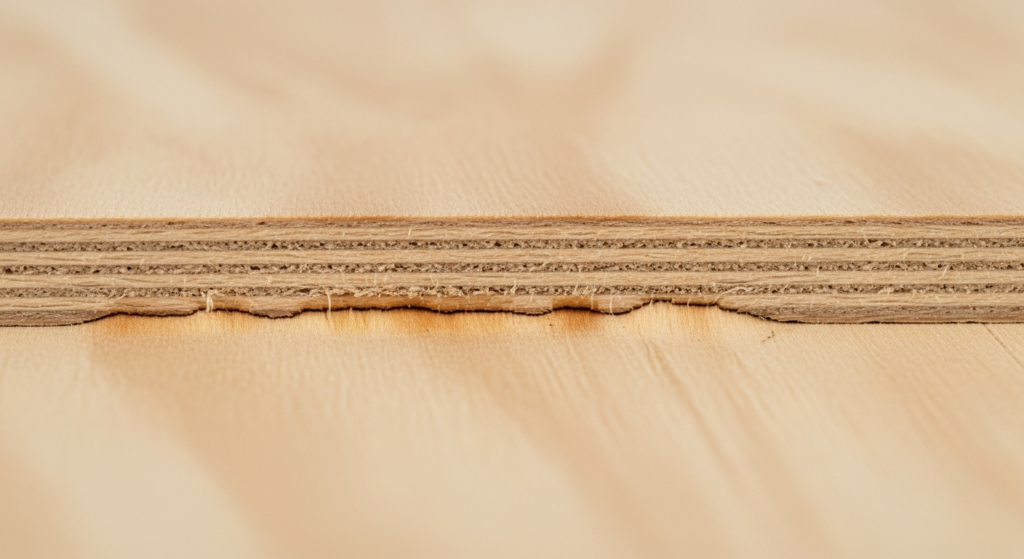
Swelling is most prominent along the edges and at cut surfaces, leading to cupping, bowing, or warping of the panel.
Key Swelling Effects
| Area Affected | Common Result |
|---|---|
| Edges | Swelling, edge lifting |
| Panel face | Slight cupping, waviness |
| Core | Bond line expansion |
| Corners | Deformation and delamination risk |
Drying may reduce swelling, but permanent warping is common after prolonged exposure.
Delamination of Veneer Layers
If birch plywood is bonded with interior-grade adhesives (such as urea-formaldehyde), water exposure weakens glue bonds.
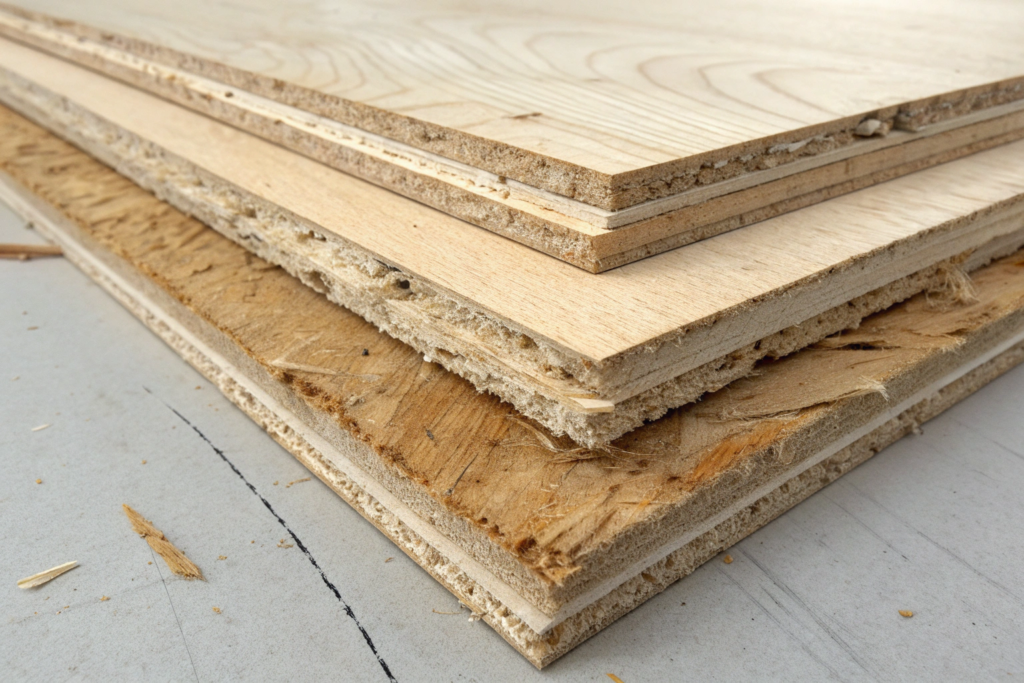
Prolonged wetting leads to separation of veneer layers, starting from the edges and spreading into the core—known as delamination.
Delaminated panels lose their structural integrity and can no longer bear loads or retain a flat surface.
Surface Fiber Raising and Finish Damage
Moisture softens the outer veneer layer. As it dries, raised wood fibers leave the surface rough.
Coated surfaces may blister or flake. Clear finishes can become cloudy or lose adhesion.
This compromises appearance in cabinetry, wall panels, or laminated components and usually requires sanding and refinishing.
Mold and Staining
Moisture trapped within the plywood core creates an ideal condition for microbial activity.
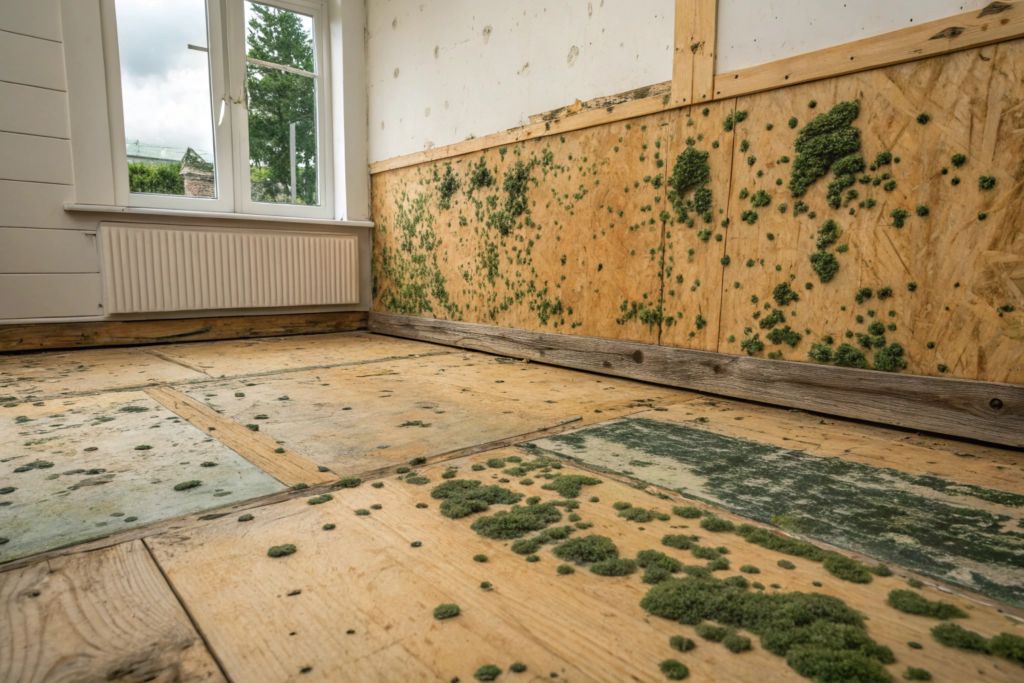
Black or green mold may form on the surface, especially in poorly ventilated or warm environments. Tannin stains and water marks are also common.
Risks from Biological Activity
| Type | Effect |
|---|---|
| Mold or mildew | Stains, odor, health risks |
| Blue stain fungi | Irreversible dark discoloration |
| Wood rot fungi | Weakening and decay over time |
Preventing prolonged wetness is the key to avoiding microbial growth.
Structural Weakening
As glue lines soften and wood fibers absorb moisture, birch plywood becomes structurally compromised.
The panel’s strength in bending, shear, and fastener holding is reduced, especially after repeated wet-dry cycles.
Applications requiring dimensional accuracy or load-bearing capacity are directly affected.
Factory Conditions and Adhesive System Matter
Birch plywood produced under controlled factory conditions—with calibrated veneer drying, uniform glue application, and high-pressure hot pressing—performs better under accidental wetting.
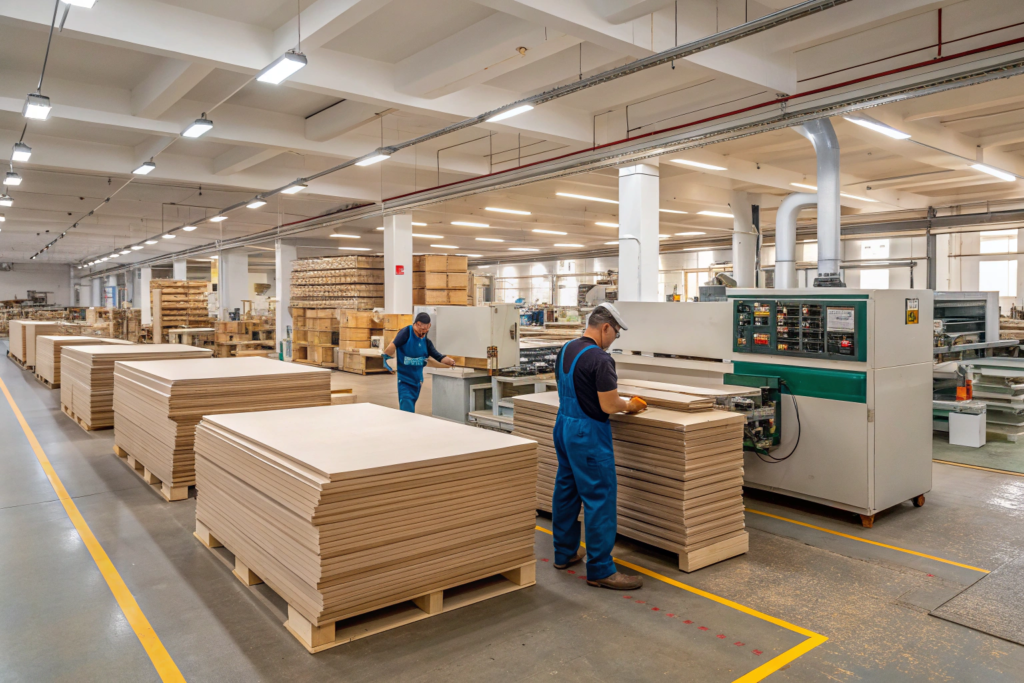
Exterior or waterproof birch plywood (bonded with phenolic resins) resists moisture significantly better than interior grades.
Plywood Types and Moisture Tolerance
| Plywood Type | Adhesive Type | Wet Resistance |
|---|---|---|
| Interior Grade (MR) | Urea-formaldehyde | Low, swells and delaminates |
| Exterior Birch Plywood | Phenol-formaldehyde | Moderate resistance |
| Birch Marine Plywood | Waterproof phenolic | High, designed for wet use |
Proper selection at the sourcing stage is critical for expected moisture performance.
How to Minimize Damage After Wetting
Immediate drying reduces long-term damage. Good airflow, mild heat, and balanced humidity can remove moisture gradually.
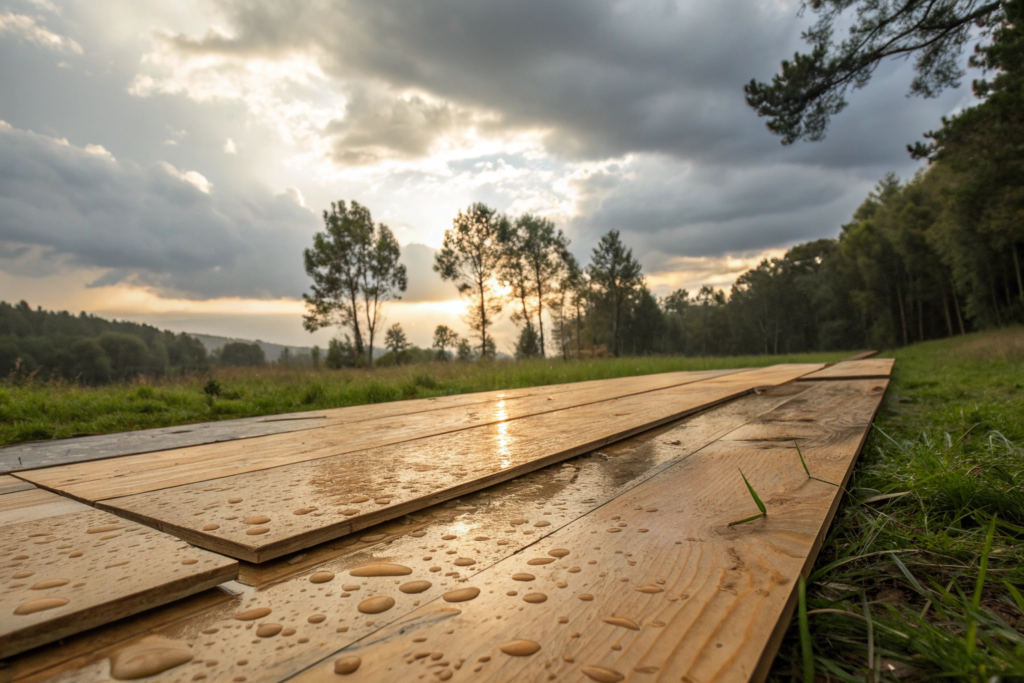
The panel should be elevated from contact surfaces, both sides exposed to air, and direct sun avoided to prevent uneven drying.
Severely affected areas may require sanding, resealing, or replacement depending on their role in the project.
Conclusion
When birch plywood gets wet, it undergoes swelling, delamination, surface damage, and structural weakening. Moisture exposure compromises the panel’s performance, especially when interior adhesives are used. Water can quickly enter through unsealed edges or fastener holes, then spread into the core.
Production quality, adhesive system, and proper coating or sealing significantly impact moisture tolerance. Waterproof or exterior-grade birch plywood has better resistance, especially when sealed with paint, resin, or edge protectants. If wetting does occur, fast drying in a controlled environment can mitigate irreversible damage.
In all applications where moisture is possible—especially in kitchens, bathrooms, or humid regions—prevention through material selection, factory processing, and installation detail is essential. Protecting birch plywood from water ensures its long-term stability, structural reliability, and visual appeal in all design and construction contexts.