
When selecting structural panels for construction or furniture, OSB and plywood are often the top choices. Understanding the differences helps avoid cost overruns and performance issues.
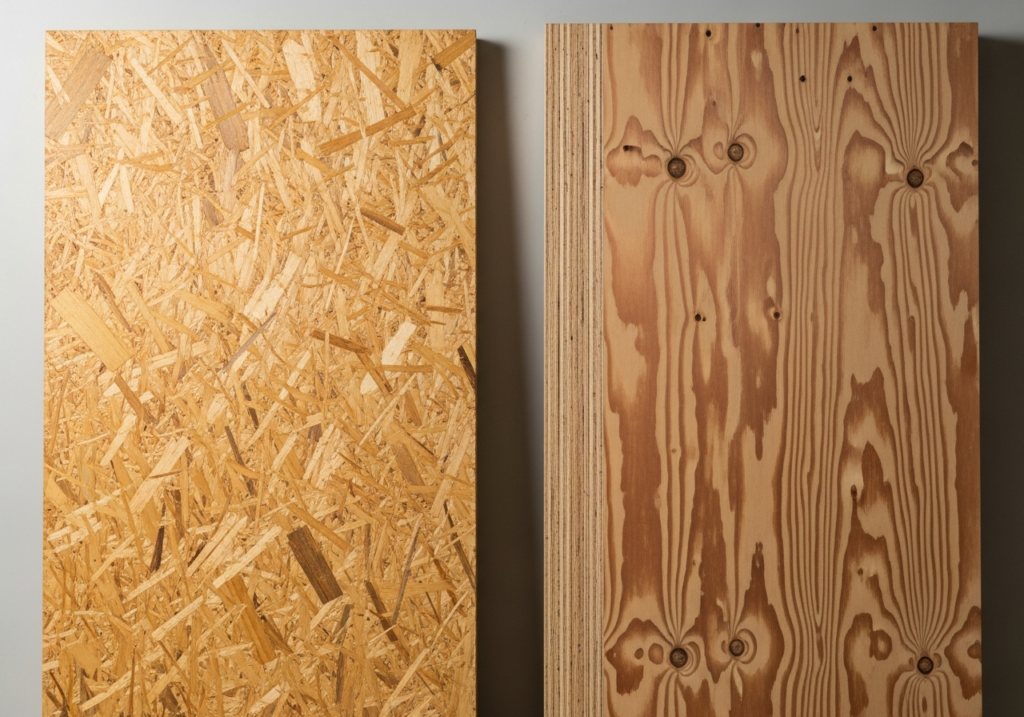
OSB (Oriented Strand Board) and plywood are both engineered wood panels, but they differ in structure, performance, cost, and ideal application. OSB is made from wood strands, while plywood uses veneer sheets.
Both materials serve similar functions in subfloors, wall sheathing, and packaging. However, their performance varies by moisture resistance, strength, and workability. Manufacturers and builders choose based on specific project needs and budget.
What is the structural difference between OSB and Plywood?
Both are composite panels, but their internal structure affects everything from weight to strength and expansion behavior.
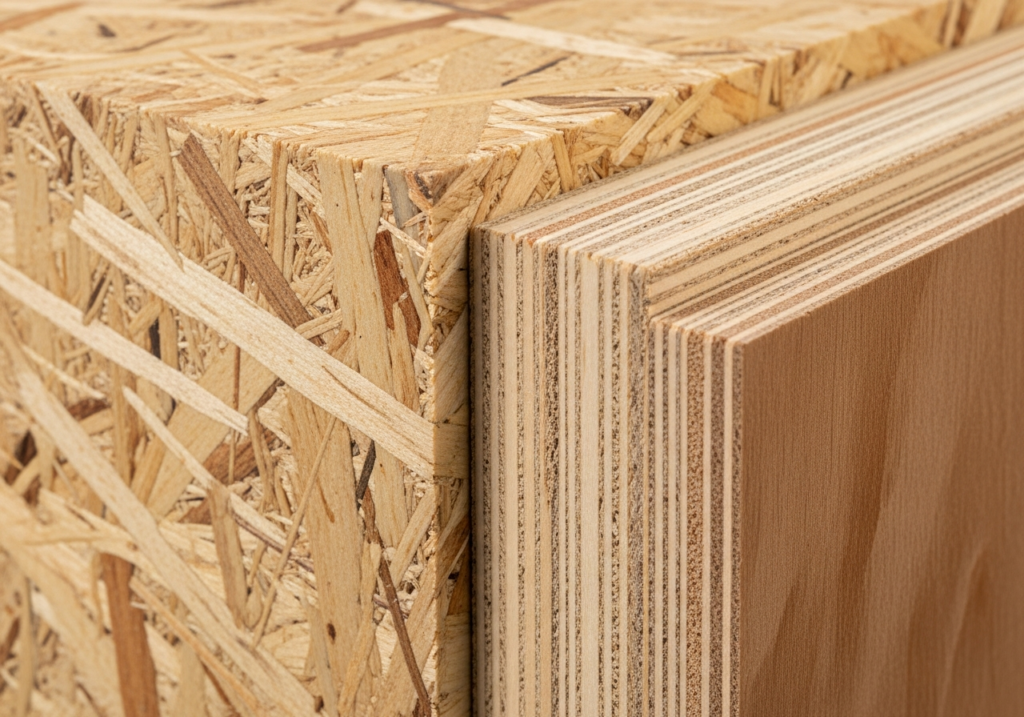
OSB is made from layers of wood strands oriented in alternating directions, while plywood is built from thin veneer sheets glued together in perpendicular layers.
Material Composition
| Property | OSB | Plywood |
|---|---|---|
| Core Structure | Wood strands in resin matrix | Cross-laminated veneer sheets |
| Grain Orientation | Oriented strand layers | Alternating veneer grain |
| Surface Texture | Rough, flake-like | Smooth (one or both sides) |
| Visual Uniformity | Consistent | May show grain or knots |
OSB uses nearly 90% of the tree and is highly efficient in material usage. Plywood uses larger, higher-quality logs to create veneer sheets. This affects both the cost and environmental yield.
How do OSB and Plywood perform in moisture?
Water exposure is a critical factor in panel selection, especially for exterior or subfloor use.
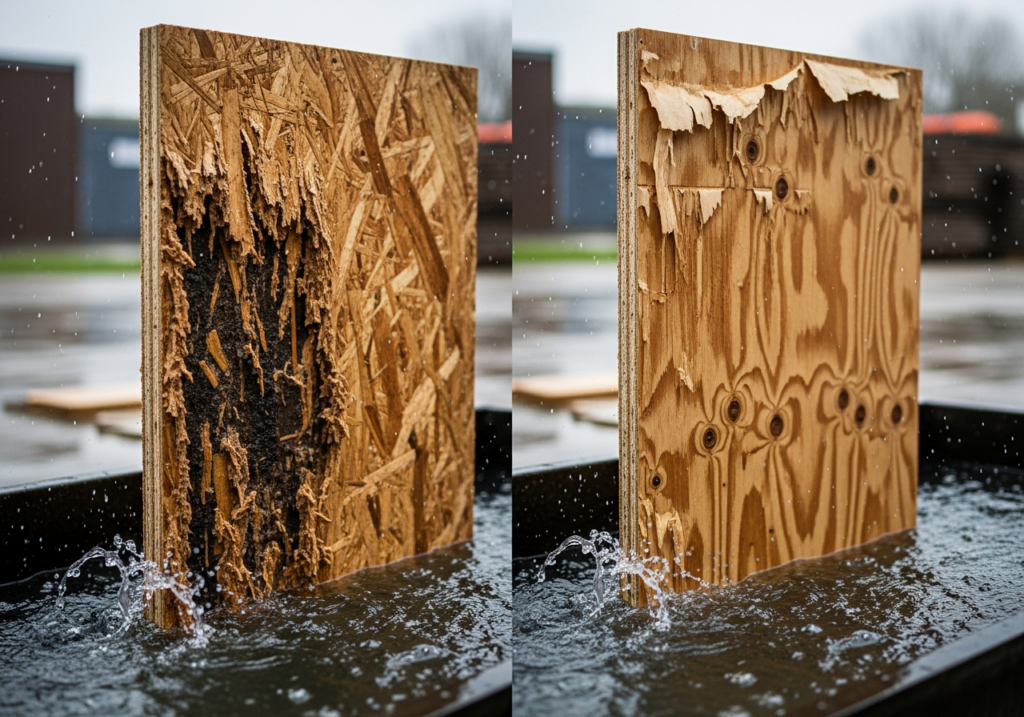
Plywood swells less and dries faster than OSB when exposed to moisture, making it more dimensionally stable in changing environments. OSB absorbs more water but can be treated for improved resistance.
Moisture Resistance Comparison
| Feature | OSB | Plywood |
|---|---|---|
| Water Absorption | Higher | Lower |
| Drying Time | Slower | Faster |
| Swelling After Wetting | May remain swollen | Returns closer to original shape |
| Treated Versions | Yes (e.g., OSB3, OSB4) | Yes (exterior-grade, marine) |
OSB Type 3 or 4 panels are used in humid zones, with factory-applied wax or resin seals. Plywood remains the preferred choice for roofs and areas with repeat wet-dry cycles.
Which material is stronger and more durable?
Load performance, fastener holding, and resistance to breakage define the structural integrity of panels.
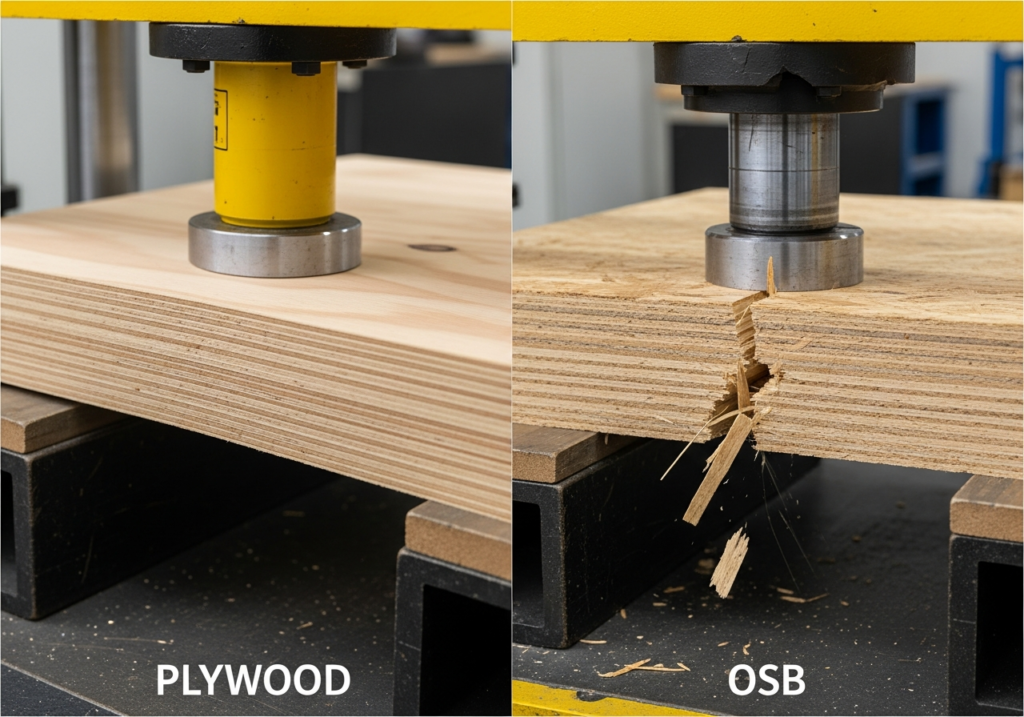
Plywood has better bending strength and fastener retention, while OSB performs well in shear strength, making it suitable for wall bracing.
Performance Ratings
| Property | OSB | Plywood |
|---|---|---|
| Shear Strength | High (ideal for walls) | Moderate |
| Bending Strength | Moderate | High (less deflection under load) |
| Nail Holding Power | Lower | Higher |
| Impact Resistance | Moderate | Higher |
In flooring systems, plywood tends to feel stiffer underfoot and resists sagging better under heavy furniture or traffic.
What about cost and availability?
Budget constraints are often a deciding factor in material choice, especially for high-volume applications.
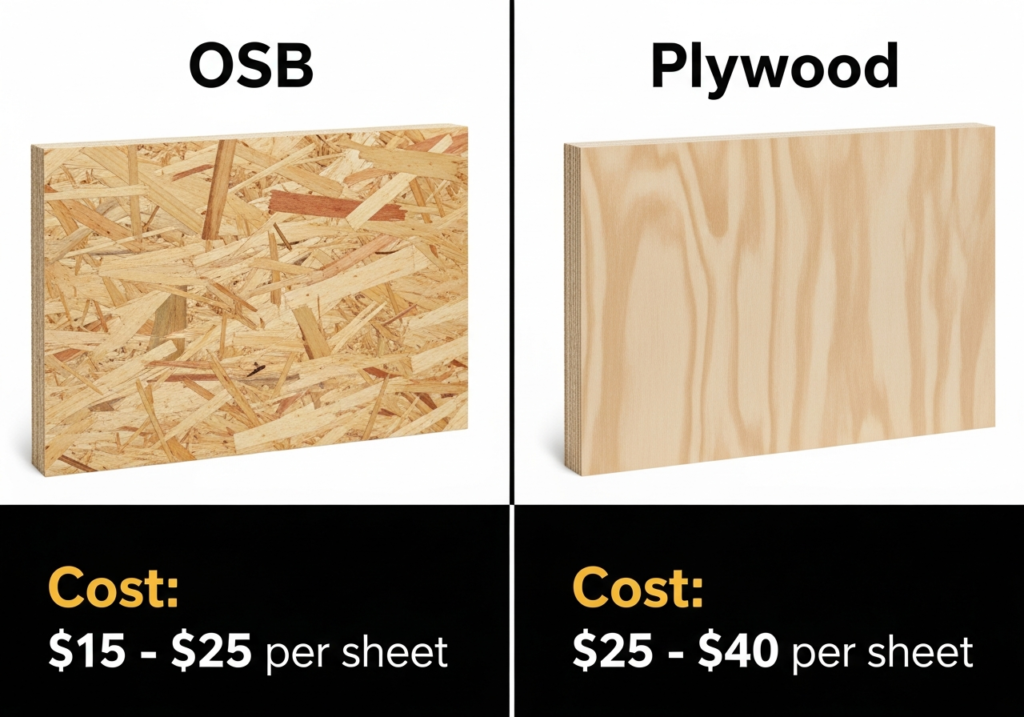
OSB is generally 20% to 30% cheaper than plywood and more readily available in large panel sizes, making it ideal for cost-sensitive builds.
Price and Supply
| Feature | OSB | Plywood |
|---|---|---|
| Price per Sheet | Lower (budget-friendly) | Higher |
| Market Availability | High | Varies by grade/species |
| Size Variants | Wider formats (e.g., 4’x9′, 4’x10′) | Mostly standard 4’x8′ |
| Special Grades | OSB3, OSB4 | CDX, Marine, Birch, Film-faced |
For packaging, underlayment, or temporary structures, OSB offers a good performance-to-price ratio. Plywood remains the first choice where structural integrity and visual finish matter more.
How do OSB and Plywood behave in manufacturing?
Panel performance is closely tied to how they are processed, bonded, and controlled during production.
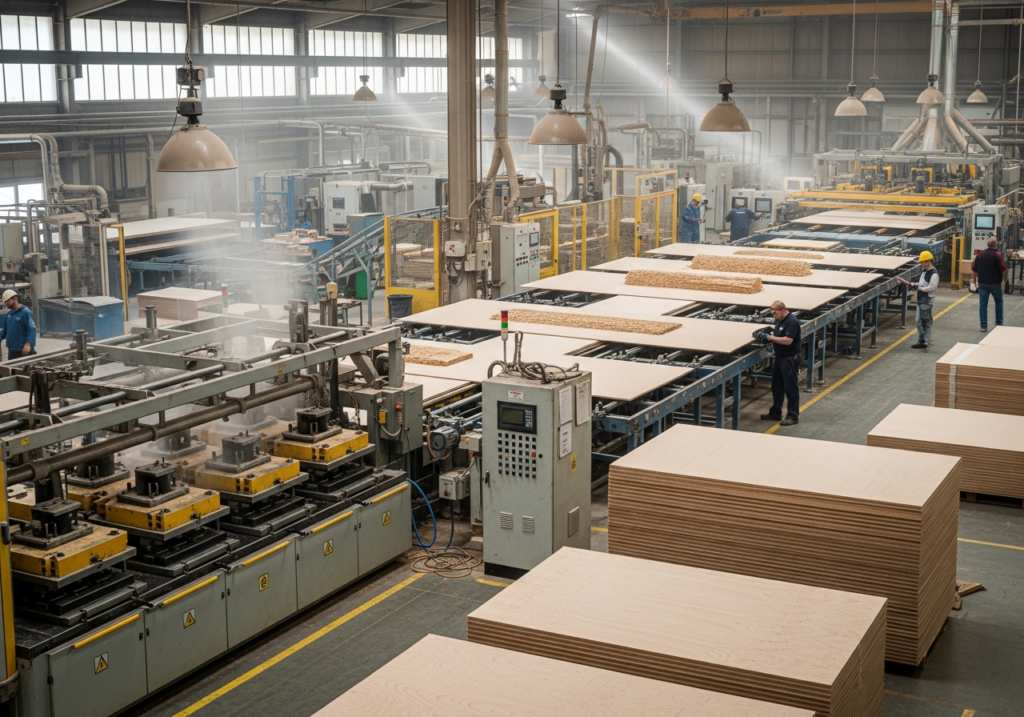
OSB is manufactured using continuous pressing and resin bonding of oriented strands, allowing tighter dimensional control. Plywood relies on log peeling, veneer drying, and multi-stage pressing.
Manufacturing Process Summary
| Process Aspect | OSB | Plywood |
|---|---|---|
| Raw Material | Small-diameter logs, wood strands | Larger logs, rotary-cut veneers |
| Pressing Method | Continuous or multi-opening hot press | Cold press + hot press (batch process) |
| Adhesive Type | MDI, PMDI, or phenol-formaldehyde | Urea or phenol-formaldehyde |
| Quality Control | Uniform across panel | Depends on veneer quality and layup |
In manufacturing, OSB yields are higher, and waste is lower. Plywood offers natural surface appeal and higher screw retention, which is valuable in furniture and visible applications.
Conclusion
Both OSB and plywood are reliable panel products, each with strengths in different areas. OSB is cost-effective and ideal for structural sheathing, while plywood offers better durability, finish, and moisture behavior.
Selecting between them depends on project demands, environmental conditions, and budget. Understanding these differences ensures proper material use and long-term structural stability.