
Waterproofing plywood means preventing water from penetrating the veneer layers and glue lines. Plywood itself is made from thin wood veneers bonded together. If moisture penetrates, the wood swells and the glue can fail. Making plywood waterproof involves selecting the right panel grade, using waterproof adhesives at the factory, applying surface treatments, sealing edges and details, and designing installations to shed water effectively.
Waterproof plywood performance is achieved through material selection, factory bonding systems, surface coatings, edge protection, and moisture‑management in the field.
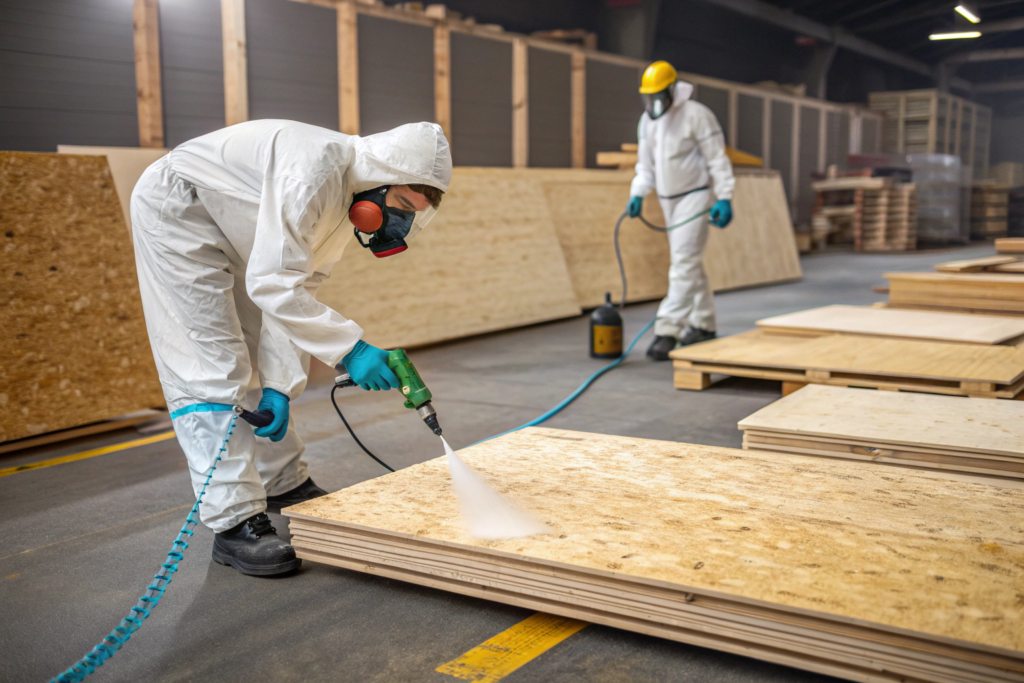
These combined methods protect the wood fibers and adhesive bonds from water, significantly improving service life in wet or exterior environments.
Use Waterproof Adhesives and Select Appropriate Grades
The most fundamental waterproofing begins in manufacturing with the adhesive system and panel grade.
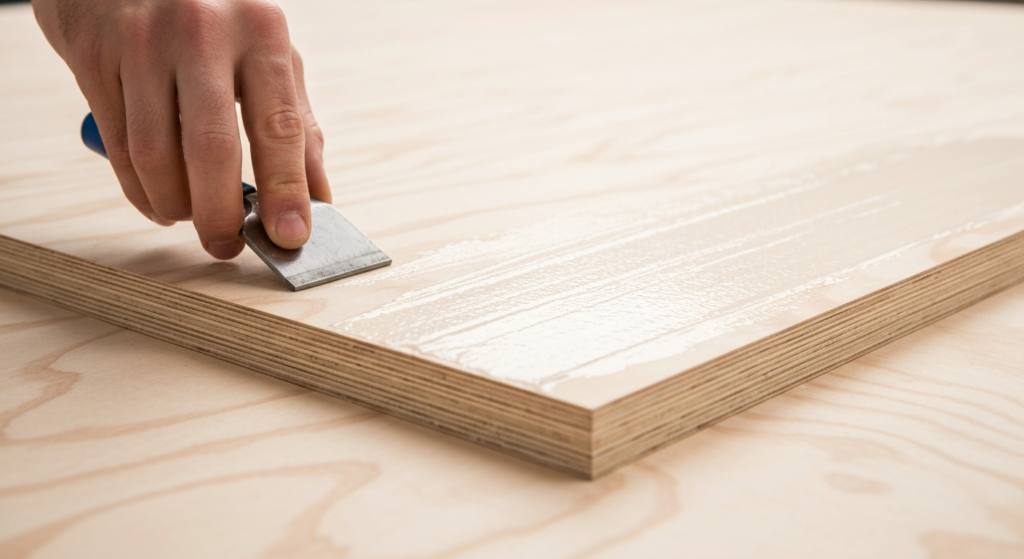
Exterior‑grade plywood and marine plywood are bonded with waterproof phenolic resins, whereas interior panels use urea‑formaldehyde adhesives that break down in moisture. Marine plywood also requires void‑free core construction and high veneer quality.
Common Waterproof Plywood Grades
| Grade/Type | Adhesive Type | Water Resistance | Application Example |
|---|---|---|---|
| Interior (MR) | Urea‑formaldehyde | Poor | Indoor furniture/cabinets |
| Exterior / BWP | Phenol‑formaldehyde | Moderate to high | Covered outdoor panels |
| Marine Grade | Phenolic waterproof | Very high | Boats, humid/exposed zones |
| Film‑Faced | Phenolic film + PF core | Very high | Concrete formwork, decks |
Panels that begin with a waterproof glue line form the base for all additional sealing efforts.
Apply Surface Coatings and Barrier Systems
Once the base panel is selected, surface coatings provide an external physical barrier that prevents water from reaching the wood fibers.
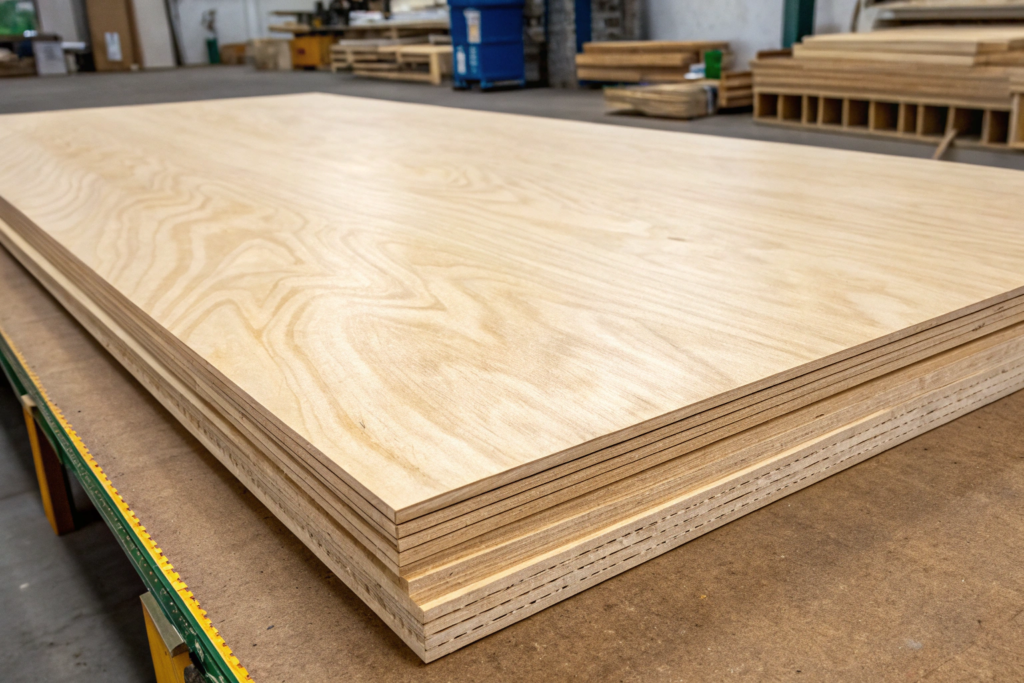
Surface waterproofing methods include exterior primers and paints, clear water repellents, epoxy or resin barrier coats, and high‑build marine coatings. These coatings form films that repel water and reduce direct absorption.
Typical Surface Treatments
| Treatment Type | Function |
|---|---|
| Exterior primer + paint | UV and water resistance |
| Clear water‑repellent sealer | Moisture repellent without hiding wood grain |
| Epoxy/resin barrier | Strong film for splash or high humidity zones |
| Marine protective coating | Designed for constant wet/dry cycling |
Surface preparation (cleaning, sanding) improves adhesion and the effectiveness of coating systems.
Seal Edges, Fastener Penetrations, and Cutouts
Edges and cut surfaces absorb water more readily than faces. End grain is a natural capillary pathway for moisture and must be treated carefully.
Edge sealing uses paint, sealants, resins, or specialized edge coats to block water entry through end grain or cutouts for fasteners, vents, or openings.
Key Detail Sealing Measures
| Detail Type | Recommended Method |
|---|---|
| Exposed edges | Exterior paint, edge sealant |
| Screw/nail holes | Waterproof caulk or sealant |
| Cutouts & penetrations | Brush‑on epoxy or silicone around openings |
| Panel joints & seams | Flashing tape or rain screen membranes |
Adequate sealing at these locations prevents moisture from reaching the core.
Use Factory‑Finished or Film‑Faced Panels
Film‑faced plywood and other factory‑finished panels are waterproofed at the production stage.
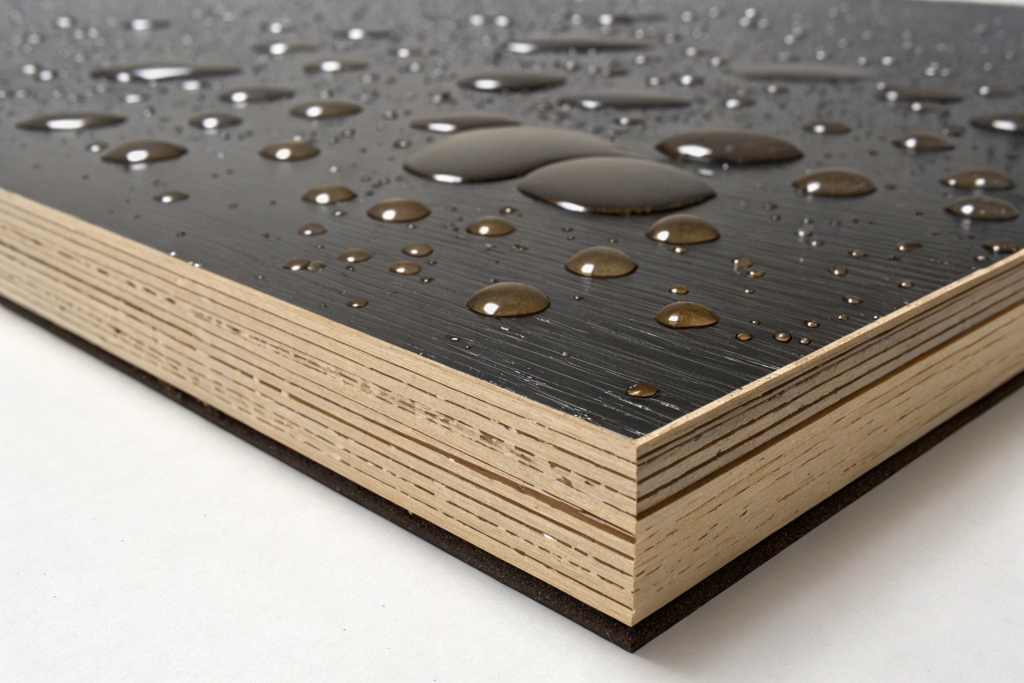
Film‑faced plywood has a phenolic film bonded under heat and pressure to the panel surface, creating a hard waterproof skin. This is especially effective for repeated wet/dry cycles, abrasion, and concrete contact.
Factory Waterproofing Benefits
| Feature | Performance Gain |
|---|---|
| Phenolic surface film | Abrasion + water resistance |
| Pre‑sealed core layers | Reduced moisture ingress |
| Controlled surface quality | Better adhesive and coating performance |
| Uniform thickness | Predictable dimensional stability |
Factory treatments reduce the need for extensive field finishing and improve consistency.
Install with Moisture Management Design
Even waterproofed plywood panels require proper installation detailing to shed water and allow drying.
Design strategies include flashing, overhangs, drainage planes, ventilation gaps, and avoiding ground contact. These measures reduce prolonged moisture exposure and improve the effectiveness of waterproofing systems.
Moisture Management Practices
| Installation Detail | Purpose |
|---|---|
| Flashing and drip edges | Keeps water away from panel faces |
| Elevated installation | Prevents capillary moisture from ground contact |
| Ventilated cavities | Promotes drying after wetting |
| Proper slopes/overflow | Prevents pooling water |
Detailing that allows drainage and airflow keeps panels dry and extends service life.
Manufacturing Quality and Production Controls
Waterproof performance also relates to how plywood panels are made. Factory control of moisture content, adhesive spread, pressing temperature, and veneer quality affects the panel’s ability to resist water.
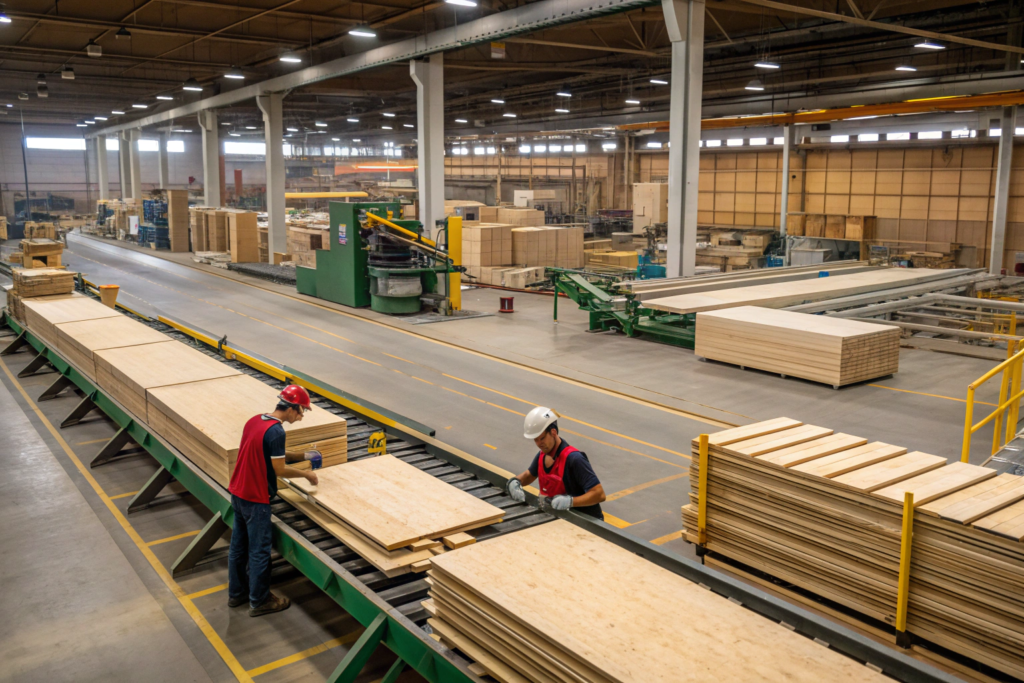
Panels manufactured with calibrated pressing, uniform glue application, and minimal core voids maintain internal bonds better when wet. Surface sanding and inspection improve coating adherence and dimensional accuracy.
Key Production Controls
| Process Step | Contribution to Waterproofing |
|---|---|
| Veneer moisture control | Reduces internal stresses and swelling |
| Uniform adhesive spread | Strong and consistent glue lines |
| Hot pressing stability | Cures adhesive for long‑term waterproof bonds |
| Surface sanding | Smooth base for coatings |
| QA inspection | Detects defects before shipment |
Strict workshop process controls result in panels that perform predictably under wet conditions.
Conclusion
Making plywood waterproof is a multi‑stage process that begins with selecting the appropriate grade—exterior or marine—bonded with waterproof adhesives. Factory quality ensures strong internal bonds, calibrated thickness, and smooth surfaces that enhance coating performance. Surface treatments such as exterior primers, paints, water‑repellent sealers, and epoxy barriers form physical barriers against moisture. Sealing cut edges, fastener holes, and joints prevents water entry through vulnerable pathways.
For demanding environments, film‑faced and factory‑finished panels provide robust waterproof performance with minimal onsite finishing. Installation detailing—flashings, drainage provisions, ventilation, and elevation off ground—further protects plywood from sustained moisture exposure. By integrating material selection, factory processing, surface protection, and thoughtful design, plywood can be made highly resistant to moisture, minimizing swelling, delamination, and rot, and ensuring long service life in wet or exterior applications.