
MDF is a dense, engineered wood material made from compressed wood fibers and resin. Its uniform texture and strength make it ideal for furniture and interior components. However, this density also limits its compatibility with certain tools. Utility knives such as the Stanley knife can serve specific purposes in MDF handling, but their application must align with the material’s structural properties.
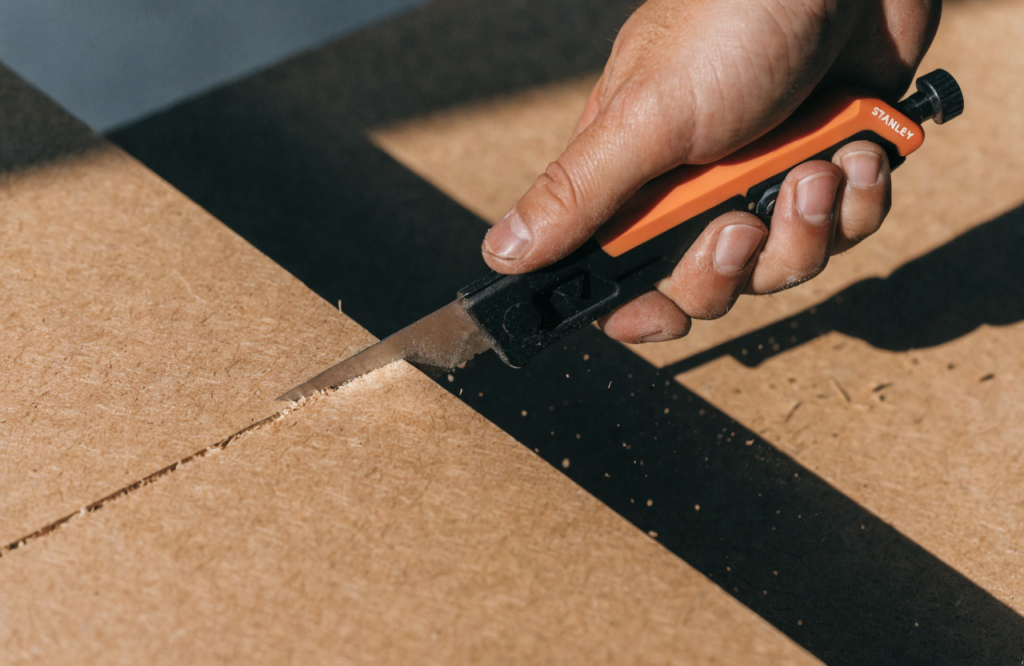
A Stanley knife is best used for scoring, surface trimming, and veneer removal on MDF, not for deep or structural cuts. Its value lies in finish detailing and layout preparation rather than panel separation.
Understanding these limitations ensures safe operation and clean outcomes in both workshop and factory finishing environments.
In What Situations Can a Stanley Knife Be Used on MDF?
Stanley knives are widely employed for precise, shallow applications rather than full-panel cutting. In MDF processing, they are often used during layout, marking, and surface treatment phases.
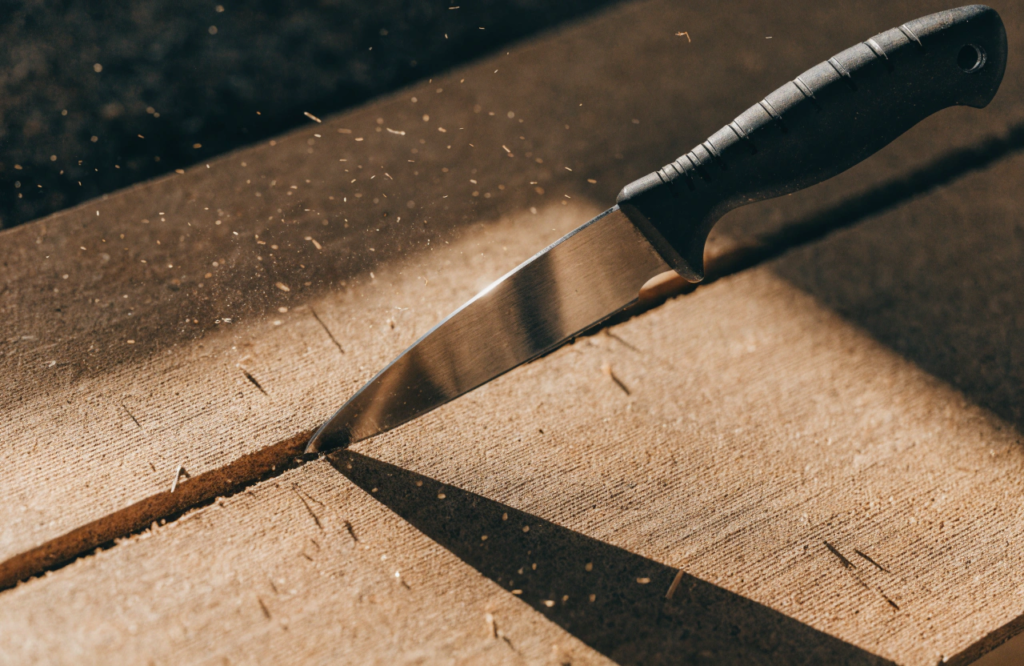
The knife’s thin blade can score surface layers, trim laminate sheets, or define routing lines in sheets up to 3 mm thick.
| Application | Appropriate Use |
|---|---|
| Surface Scoring | Creating break lines for snapping |
| Veneer Trimming | Cutting thin overlays and decorative skins |
| Edge Chamfering Prep | Outlining profiles before sanding/router |
Factories often integrate Stanley knives into assembly kits for technicians working on post-machining refinements or layout adjustments.
What Are the Cutting Limitations of a Stanley Knife?
Attempting to fully cut through MDF panels with a utility knife typically leads to uneven cuts, tool slippage, and excessive blade wear. MDF’s density resists clean slicing, particularly in sheets over 3 mm.
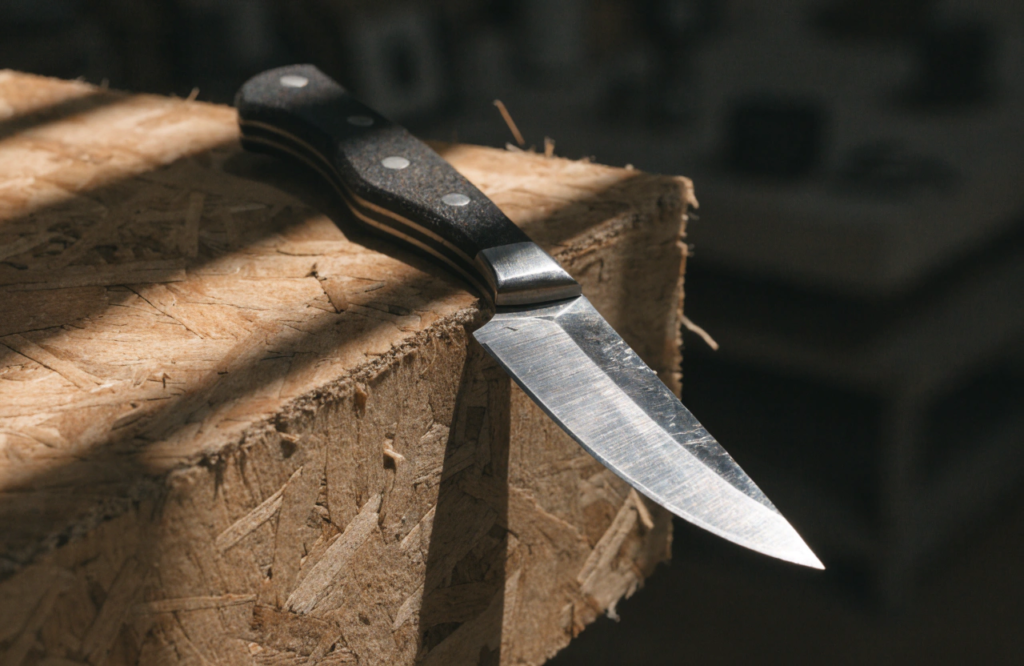
Stanley knives are ineffective for structural cuts due to limited blade length, inadequate cutting angle, and lack of cutting depth control.
| Limitation | Cause |
|---|---|
| Shallow Penetration | Dense fiber matrix resists blade entry |
| Blade Dulling | Resin binder increases friction wear |
| Irregular Edge Finish | Blade flex during deep strokes |
In controlled environments, factory protocols recommend saws or routers for any dimensional cutting involving structural requirements.
How Can Knife Techniques Be Optimized for MDF?
Using a Stanley knife effectively requires a scored, layered approach. Scoring with increasing pressure and multiple passes produces cleaner results without stressing the tool or the material.
Using a metal straightedge, light pressure, and angled passes builds a precise groove while preventing splintering.
| Knife Technique | Description |
|---|---|
| Multi-pass Scoring | Builds depth in layers to avoid chipping |
| Angle Bevel Cuts | Prepares chamfers or corners |
| Guide-assisted Cutting | Reduces drift and increases safety |
These methods are particularly important when applying edge banding or creating template guides for CNC routing.
What Are Typical Factory Uses of Utility Knives for MDF?
In manufacturing environments, knives are not used for panel cutting but are essential in fine adjustment areas. Edge detailers, quality check technicians, and finish carpenters frequently include Stanley knives in their standard toolkit.
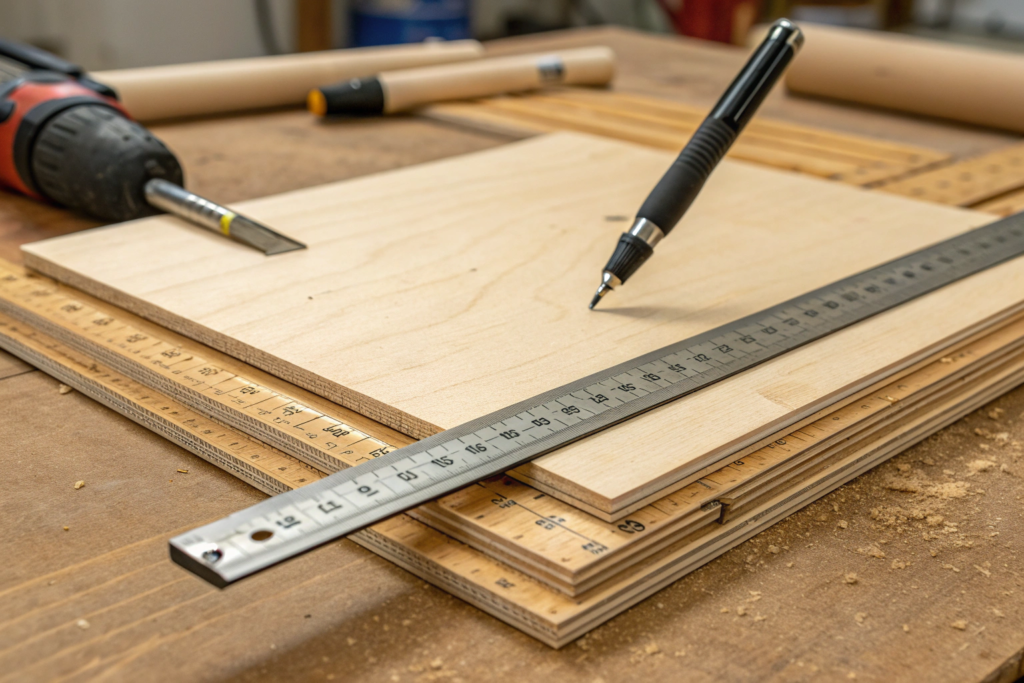
Common tasks include scoring reference marks, trimming film overlays, and fine-tuning decorative layers after CNC or saw processing.
| Task | Purpose |
|---|---|
| Label/Mask Removal | Prepares surface for finishing |
| Laminated Edge Trimming | Refines overhangs after press application |
| Template Guideline Scoring | Sets visual boundaries for trimming tools |
Knives are used in conjunction with calipers, sanding blocks, and edge buffers within the finishing and inspection stations of production lines.
What Are Safer Alternatives for Full Cuts in MDF?
While utility knives assist in surface work, full sheet processing must rely on cutting tools designed for MDF’s density. Panel saws, CNC routers, or scoring saws ensure consistency, depth control, and clean edges.

Factory lines employ circular saws with carbide-tipped blades and vacuum extraction systems to process MDF accurately and safely.
| Cutting Tool | Use Case |
|---|---|
| Table Saw | Large sheet division |
| CNC Router | Precision profile shaping |
| Track Saw | On-site straight-line trimming |
For factory-grade cuts, blade sharpness, feed rate, and dust containment are critical to achieving production efficiency and maintaining edge quality.
Conclusion
Stanley knives serve important functions in the fine finishing and preparatory stages of MDF handling. They provide accuracy in veneer trimming, edge layout, and surface scoring. However, they are not intended for full-panel separation or deep structural cuts due to the density and composition of MDF. In manufacturing environments, utility knives are widely used for layout control, inspection adjustments, and detail refinements. When paired with industrial cutting tools and quality protocols, they contribute to a precise and clean final product without replacing the core machinery required for production-scale MDF processing.