
Importing plywood from China can look simple at the quotation stage. The real problems usually appear later, after production, loading, customs, or installation.
A successful plywood import process depends on clear product specs, supplier screening, sample testing, document control, packaging protection, and market compliance before the order ships.
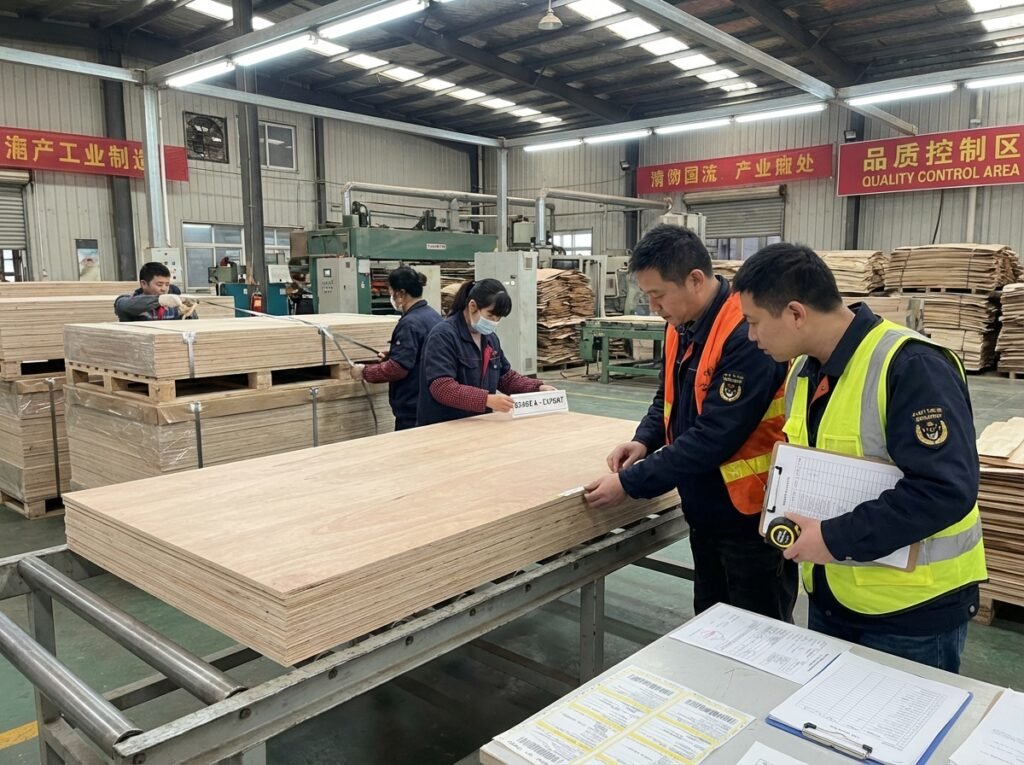
Plywood import mistakes usually do not come from one big error. They come from a series of small decisions that were not checked early enough. Public complaints across Reddit, Amazon, Facebook, YouTube, trade forums, Trustpilot, and SiteJabber repeat the same problems again and again. Buyers complain about delamination, warping, rough surfaces, hidden voids, chipped edges, thin face veneer, incorrect thickness, dirty sheets, damaged corners, wrong cuts, weak packaging, and poor delivery communication. These patterns show a simple fact: importing plywood successfully is not only about finding a low price. It is about controlling risk from product definition to final delivery.
What is the step-by-step process to import plywood from China successfully?
A successful plywood import order usually starts with application first, not product name first. The importer needs to define how the panel will be used. Furniture, cabinetry, wall panels, flooring base, packaging, marine use, exterior use, and laser cutting all require different plywood construction. Once the use is clear, the next step is to lock the technical specification. That should include thickness, tolerance, face and back grade, core type, glue type, moisture target, panel size, sanding level, and packaging method.
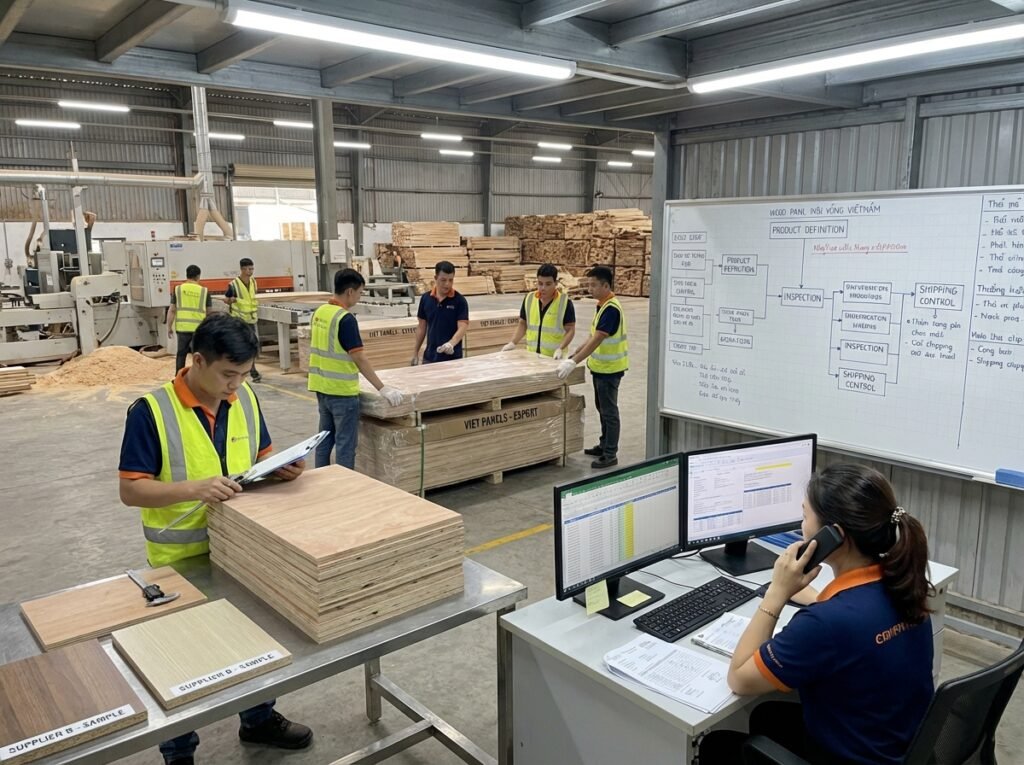
After that, the supplier shortlist should be built. Samples should be reviewed before bulk production starts. The review should go beyond surface appearance. The sample should be cut, drilled, routed, edge-checked, and sometimes exposed to light moisture depending on the end use. Then the importer should confirm production lead time, labeling, inspection method, loading plan, and shipping documents before deposit payment.
The final steps are pre-shipment inspection, freight booking, customs document review, and arrival inspection. A plywood order becomes much safer when each step is checked in sequence instead of managed only by price pressure.
| Step | Main goal | What should be confirmed |
|---|---|---|
| Application definition | Match board to end use | Interior, exterior, cabinet, structural, decorative, laser |
| Product specification | Prevent vague product claims | Thickness, grade, core, glue, sanding, tolerance |
| Supplier screening | Reduce hidden factory risk | Export history, quality control, document discipline |
| Sample review | Detect problems early | Voids, warping, edge quality, veneer thickness, finish |
| Order confirmation | Lock commercial and technical terms | Quantity, lead time, packing, inspection, labels |
| Pre-shipment control | Catch defects before loading | Flatness, bonding, dimensions, packaging, cleanliness |
| Arrival check | Protect against claims loss | Damage, moisture, count, visible defects, paperwork |
Why do plywood import orders often go wrong?
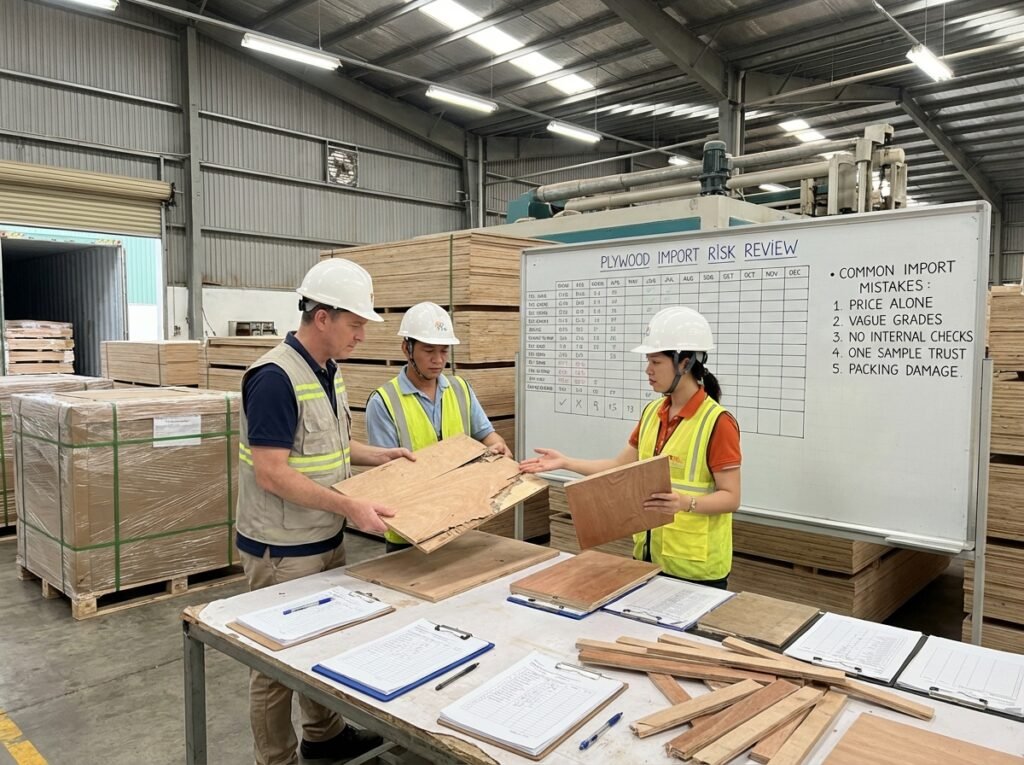
Most failed plywood imports follow the same pattern. The buyer approves a supplier too quickly, judges the board only by the top veneer, assumes all plywood is basically similar, or skips detailed inspection because the sample looked acceptable. Then the problems show up during cutting, edge banding, routing, storage, or installation.
The most common failures are already visible in public market feedback. Delamination shows weak bonding or poor pressing. Warping usually points to moisture imbalance or poor layup control. Hidden voids appear when routing or grooving exposes gaps inside the core. Thin face veneer becomes obvious during sanding. Rough faces and dirty surfaces lead to finishing trouble. Chipped edges and broken corners often come from weak board integrity or poor packaging.
Import problems also come from paperwork and logistics. Some orders arrive late with little communication. Some arrive with wrong labeling, damaged corners, poor pallet support, or packaging that cannot handle long transit. In other cases, the product is technically wrong because the quote never defined the board clearly enough in the first place.
| Common import failure | What usually caused it |
|---|---|
| Delamination after arrival or use | Weak glue system, poor pressing, wrong grade for wet use |
| Warping in storage or production | Moisture imbalance, poor conditioning, thin panel instability |
| Hidden voids in machining | Weak core construction and poor internal grading |
| Sand-through or fragile surface | Face veneer too thin |
| Chipped corners and dirty faces | Weak export packaging and rough handling |
| Wrong board received | Vague specs and poor order confirmation |
How should the right plywood specification be written before placing an order?
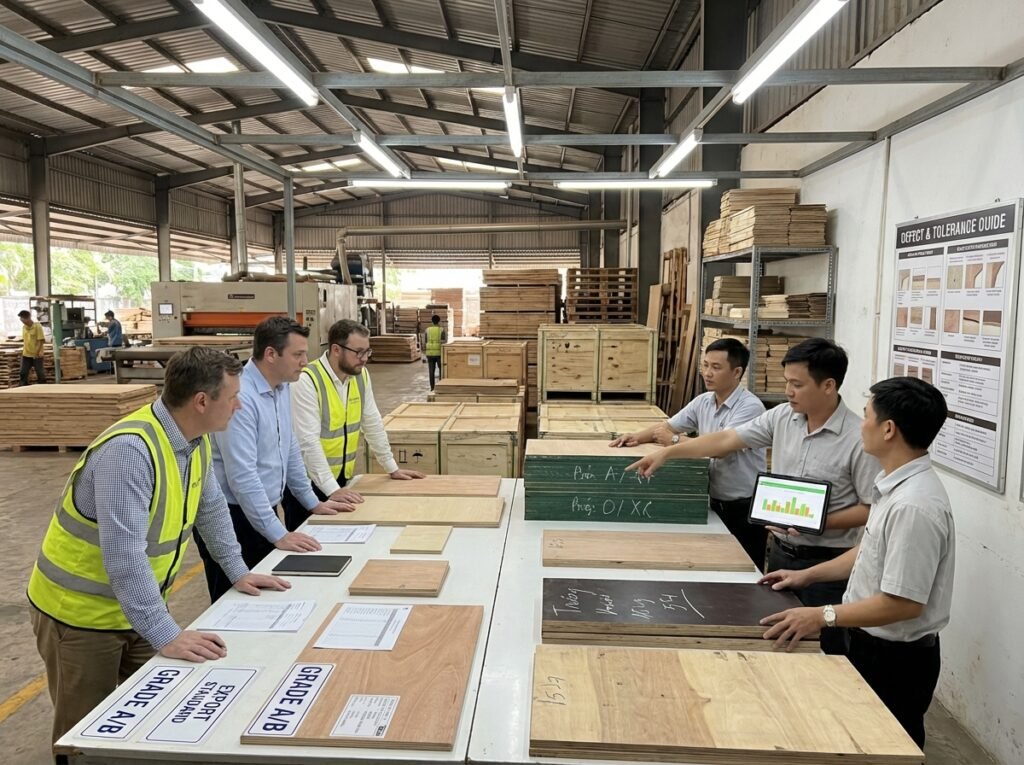
A plywood order should never rely on a short description like birch plywood, hardwood plywood, or furniture plywood. That is too broad. A strong purchase specification needs to describe the board in a way that removes guesswork from production, inspection, and claims.
The specification should define face and back quality, acceptable patches, core species or core grade, glue type, moisture range, thickness tolerance, target flatness, surface sanding level, edge condition, and any special requirement such as low-emission, exterior durability, or laser-friendly processing. If the panel will be visible, veneer color variation, grain direction, and patch tolerance should also be stated. If the board will be machined, core void limits and edge quality become much more important.
This step matters because many disputes start from product names that sound premium but are not technically specific. A supplier may ship a board that matches the broad wording but fails the real use case. Good importing starts when the specification is strong enough to control the result.
| Specification item | Why it matters |
|---|---|
| Face/back grade | Controls visible quality and finishing result |
| Core construction | Affects voids, strength, and machining result |
| Glue type | Affects moisture resistance and bond durability |
| Veneer thickness | Reduces sand-through and surface damage risk |
| Thickness tolerance | Helps assembly, cut accuracy, and fit |
| Moisture target | Reduces warping and movement |
| Packaging method | Protects quality during long transit |
How can the right China plywood supplier be chosen for import orders?
The right supplier is usually not the one with the lowest price sheet. The right supplier is the one that can explain the product clearly, produce it consistently, and protect it through export delivery. A dependable supplier should be able to describe the panel structure, show test and inspection logic, explain packaging, and provide stable answers about lead time and quality control.
Supplier screening should focus on three things. First is factory capability. That includes product range, core control, sanding quality, bond control, moisture management, and packaging practice. Second is export discipline. That includes communication, labeling, document accuracy, pallet design, and experience with destination-market requirements. Third is consistency. A factory that makes one good sample but cannot repeat it in bulk is still a risky supplier.
The supplier review should also include how the factory handles complaints. A serious exporter usually has a clear method for batch tracing, replacement review, and corrective action. That is important because even a good factory is judged by how it handles exceptions.
| Supplier check area | Good sign | Warning sign |
|---|---|---|
| Product clarity | Clear spec discussion | Vague sales language |
| Core and bond control | Talks about voids, glue, pressing, flatness | Talks only about price |
| Export packaging | Has edge and face protection plan | Uses basic wrap only |
| Communication | Gives structured updates | Slow or inconsistent replies |
| Quality consistency | Repeatable sample and batch logic | One nice sample only |
| Complaint handling | Clear traceability and response flow | Defensive or unclear |
What import risks and mistakes are most common when buying plywood from China?
One common mistake is buying by appearance only. A sheet can look smooth and still contain internal gaps, weak glue lines, or unstable moisture. Another mistake is using the wrong grade for the end use. Interior-grade plywood may be used in damp conditions. Economy core may be used in cabinetry where routing exposes the inside. Thin face veneer may be treated as if it can handle heavy sanding or repair.
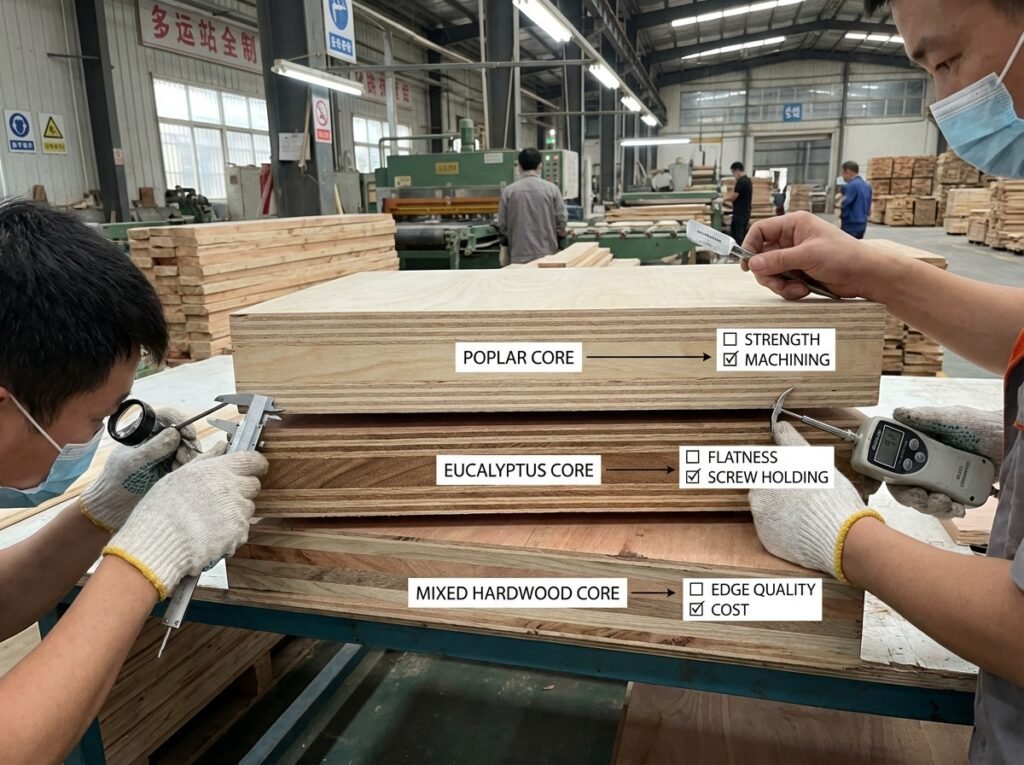
A third mistake is ignoring packaging. Many negative reviews in the market are tied to damaged corners, dirty faces, scratched surfaces, and poor protection in transit. A fourth mistake is failing to define inspection standards before production starts. Without agreed quality checkpoints, every defect becomes an argument later. A fifth mistake is assuming the destination market will accept any plywood that looks decent. In reality, import compliance can matter as much as product quality.
The safest import process treats plywood as both a manufactured product and a regulated import item. That means quality, packaging, labeling, and documents all need attention at the same time.
| Mistake | Why it causes trouble |
|---|---|
| Buying from photos only | Hidden defects stay invisible |
| Choosing by lowest price only | Core quality, veneer, glue, and packaging often drop |
| Skipping sample processing tests | Machining defects appear too late |
| Using vague product names | Wrong board gets produced or shipped |
| Ignoring packaging details | Transit damage creates claims and delay |
| Ignoring market compliance | Customs, sales, or project use can be blocked |
What documents and compliance checks should be reviewed before shipment?
Before shipment, the importer should review both trade documents and product compliance documents. The exact list depends on the destination market and final use, but the principle stays the same: the paperwork should match the actual plywood being shipped.
Commercial papers usually include invoice, packing list, bill of lading data, and any agreed inspection records. Product-related compliance may include emission compliance, construction-use documentation, origin-related files, or responsible sourcing paperwork depending on the market. The supplier should also confirm how pallets or wood packaging are treated for export when required.
This step matters because many import problems are not caused by bad plywood alone. They are caused by mismatches between the quote, the panel label, the shipment papers, and the legal requirements of the destination country. A clean document set reduces customs delay, warehouse confusion, and downstream claims.
Why do sample testing and pre-shipment inspection matter so much?
A plywood sample should be treated like a risk test, not a sales gift. Public complaints already show what tends to fail in real use: voids inside the core, edge delamination, weak face veneers, unstable flatness, and poor cut quality. A useful sample review checks these points before money is locked into mass production.
Pre-shipment inspection matters for the same reason. Plywood can degrade in value very quickly once a full container arrives with the wrong panel, damaged packaging, or inconsistent thickness. Inspection before loading is usually much cheaper than rework, claim negotiation, replacement freight, or project delay later.
The inspection should review dimensions, quantity, moisture condition, visible damage, face quality, edge condition, packaging strength, pallet stability, and overall cleanliness. When the product is intended for cabinet, furniture, or decorative use, cosmetic consistency should also be checked closely.
| Inspection area | What should be checked |
|---|---|
| Flatness | Bow, twist, and panel stability |
| Core quality | Voids, missing layers, weak edge structure |
| Bond quality | Delamination signs and edge integrity |
| Surface | Rough sanding, stains, scratches, patch visibility |
| Dimensions | Thickness, width, length, and tolerance |
| Packaging | Corner protection, pallet support, moisture barrier |
How can long-term plywood importing from China become more stable?
Stable importing usually comes from system control, not from one successful shipment. The best results come when the importer builds a repeatable process with approved specifications, approved factories, approved inspection points, and approved packaging methods. That reduces quality swings between orders.
It also helps to narrow the supplier base. A factory that understands the end use, target market, and defect limits is much more likely to repeat acceptable quality over time. Stable supply also depends on honest grade positioning. Economy boards should be sold as economy boards. Furniture-grade and export-grade products should have stronger core control, better face veneers, better sanding, and better packaging.
In plywood importing, consistency becomes a real competitive advantage. It lowers claims, protects delivery schedules, and makes pricing easier to manage over time.
Conclusion
Importing plywood from China successfully in 2026 depends on a clear process from specification to arrival. The most common risks are already visible in the market: delamination, warping, hidden voids, thin veneer, damaged packaging, vague product descriptions, and weak supplier communication. These are not random problems. They are signs of weak control somewhere in the chain.
That is why the safest import strategy is to define the board clearly, test samples properly, screen suppliers carefully, verify documents before shipment, and inspect quality before loading. When product fit, supplier capability, compliance, packaging, and inspection are all managed together, plywood importing becomes far more predictable and far less costly over time.