
Cutting plywood may seem simple, but poor technique can lead to splintering, rough edges, and wasted material.
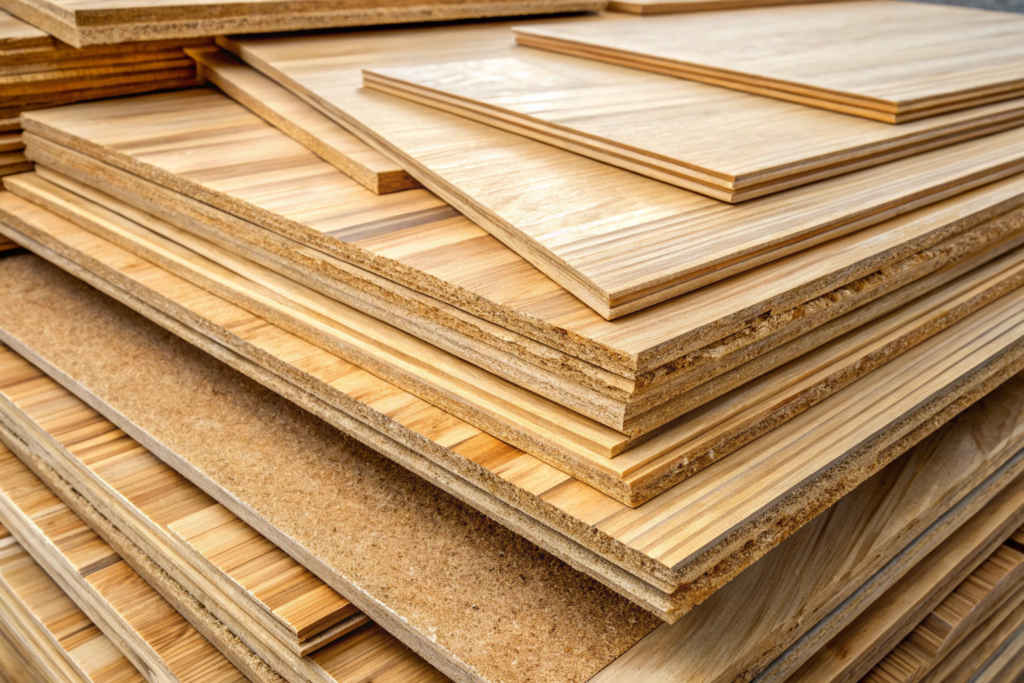
The easiest way to cut plywood cleanly is to use a circular saw with a fine-tooth blade and a straightedge guide, combined with proper support and cutting surface.
The method matters. A basic tool setup can achieve professional results if the board is well-supported, the right blade is chosen, and the cut path is prepared correctly. For those handling large sheets or repetitive cuts, upgrading the process increases both speed and accuracy.
What tools make plywood cutting easier?
Manual saws are outdated for sheet material. Efficient plywood cutting relies on the right equipment.
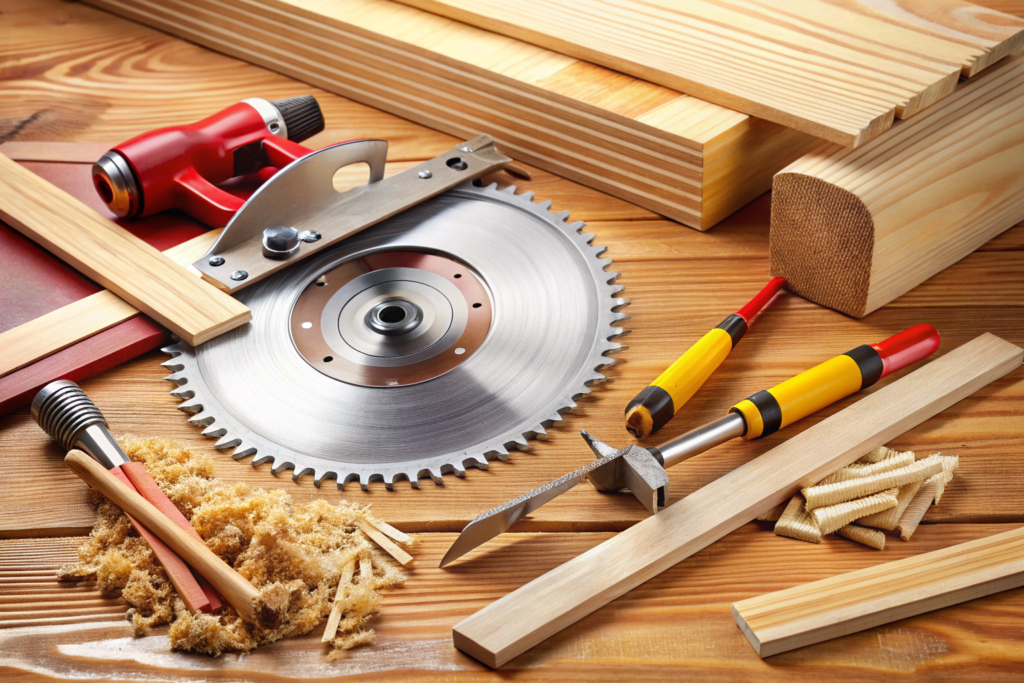
Circular saws, track saws, and panel saws with fine-tooth blades offer smooth and quick cuts with minimal splintering when used properly.
A circular saw is a cost-effective tool widely used in construction sites and workshops. When paired with a straightedge guide or track system, it can cut full sheets with precision. Track saws take this further by integrating guiding rails, reducing blade drift and tear-out. Panel saws are efficient for vertical sheet cutting and are often used in cabinet workshops.
Using blades with 60 to 80 teeth minimizes fiber breakout, especially when cutting across the grain. Carbide-tipped blades remain sharp longer and produce cleaner edges, reducing the need for sanding or trimming.
How can plywood cutting be simplified on-site?
Large sheets can be hard to handle without the right support. Simpler setups help improve both accuracy and safety.
Placing the plywood on a foam insulation board or sacrificial sheet allows for full support, prevents blade binding, and enables easier handling.

Instead of sawhorses, a rigid foam sheet or pallet base supports the entire plywood panel. This prevents sagging during cutting, stabilizes the surface, and allows the blade to pass through cleanly without hitting the ground. A straightedge or clamp-on guide ensures straight lines.
Marking the cut line with painter’s tape reduces chipping, especially on veneered plywood. Cutting with the good face down helps keep visible surfaces intact, as most circular saws cut upwards.
What practices reduce tear-out in fast cuts?
Speed should not come at the cost of clean edges. Even fast cuts can stay precise with minor adjustments.
To reduce tear-out, use sharp blades, mark and score the cut line, and maintain steady feed pressure during the cut.
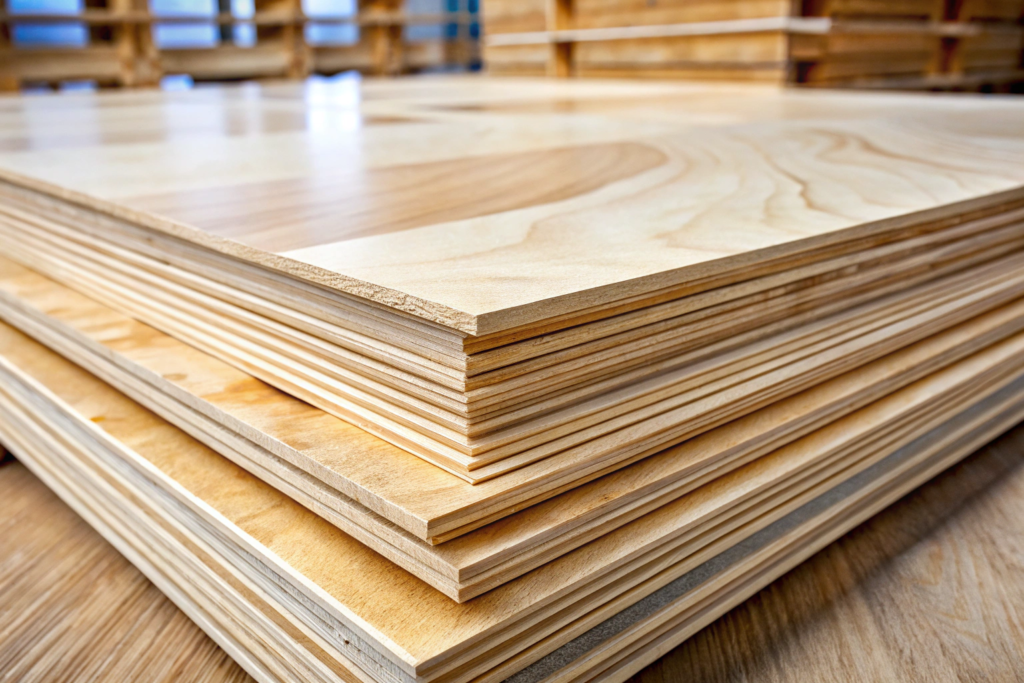
Scoring the top veneer layer with a utility knife before sawing helps the blade separate the fibers cleanly. Supporting the plywood along the entire cut line avoids vibration and movement. Feeding the saw at a consistent speed minimizes blade wobble.
In laminated or veneered plywood, using sacrificial backing sheets or flipping the panel so the blade exits through the back side reduces edge damage. Higher blade tooth counts are recommended for these applications.
How do different plywood types affect cutting?
Not all plywood behaves the same under the blade. Material density and surface finish influence cutting strategy.
Hardwood-faced, film-coated, or marine-grade plywoods require slower feed rates and sharper blades to maintain edge quality.
Hardwood-faced panels often have dense cores, such as birch or eucalyptus, which resist cutting and may cause premature blade dulling. Film-faced plywood used in formwork has resin coatings that can chip if cut too fast. Marine plywood typically includes water-resistant adhesive and tightly bonded veneers, requiring more precise control.
For decorative plywood, surface protection is essential. Taping along the cut line and using a zero-clearance insert (on table saws) or splinter guard (on track saws) helps maintain a clean finish.
How is plywood cut in a factory environment?
Factory cutting offers precision and speed that surpass manual methods.
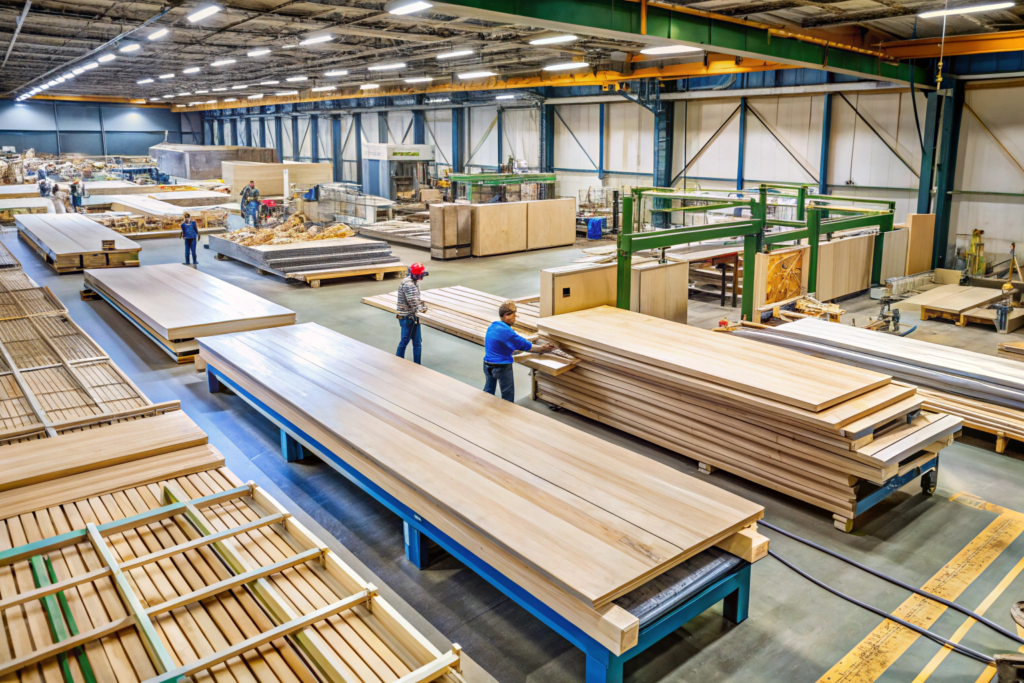
In manufacturing, plywood is cut using CNC routers, beam saws, and programmable panel saws for consistent accuracy and reduced material loss.
Beam saws clamp large stacks of plywood and cut them simultaneously with minimal deviation. CNC routers follow digital templates to produce parts with precise edges, angles, and curves, making them ideal for high-volume furniture or architectural panel production. These machines use carbide or diamond-tipped cutters and are maintained under strict quality protocols.
Dust extraction systems and automatic feed lines improve efficiency, while quality control teams inspect edge integrity, squareness, and dimensional consistency before shipping. Plywood processed this way requires no further trimming on-site, reducing labor and ensuring installation efficiency.
Conclusion
Cutting plywood easily depends on the right combination of tools, support, and preparation. Whether working on a construction site or in a manufacturing facility, efficiency and clean results come from using sharp blades, stable surfaces, and proven techniques. As plywood continues to be a primary material in structural and decorative applications, refining the cutting process ensures faster, safer, and more professional outcomes.
In factory settings, automation and equipment precision raise standards beyond manual cutting. With digital control, advanced tooling, and real-time quality checks, modern production lines provide edge-finished plywood that meets tight tolerances and demanding application needs. This reduces waste, boosts productivity, and supports downstream processes like laminating, joining, or installation.
When manufacturing integrates high-speed cutting lines with material-specific strategies—like resin-coated blade paths or anti-chip routing systems—the result is not just a cleaner edge, but a better product overall. For builders, designers, and fabricators, a smooth, dimensionally accurate plywood panel is not only easier to work with, but also improves the quality and finish of the final project.