
Plywood is everywhere, yet often overlooked. Behind its simple appearance lies a material trusted across industries.
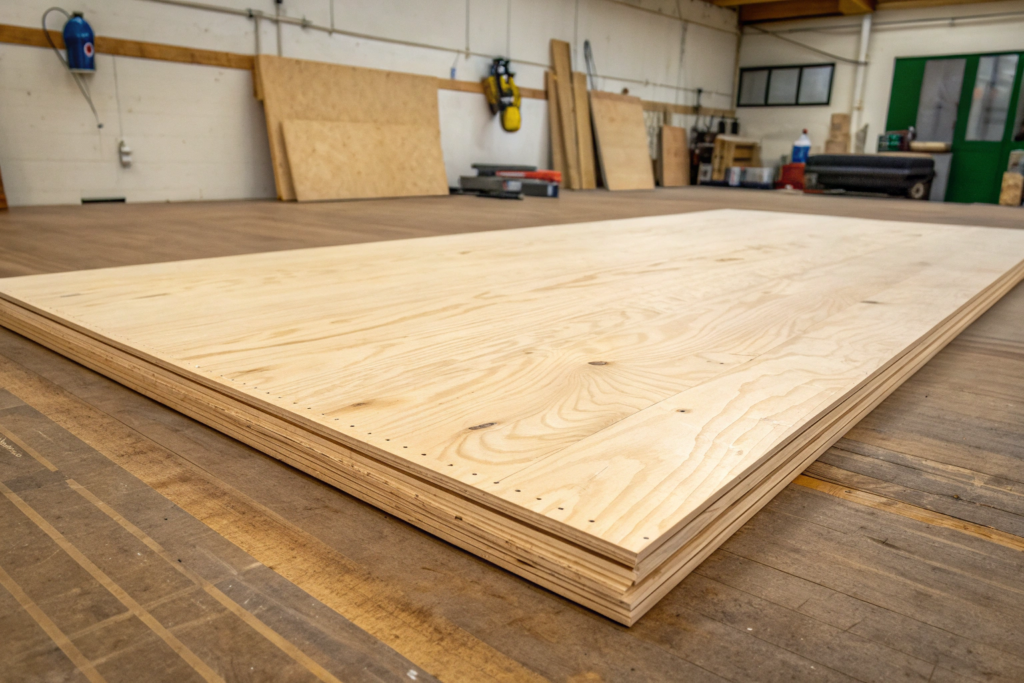
People use plywood because it’s strong, stable, versatile, and cost-effective, suitable for construction, furniture, interiors, and marine use.
From architectural structures to home cabinets, plywood delivers performance with consistency. Its layered design and bonding process offer a combination of strength and flexibility that solid wood often cannot provide. Engineers, designers, and builders rely on it daily.
What are the advantages of plywood?
Strength, versatility, and affordability rarely come in one material. Plywood brings all three.
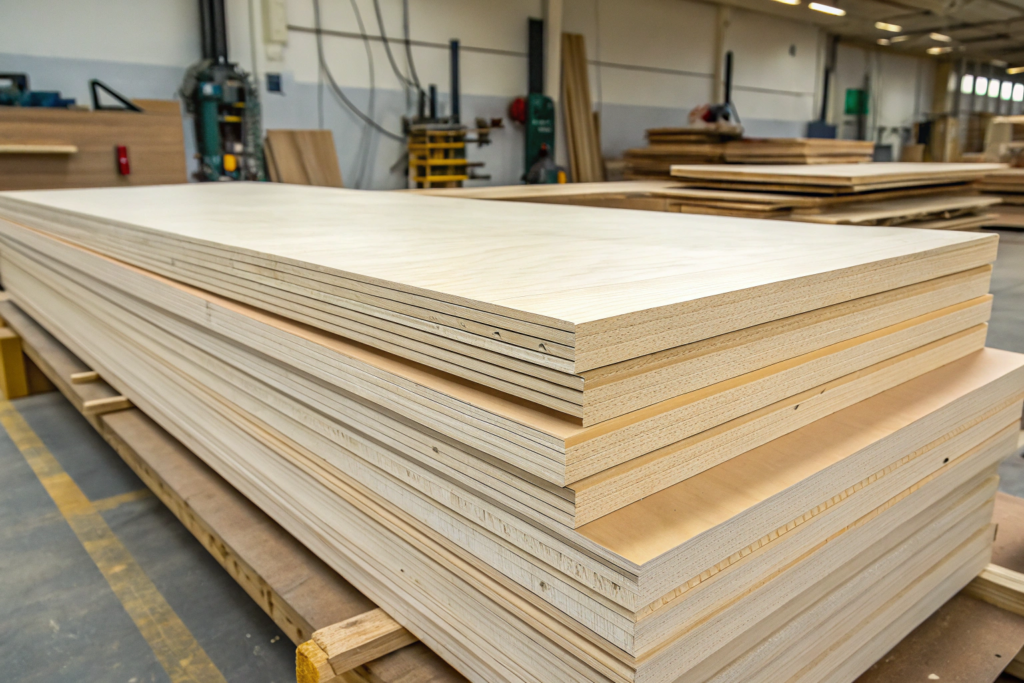
Plywood is used for its high strength-to-weight ratio, dimensional stability, easy machinability, and ability to take finishes and veneers.
Structural strength and load-bearing capacity
Cross-laminated construction resists bending and warping. Plywood panels distribute weight evenly, making them ideal for flooring, roofing, and walls. The layered build makes it resilient under both compression and tension forces.
Versatility in application
Plywood adapts to interior and exterior settings, curved surfaces, and complex assemblies. Whether for cabinetry, furniture, wall panels, or cladding systems, it provides a consistent base.
Why is plywood better than solid wood in many cases?
Solid wood may crack or warp over time. Plywood was designed to fix those problems.
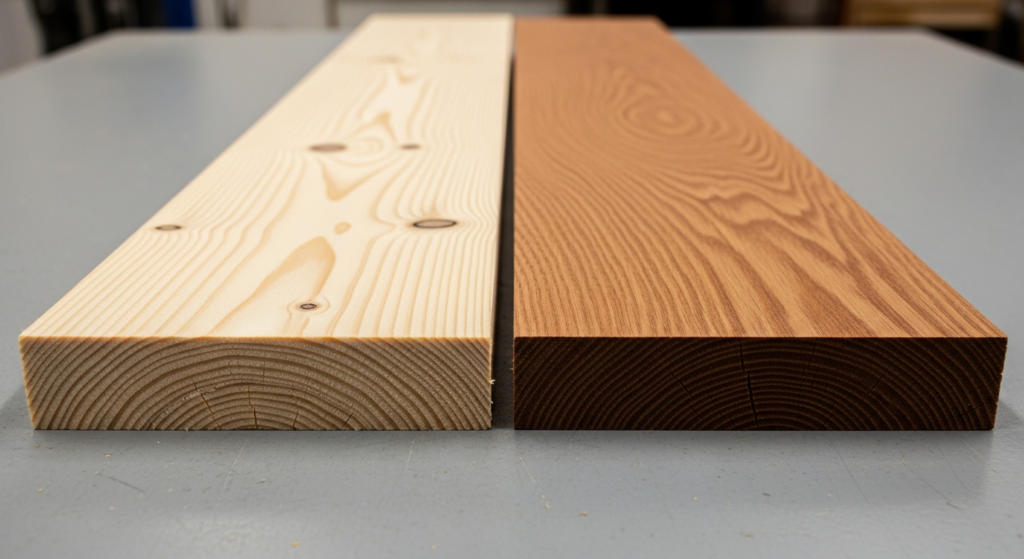
Plywood resists warping, shrinking, and splitting better than solid wood, especially in large formats or humid environments.
Dimensional stability
Alternating grain directions reduce internal stresses, making plywood less prone to movement. This makes it a safer choice for large panels or areas subject to temperature and moisture changes.
Cost and material efficiency
Solid wood has more waste in processing. Plywood production uses thinner layers and smaller logs, resulting in less timber waste and lower cost per unit strength.
How does plywood perform in different environments?
Plywood is engineered to suit different climates and conditions.
Different grades of plywood are made for indoor dry spaces, outdoor exposure, high-humidity areas, and marine conditions.
Interior vs exterior grades
Interior-grade plywood is bonded with urea-formaldehyde resins suitable for dry environments. Exterior or marine-grade plywood uses waterproof adhesives and higher density hardwood cores, performing well in wet or high-load situations.
Weather and pest resistance
With proper treatment or film coating, plywood resists termites, decay, and UV degradation. This makes it useful for cladding, pergolas, and temporary structures in variable outdoor settings.
What types of plywood are commonly used?
The word “plywood” covers a range of engineered panels.
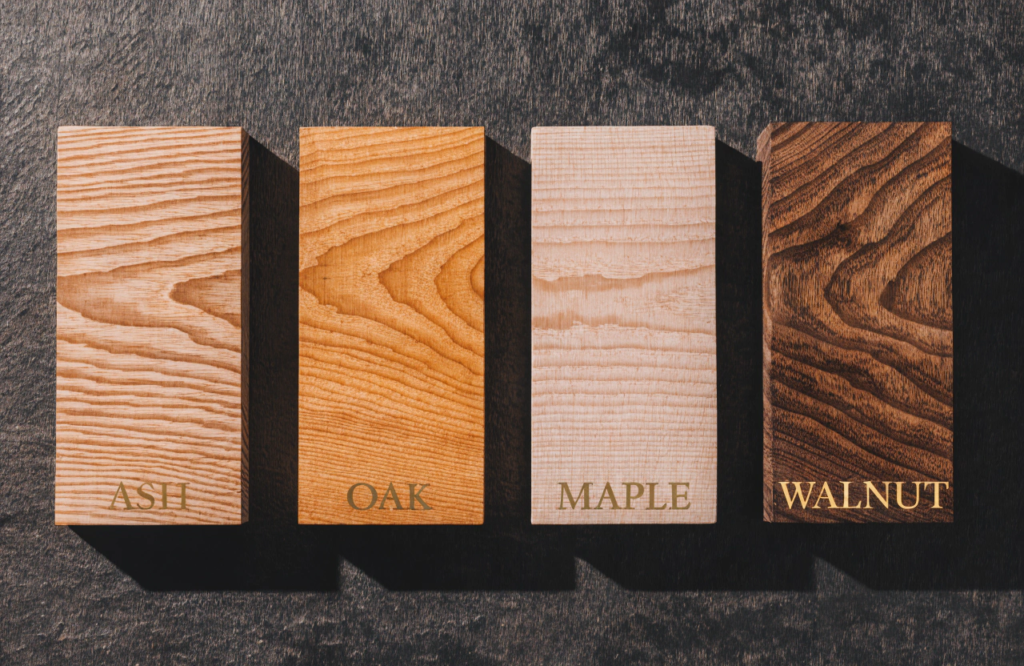
Common types include softwood plywood, hardwood plywood, marine plywood, fire-retardant plywood, and decorative veneer plywood.
Classification by core and application
- Softwood Plywood: Often used in construction and roofing.
- Hardwood Plywood: Preferred for furniture and interiors.
- Marine Plywood: Built with waterproof glue and high-density cores.
- Film-Faced Plywood: Used in concrete forming and scaffolding.
- Veneered Plywood: Offers aesthetic finishes for interiors.
Specialty panels
Some plywood is modified with flame retardants, insulation materials, or acoustic damping layers for specific technical applications.
What does plywood offer to modern manufacturing?
Consistency is key in industrial use. Plywood provides it at scale.
Plywood enables efficient mass production with stable dimensions, smooth surfaces, and compatibility with machining, lamination, and coating processes.
Compatibility with CNC and panel processing
Flat, uniform sheets cut cleanly with minimal chipping. Precision routers, edge-banding lines, and laminators run efficiently on plywood substrates.
Repeatability and uniformity
Low internal voids and consistent thickness make plywood suitable for automated production. Designers and engineers can trust that every sheet meets the same specifications.
How does factory control affect plywood performance?
Material performance starts with manufacturing control.
Controlled drying, bonding, and pressing at the factory determine plywood’s strength, durability, and application suitability.
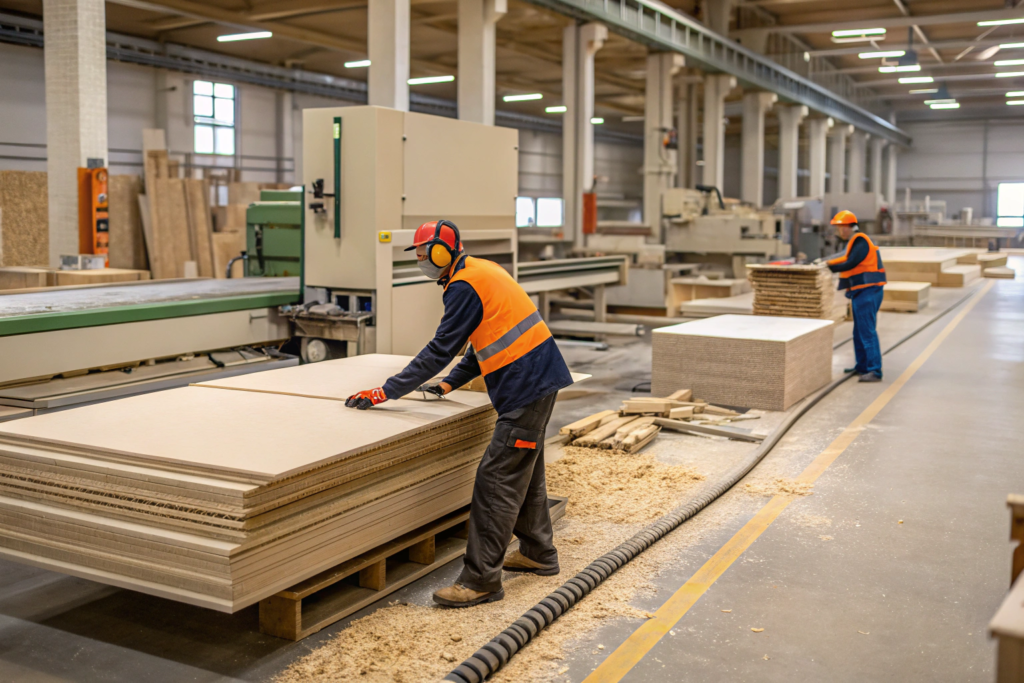
Precision equipment and process flow
Advanced production lines handle veneer drying, hot pressing, trimming, and calibration in sequence. Automated resin dosing and temperature control prevent under- or over-bonding.
Quality testing and inspection
Each production batch is tested for bending strength, water resistance, and bonding performance. Factories implementing ISO or CE quality systems produce more reliable and consistent products for global markets.
Conclusion
Plywood is chosen not just for tradition, but because it offers practical solutions to modern construction and manufacturing needs. Its strength, stability, and adaptability make it a material that outperforms others in demanding situations—from marine decks to high-rise interiors. What makes plywood valuable is not only what it is made of, but how it is made: layer by layer, under heat and pressure, with engineered precision.
As industries continue to demand better material efficiency, environmental responsibility, and consistent quality, plywood remains a benchmark product. When manufactured with strict quality control and applied correctly, plywood meets global standards for structural reliability and aesthetic performance.