
Oriented strand board (OSB) is tough, but it has its limits when exposed to moisture.
OSB is not automatically ruined if it gets wet, but prolonged exposure to water can lead to swelling, loss of strength, and eventual structural failure if not dried properly.
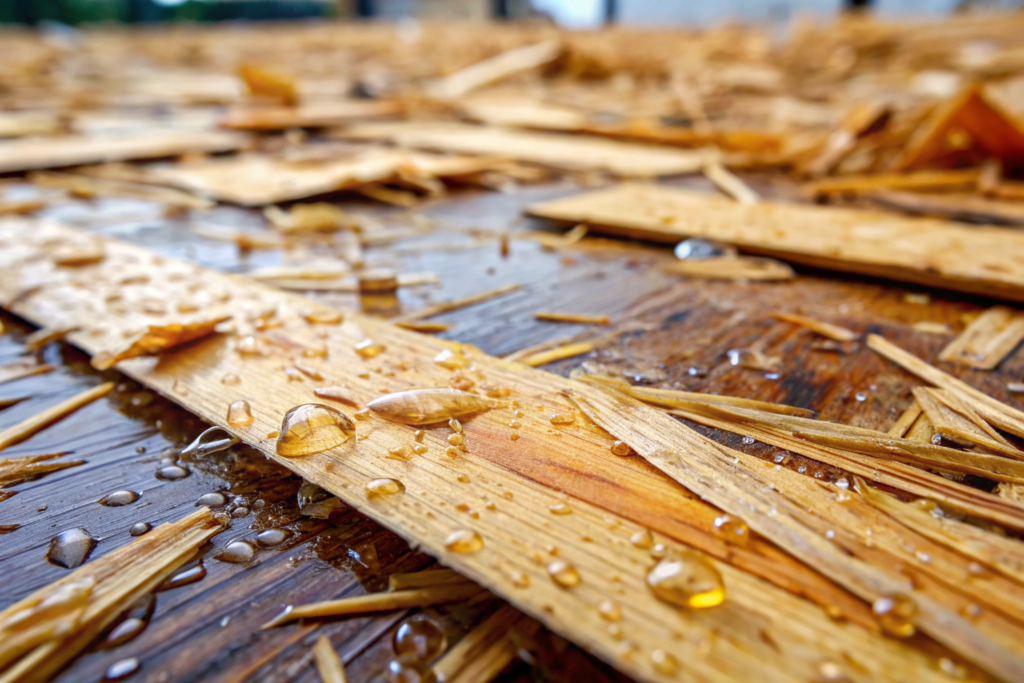
OSB can withstand temporary moisture during construction, especially when made with exterior-grade resins. But standing water, repeated soaking, or poor ventilation will degrade its performance over time. The key is how fast it dries and whether it was properly sealed or protected.
How does OSB react to moisture?
OSB holds up better than some expect, but it’s not waterproof.
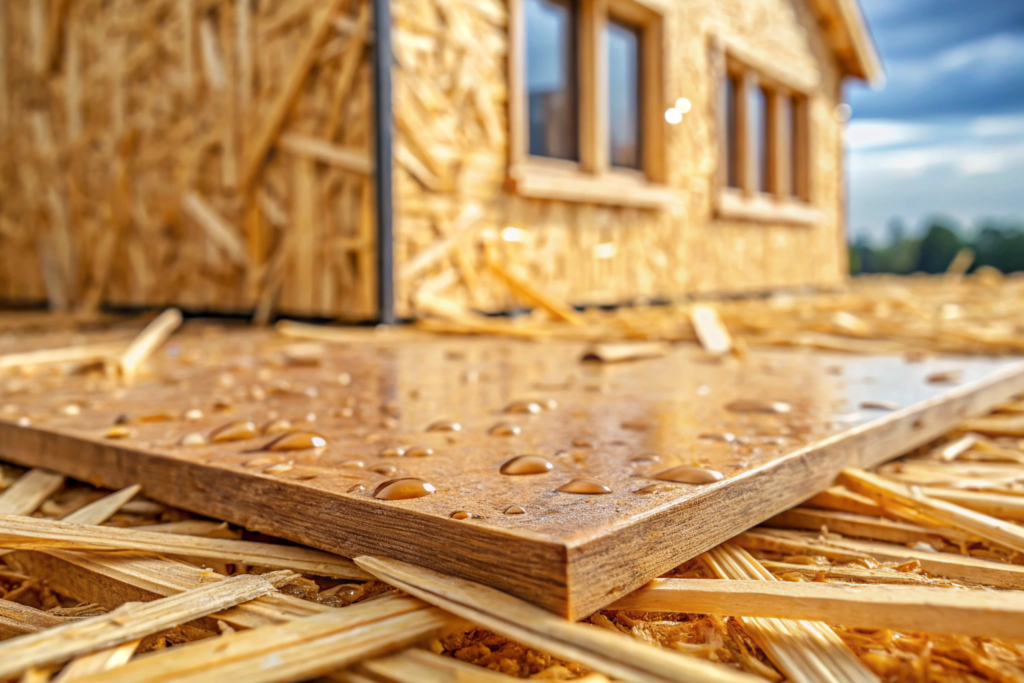
OSB absorbs water slowly, swells at the edges, and may delaminate if saturation is prolonged or repeated.
The strands in OSB are bonded with moisture-resistant resins, especially in exterior or structural panels. Still, the wood fibers themselves absorb water. Edge swelling is most common because the edges are more porous and often cut on-site. While small amounts of moisture may dry out with little effect, saturation over days or weeks breaks down the board’s cohesion.
How much water exposure is too much?
Not all water contact causes damage. Duration and protection matter most.
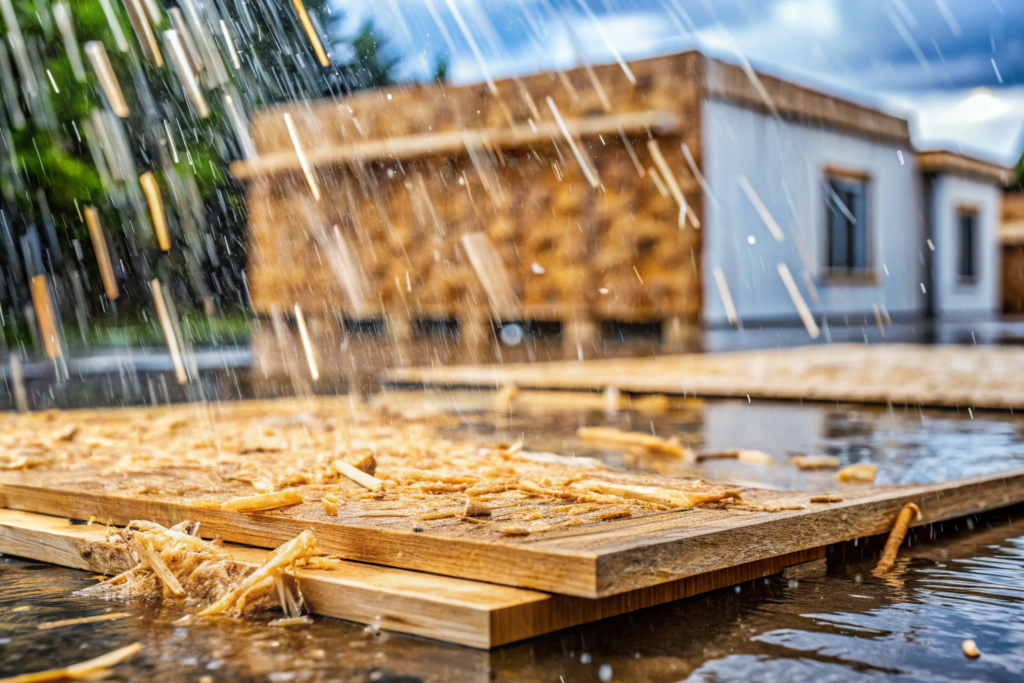
A brief rain event during installation is usually fine, but soaking, ponding, or humidity over days can compromise OSB’s integrity.
If water sits on the OSB surface or seeps between layers without ventilation, swelling can become irreversible. Most construction-grade OSB is rated for limited exposure during framing, but not for constant wetting. Repeated wet-dry cycles are especially harmful, causing expansion, contraction, and stress on the bonds between strands.
Can OSB be saved after getting wet?
It depends on how long the board stayed wet and whether swelling occurred.
Mildly wet OSB can dry and be reused, but soft spots, warping, or edge expansion are signs of permanent damage.
Allowing air circulation, heat, and dehumidifiers can dry out damp OSB. If the surface is solid, flat, and returns to original dimensions after drying, it’s likely still usable. However, cupping, flaking, or fuzzy edges mean the board has lost structural integrity. Sealing exposed cuts with waterproof coating during installation can help prevent deep moisture entry.
How is moisture-resistant OSB made?
Some OSB is built specifically to resist water damage.
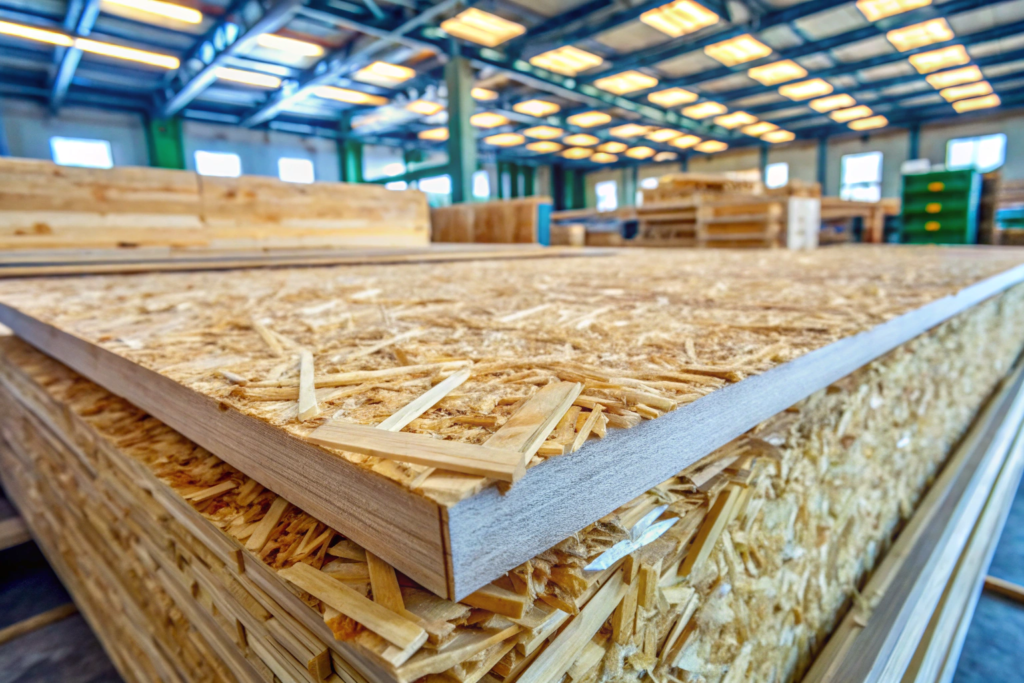
Moisture-resistant OSB uses phenolic or melamine-formaldehyde resins, wax additives, and edge sealants to slow water absorption and maintain strength.
Factory-grade treatments make a difference. Panels labeled "Exposure 1" can handle temporary wetting, while "Exterior" or "Exposure 2" grades offer greater resistance. Premium OSB products may include factory-sealed edges, top surface films, or paraffin treatments that repel moisture. These enhancements extend performance in roofs, subfloors, and wall sheathing where exposure is possible.
What can be done to protect OSB from moisture?
Moisture management starts with installation and continues through building maintenance.

Sealing edges, using house wraps, allowing ventilation, and preventing pooling help protect OSB from water damage.
During framing, panels should be covered quickly, especially in wet climates. Elevating materials off the ground and storing under tarps prevents pre-installation saturation. Applying waterproof paint, sealing tape, or flashing at joints can block water paths. Proper guttering and roof design also reduce long-term water risks.
Conclusion
OSB is not ruined just because it gets wet once, but repeated or prolonged exposure to water will break it down. Its performance depends heavily on the quality of the board, its exposure rating, and how well it is protected during and after installation. Builders working in variable climates should choose moisture-resistant grades and follow proper handling and sealing practices.
When treated with care, OSB can remain a durable, reliable material in both structural and decorative uses. But ignoring water management will lead to swelling, loss of strength, and eventual failure—even in the best boards.