
Cutting plywood with a circular saw requires not only the right blade and cutting technique, but also a stable and protective surface underneath the sheet. Without proper support, the plywood may splinter, bind the blade, or sag, leading to unsafe cuts and poor edge quality.
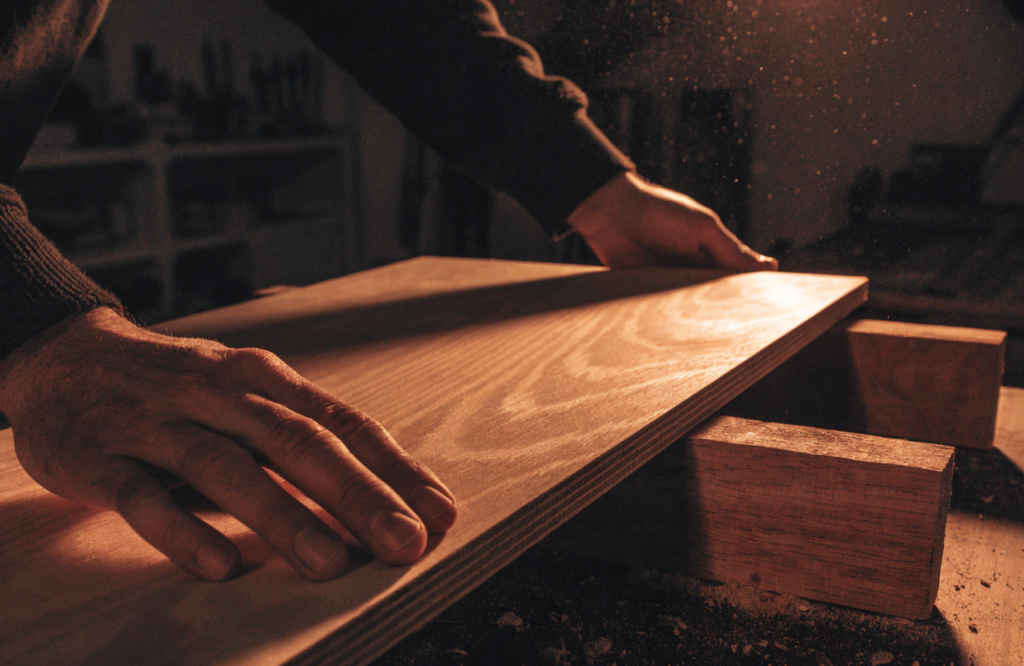
The most effective support under plywood when cutting with a circular saw is a sacrificial material like rigid foam insulation, scrap plywood, or sawhorses with crossbars to prevent tear-out and support the full sheet.
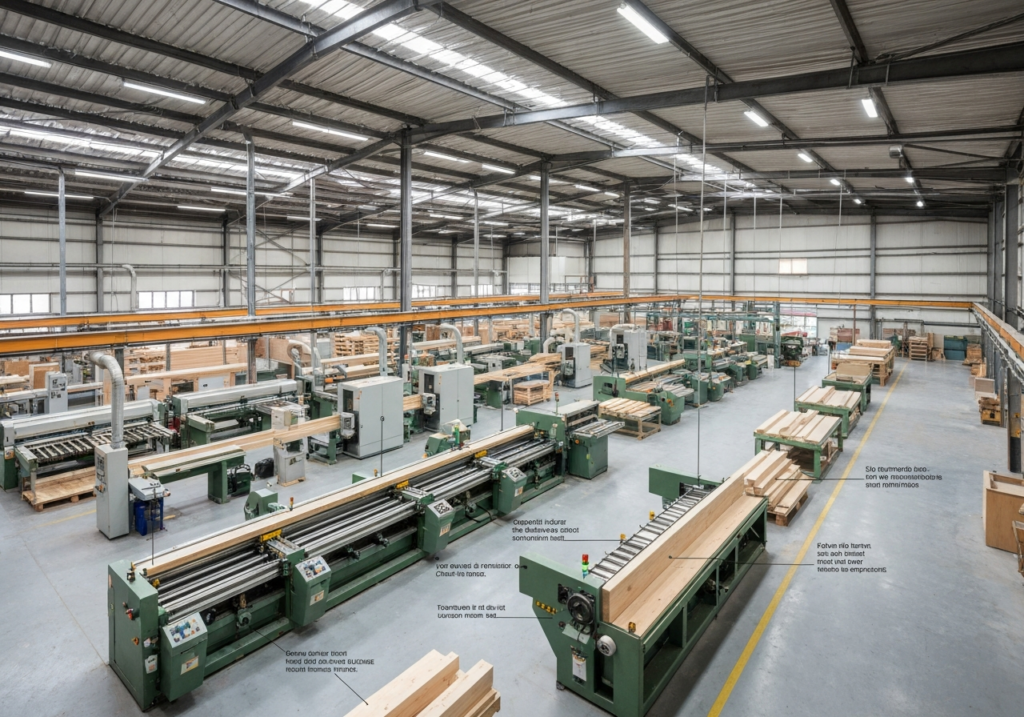
In manufacturing lines, full-sheet support tables, vacuum beds, and conveyor systems ensure stable, uniform cuts during high-speed production.
Why Is Full Support Important During Cutting?
Proper support prevents vibration, blade pinching, and uncontrolled sheet movement.
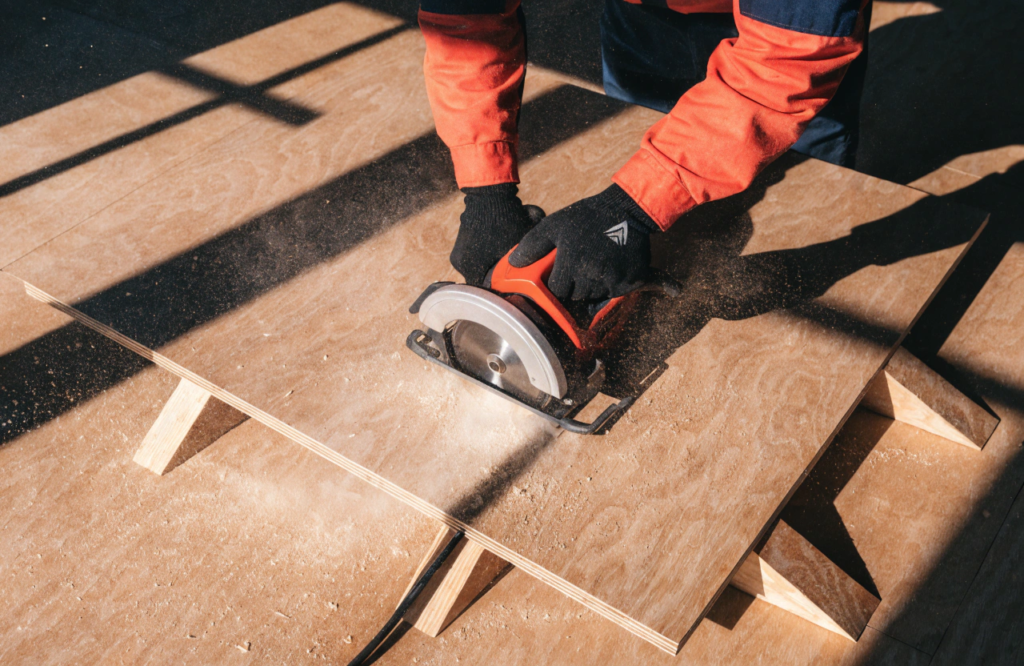
Full contact with a flat surface reduces material shifting and minimizes tear-out on the bottom face of the plywood.
| Issue Without Support | Resulting Problem |
|---|---|
| Sheet Sagging | Irregular cut line and blade binding |
| Edge Tear-Out | Damaged surface veneer |
| Unstable Setup | Increased risk of injury |
Factories use pneumatic clamps and full-length tables to keep panels steady through the cutting process.
What Types of Support Work Best Under Plywood?
Different cutting setups call for different support materials based on accuracy, portability, and convenience.
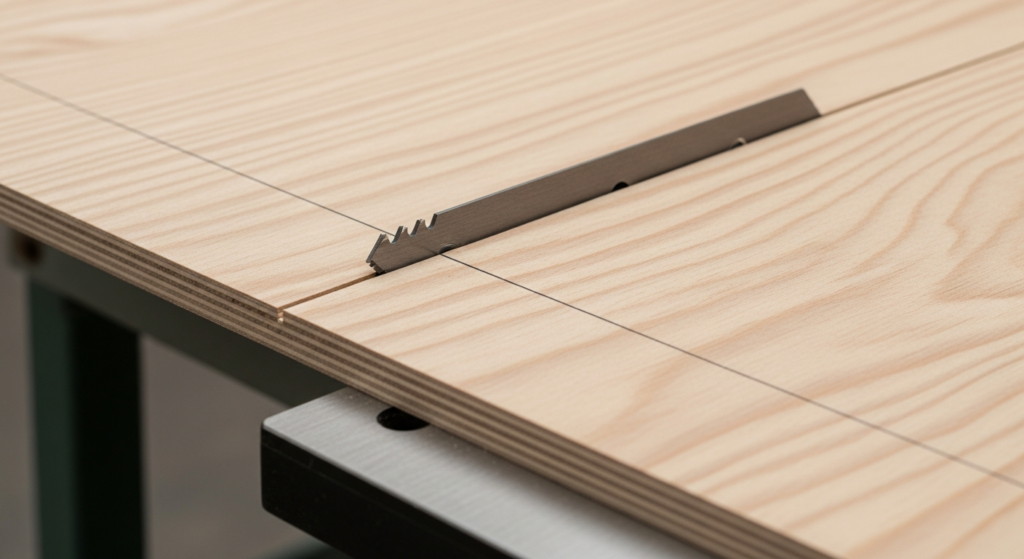
Rigid foam boards, sacrificial plywood, and modular cutting tables are common and effective solutions.
| Support Material | Key Benefit |
|---|---|
| Rigid Foam Insulation | Lightweight, allows full plunge cuts |
| Scrap Plywood Sheet | Durable and reusable base layer |
| Folding Cutting Table | Provides consistent height and support |
In production settings, heavy-duty slatted benches are often used beneath panel saws to enable clean drop-through without surface damage.
How to Set Up a Cutting Platform Safely?
A safe platform improves cut quality and reduces risk of injury or sheet damage.
The work surface should be level, stable, and capable of supporting the plywood’s entire weight.
| Setup Component | Purpose |
|---|---|
| Horizontal Alignment | Prevents uneven blade entry |
| Non-slip Surface | Reduces panel shifting during cut |
| Edge Clearance | Allows blade travel without obstructions |
In automated factories, computer-controlled feed systems maintain perfect alignment for each panel before blade engagement.
How to Protect the Blade and Work Surface?
Using sacrificial materials beneath the cut line protects both the blade and the surface below.
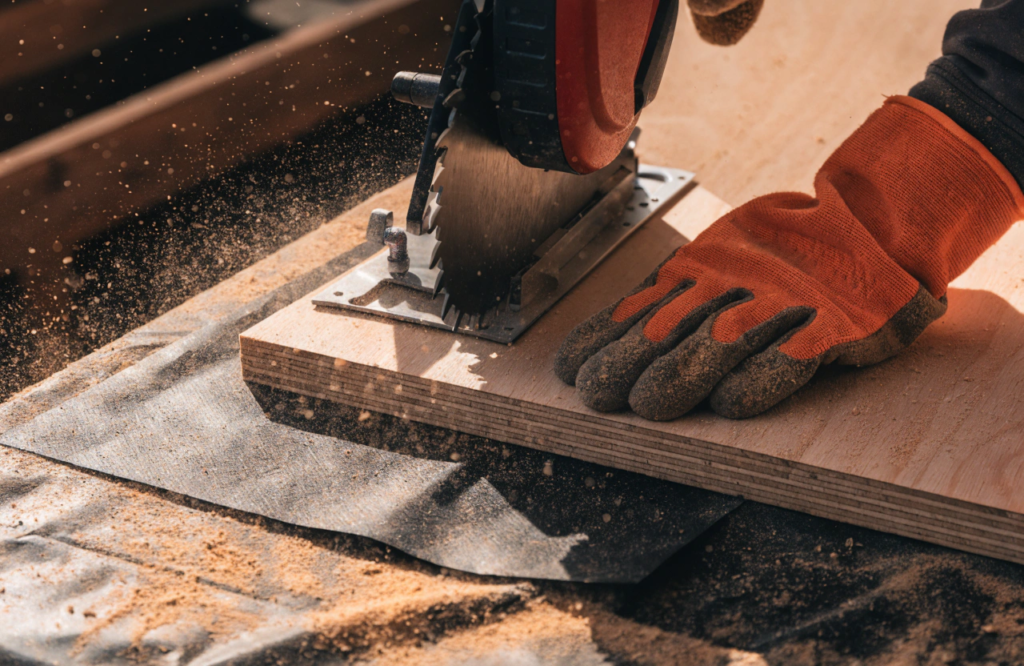
This approach allows the saw to fully pass through the plywood without damaging workbenches, floors, or underlying tools.
| Material Underlay | Protection Purpose |
|---|---|
| Foam Board | Soft material avoids blade damage |
| Secondary Plywood | Preserves primary bench surface |
| Rubber Mat or Pad | Prevents slipping and absorbs vibration |
In industrial panel lines, sacrificial blades and segmented underlayers are used to protect machines while maximizing throughput.
When Are Sawhorses with Support Boards Useful?
Sawhorses paired with support boards provide a flexible and height-appropriate cutting station.
They are effective for site work, allowing full-sheet support and safe blade clearance.
| Component | Function |
|---|---|
| 2×4 Cross Braces | Act as sacrificial cut lines |
| Center Sheet Support | Prevents sag during cutting |
| Adjustable Height Legs | Improves ergonomic safety |
Factories replicate this concept with hydraulic scissor tables and adjustable feed lines for ergonomic efficiency.
What Mistakes Should Be Avoided?
Common setup mistakes include unsupported cut paths, slippery surfaces, and using hard non-sacrificial bases.
Failure to prepare the cutting base properly can damage materials and lead to inaccurate results.
| Mistake | Consequence |
|---|---|
| No Full-Length Support | Sheet flexing and incomplete cuts |
| Hard Surface Below | Blade dulling or bounce-back |
| No Material Restraint | Unsafe movement of workpiece |
Factory setups avoid these issues with standardized clamping and sacrificial surfaces beneath every sheet.
Conclusion
Supporting plywood properly before cutting is essential for accuracy, safety, and material preservation. Using foam boards, scrap plywood, or purpose-built tables provides a reliable foundation that reduces tear-out and protects both tools and materials. In manufacturing environments, heavy-duty platforms and computer-controlled alignment systems deliver repeatable precision at scale. Whether in high-volume production or on-site construction, the right cutting base ensures plywood performs as intended during processing and installation.