
Plywood is a versatile and widely used material in construction, cabinetry, and interior projects. Despite its strength and stability, cutting plywood can be challenging without the right tools or techniques. Clean, accurate cuts are essential to maintain edge integrity and dimensional consistency.

The easiest way to cut plywood is with a circular saw paired with a guide track or straight edge to ensure accuracy and minimize tear-out.
In manufacturing environments, cutting is handled with precision saws and CNC machines for mass accuracy and edge quality.
Why Is a Circular Saw the Preferred Tool for Most Cuts?
A circular saw is efficient, portable, and capable of making both straight and angled cuts on-site.
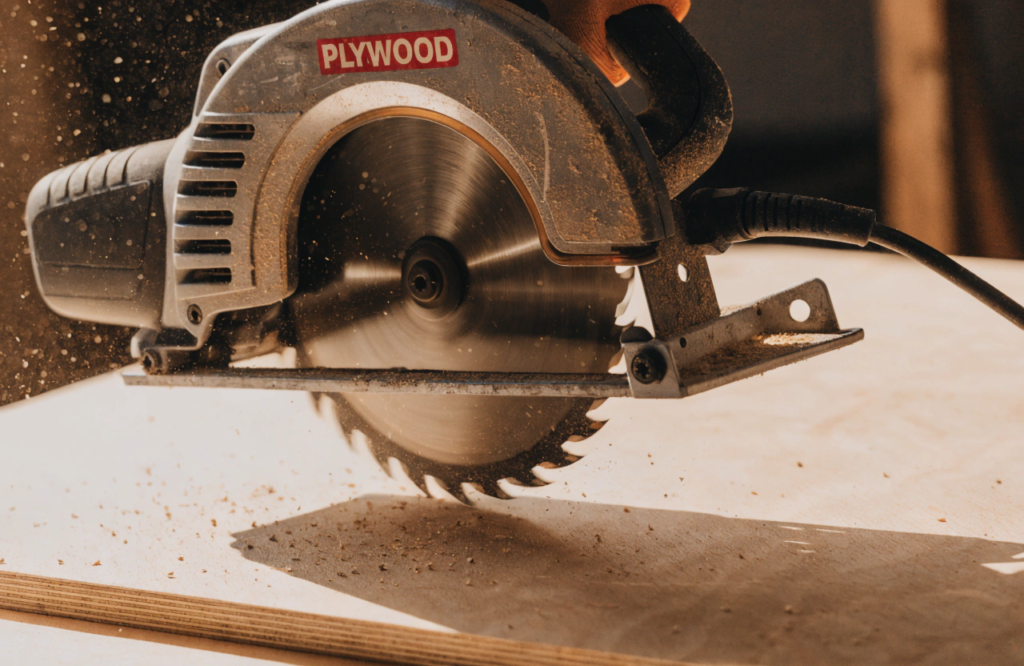
With the right blade and guide, a circular saw delivers smooth, splinter-free cuts on plywood sheets.
| Tool Feature | Cutting Benefit |
|---|---|
| Carbide-Tipped Blade | Cleaner edges, less fraying |
| Guide Rail or Fence | Keeps cut straight and consistent |
| Adjustable Depth | Minimizes tear-out from underside |
Factories often use sliding table saws or beam saws for repeatable, clean cuts on high-volume plywood production lines.
How Can Tear-Out Be Prevented During Cutting?
Tear-out occurs when the blade exits the wood and splinters the surface veneer.

Using the correct blade, taping the cut line, and cutting with the good side down minimizes edge chipping.
| Preventive Method | Effectiveness |
|---|---|
| Painter’s Tape | Supports top veneer during cut |
| Scoring Pass | Light first pass reduces fraying |
| Fine-Tooth Blade | Smooths the cut surface |
In production, CNC routers use upcut/downcut bits with vacuum hold-down to eliminate tear-out and ensure dimensional precision.
Is a Table Saw Better for Precision Work?
A table saw offers unmatched accuracy for repeated cuts, bevels, and panel sizing.
For precision cuts with tight tolerances, especially in cabinetry and panel joinery, a table saw is the most effective tool.
| Use Case | Advantage |
|---|---|
| Repeated Width Cuts | Consistent measurements across pieces |
| Bevel and Mitre Cuts | Controlled angles with adjustable fence |
| Sheet Ripping | Long, straight cuts with edge quality |
Manufacturing plants use panel saws integrated with digital readouts to maintain uniformity across bulk plywood cuts.
What Blades Are Best for Cutting Plywood?
Blade selection significantly impacts cut quality, edge finish, and tool efficiency.

Blades with high tooth count and alternate top bevel (ATB) geometry are best for plywood.
| Blade Type | Feature |
|---|---|
| 60–80 Tooth Carbide | Clean edges, reduced tear-out |
| ATB Blade Design | Crosscut and rip capability for veneer |
| Thin-Kerf Blade | Less resistance, smoother feeding |
In the factory, blade maintenance, sharpening intervals, and machine alignment are strictly monitored to ensure cutting precision.
How Can Cutting Accuracy Be Improved on-Site?
On-site plywood cutting requires setup and technique to ensure straight, repeatable results.
Using clamps, guides, and pre-marked lines improves efficiency and minimizes material waste.
| Accuracy Tool | Function |
|---|---|
| Guide Track System | Guides saw along straight path |
| Clamping Straightedge | Prevents shifting during cut |
| Marking Gauge | Ensures parallel repeat measurements |
In wood processing facilities, laser-guided cutting stations automate alignment for maximum material utilization.
Are Power Tools Always Necessary?
For small or delicate plywood cuts, hand tools can be used, though with more effort and lower precision.
A fine-tooth handsaw or Japanese pull saw is suitable for small trims, but not for large panel cutting.
| Hand Tool | Limitation |
|---|---|
| Handsaw | Inconsistent line and risk of splitting |
| Keyhole Saw | Best for cutouts, not sheet cutting |
| Utility Knife (Scoring) | Only effective for thin or veneer layers |
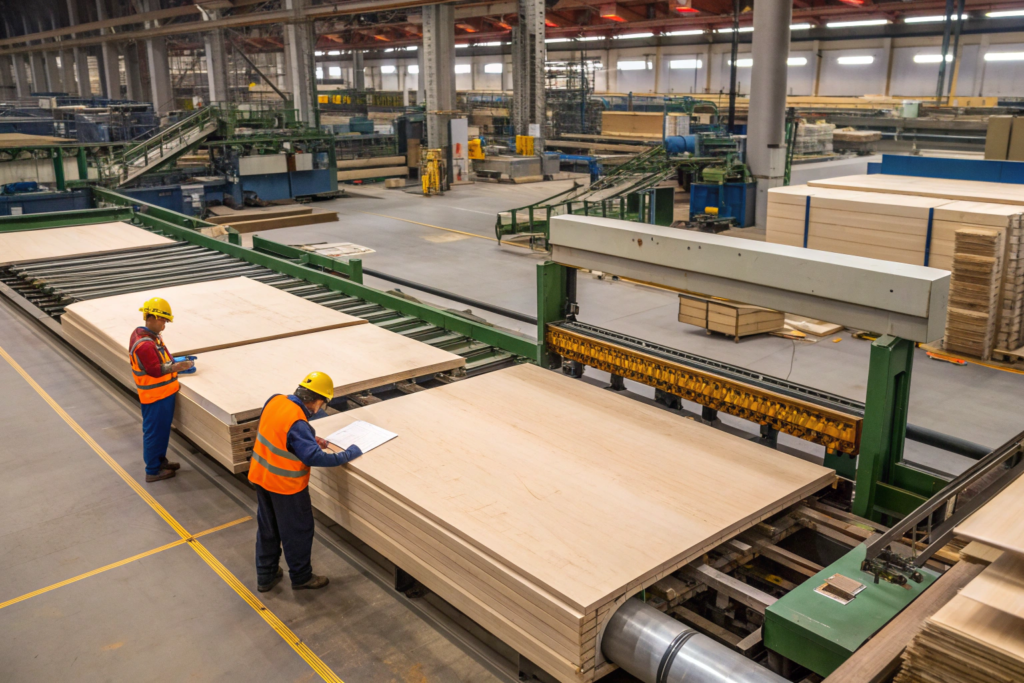
Industrial plywood fabrication avoids manual methods, relying instead on mechanized, calibrated saw lines to ensure repeatable outputs.
Conclusion
The easiest and most effective way to cut plywood is with a circular saw equipped with a fine-tooth blade and guided by a straight edge or rail. Tear-out prevention, accurate measurements, and blade selection are critical for quality results. For higher precision or volume work, table saws and factory-grade panel saws provide superior consistency. In manufacturing, cutting systems are integrated into quality workflows that optimize yield and minimize waste. Whether on-site or in production, correct cutting techniques ensure plywood retains its structural and aesthetic integrity throughout its application lifecycle.