
Appearance plays a critical role in identifying pressure treated lumber, especially during material selection, compliance inspection, or quality verification.
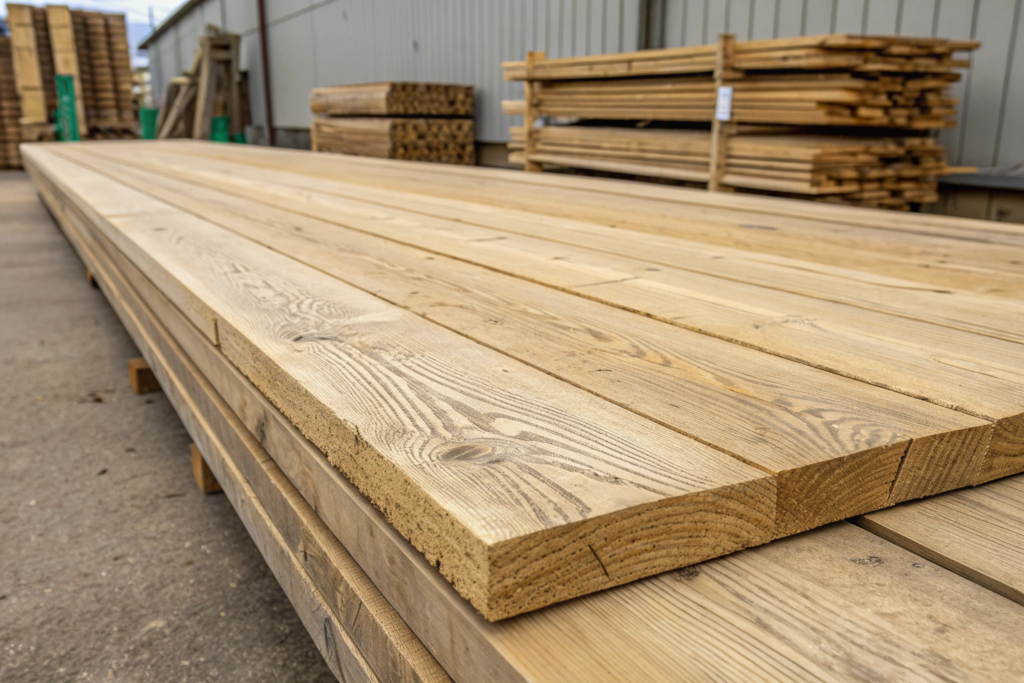
Pressure treated lumber typically has a greenish or brown tint, visible surface marks from treatment, and end tags indicating chemical type and retention rating.
Pressure treatment alters both the appearance and behavior of lumber. Visual differences are the first indication of treatment and are important for differentiating treated wood from standard kiln-dried material. In factory settings or construction sites, recognizing pressure treated wood ensures correct application in moisture-prone or ground-contact environments. Identification is especially important in markets where local regulations require certified treated lumber for structural or exterior use.
What Are the Common Colors of Pressure Treated Lumber?
Coloration is the most noticeable feature of treated wood, caused by the preservatives used during the treatment process.
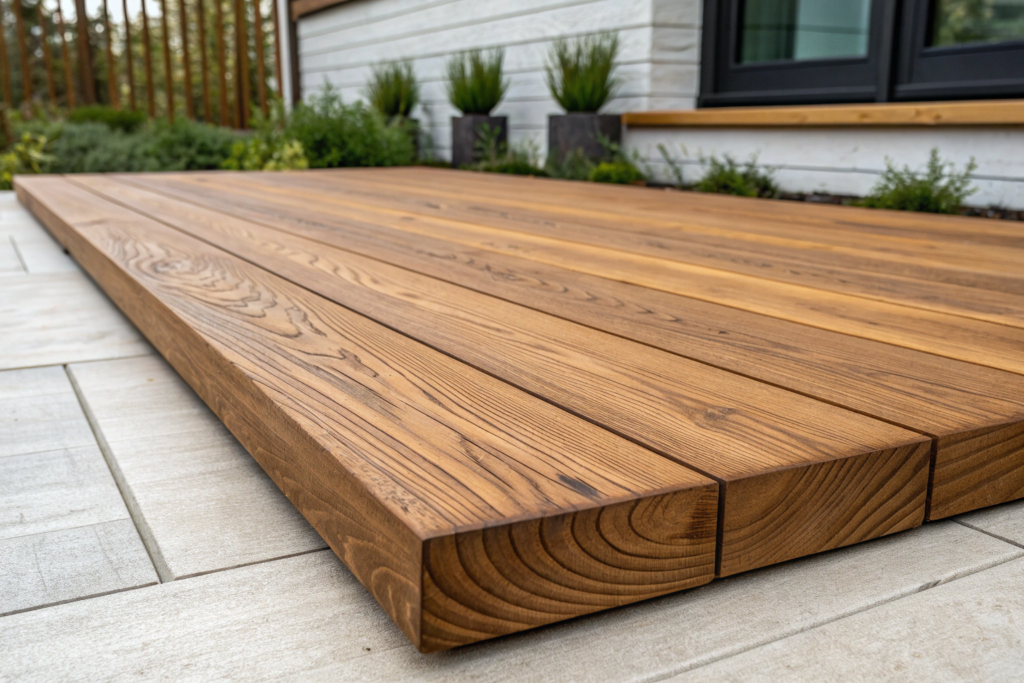
Pressure treated lumber is often light green or brown, depending on the chemical used—copper-based treatments leave a green tint, while oil-based types may result in brown or tan hues.
The green color is most associated with copper azole (CA) or alkaline copper quaternary (ACQ), two common preservatives. The green fades over time as the copper oxidizes, turning to gray or silver. Brown pressure treated lumber, often used in landscaping or decking, results from treatments such as micronized copper azole (MCA) combined with iron oxide pigments. In export-grade materials, the tint may also vary slightly due to drying conditions and wood species used.
Color Comparison of Treated Lumber
| Treatment Type | Initial Appearance | Long-Term Color Change |
|---|---|---|
| ACQ / CA (Copper) | Light green | Fades to silver/gray |
| MCA with pigment | Medium brown | Fades to light brown |
| Creosote (Heavy-duty) | Dark brown/black | Minimal color change |
Are There Surface Signs of the Pressure Treatment Process?
In addition to color, physical marks or residue may be visible.
Pressure treated wood may display small perforation holes, surface streaks, or residue from the preservative treatment process.
During treatment, the wood is placed in a sealed cylinder where vacuum and pressure cycles drive chemicals deep into the grain. This process sometimes leaves visible incising marks—regularly spaced slits or perforations—especially on species like Douglas fir that absorb treatment less readily. Treated southern yellow pine may exhibit a more uniform appearance with occasional chemical residue at the surface. After treatment, boards are typically kiln-dried or air-dried, depending on the final application.
What Tags or Stamps Are Found on Treated Lumber?
Labeled indicators ensure compliance with building codes and help match material to its intended application.
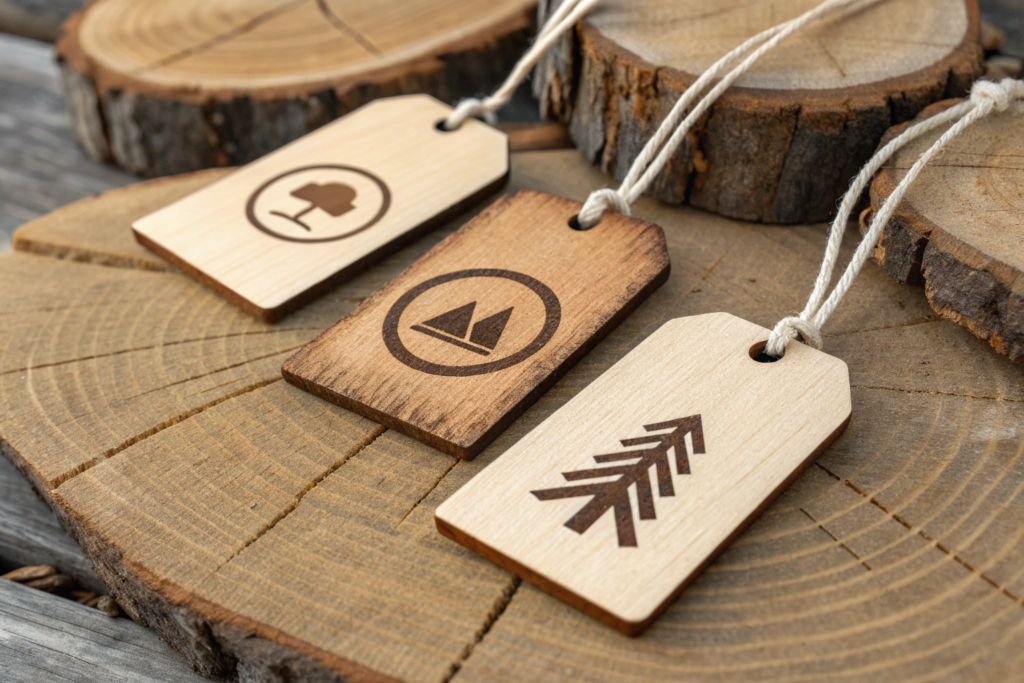
Most pressure treated lumber carries an end tag or ink stamp with key data such as wood species, chemical type, intended use (above ground or ground contact), and retention level.
For export, each board must be properly labeled according to regulatory requirements in the destination market. Tags usually include manufacturer name, third-party inspection agency, treatment classification (e.g., UC3A, UC4B), and preservative type (ACQ, CA, MCA). These indicators help architects, builders, and inspectors verify that the correct material is being used for structural or outdoor applications. Factory QC teams use this labeling system during palletization and container loading to confirm order accuracy.
Sample End Tag Data Format
| Label Field | Example Data |
|---|---|
| Use Category | UC4A (Ground Contact) |
| Preservative Type | ACQ-D |
| Retention Level | 0.40 pcf |
| Inspection Agency | SPIB, WWPI |
| Manufacturer Code | TR-0254 |
How Does Treated Lumber Feel Compared to Untreated Wood?
Treated wood differs not only in appearance but also in weight and texture.
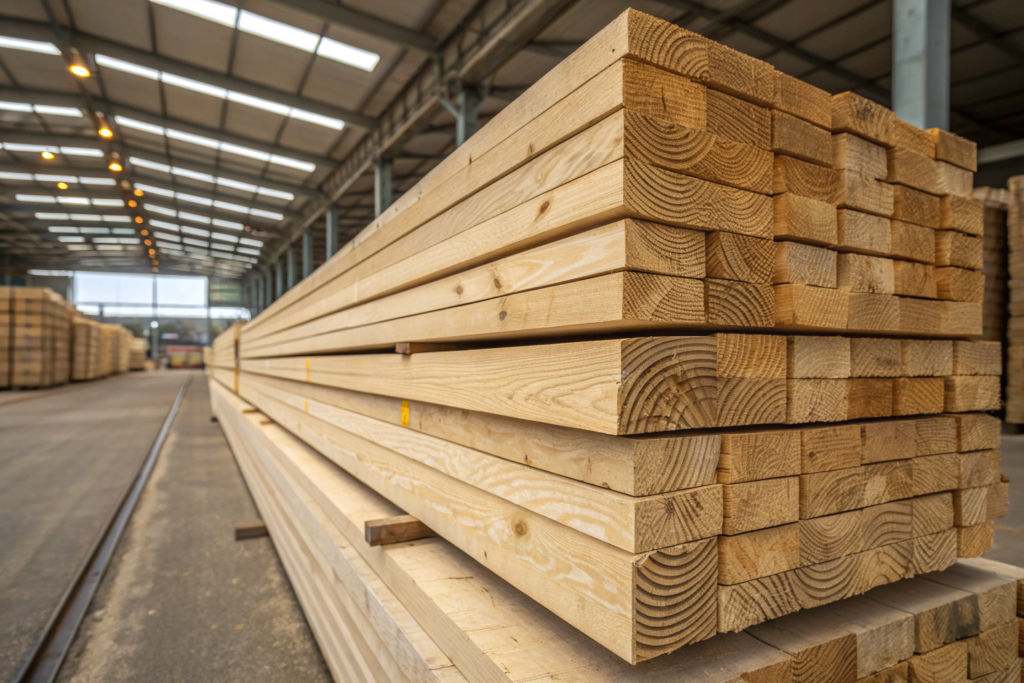
Pressure treated lumber typically feels heavier and slightly damp when fresh, with a coarse surface due to chemical saturation or incising.
Because treatment saturates the wood with liquid preservatives, freshly treated lumber can be significantly heavier than kiln-dried boards. Moisture levels may exceed 60% immediately post-treatment. This weight affects both transport planning and handling during installation. After drying, surface texture may still feel rougher than untreated equivalents due to incising marks or uneven absorption. In finishing applications, sanding or planing may be required to improve appearance.
How Does Treated Wood Behave in Factory Processing?
Machining and coating require adjustments when working with treated material.
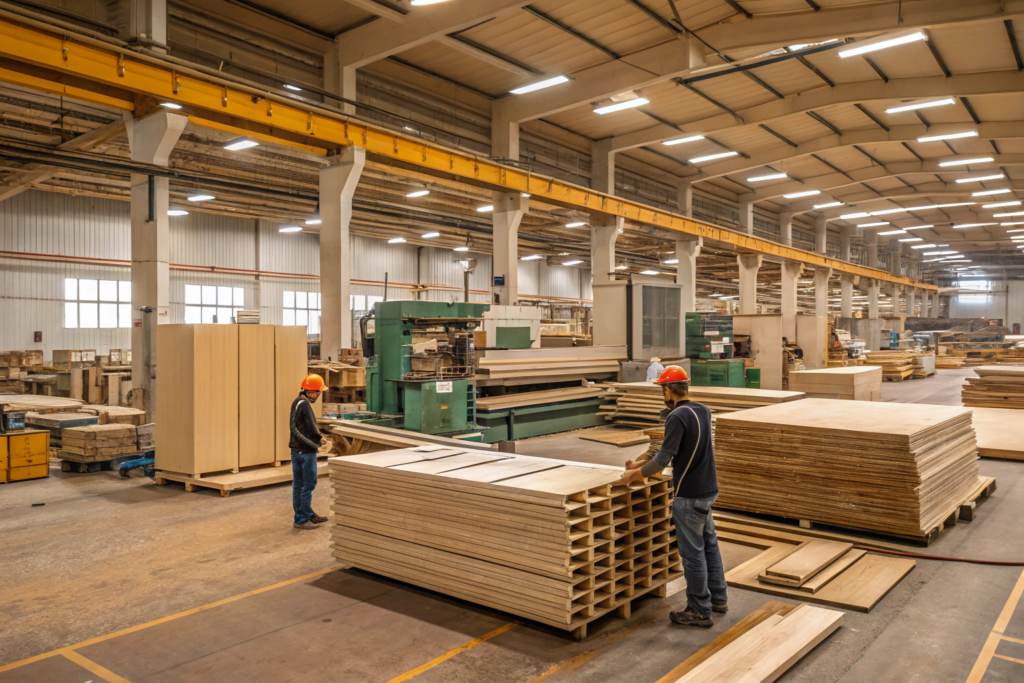
Pressure treated lumber requires specialized blades for cutting, corrosion-resistant fasteners for joining, and additional drying time before finishing or painting.
In factory lines, treated lumber introduces several variables. Its higher moisture content can dull blades faster and may require feed rate adjustments during cutting. Adhesion of coatings or stains depends heavily on surface moisture levels—finishing must be delayed until the wood reaches 19% or lower. Fastening systems must use stainless steel or hot-dip galvanized hardware to prevent corrosion caused by copper-based preservatives. For export packaging, pre-drying is often integrated into production to meet moisture standards required by overseas clients.
Conclusion
The appearance of pressure treated lumber is shaped by the chemical treatment process, creating distinct color tones, physical markings, and moisture-related behavior. These characteristics allow for quick field identification, ensure code compliance, and guide proper application. In manufacturing environments, recognizing and adapting to the properties of treated lumber is essential for efficient processing, safe assembly, and long-term durability. Treatment labels, incising patterns, and color variations provide visible evidence of wood prepared for exposure to moisture, insects, and decay. When properly handled, pressure treated lumber plays a critical role in extending product lifespan in structural, outdoor, and ground-contact applications—delivering performance that untreated lumber cannot match.