
Marine environments expose plywood to constant moisture, salt, UV radiation, and temperature changes. Without proper sealing, plywood will absorb water, delaminate, and lose strength rapidly.
To seal plywood for marine use, apply penetrating epoxy to all surfaces and edges, followed by multiple protective topcoats designed for long-term water exposure.
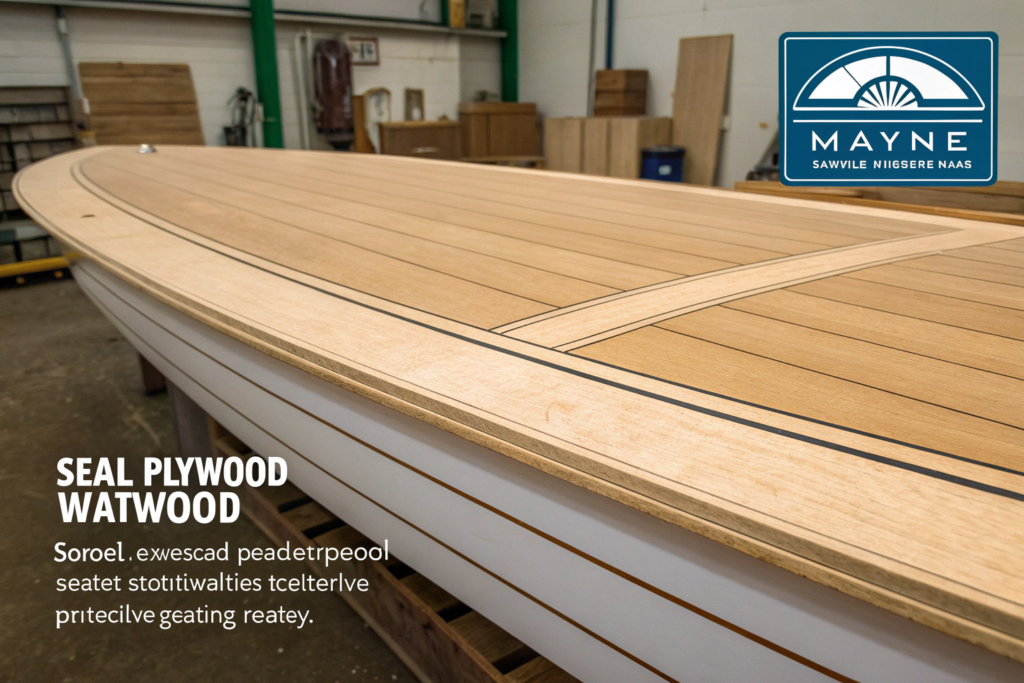
Marine sealing focuses on full encapsulation. Every surface, edge, fastener hole, and cutout must be sealed to block water entry. Partial treatment is not sufficient in boats, docks, or coastal structures where plywood is exposed continuously.
Why does plywood need special sealing for marine use?
Marine conditions are harsher than normal outdoor environments. Saltwater, humidity, and constant wet-dry cycles accelerate material failure.
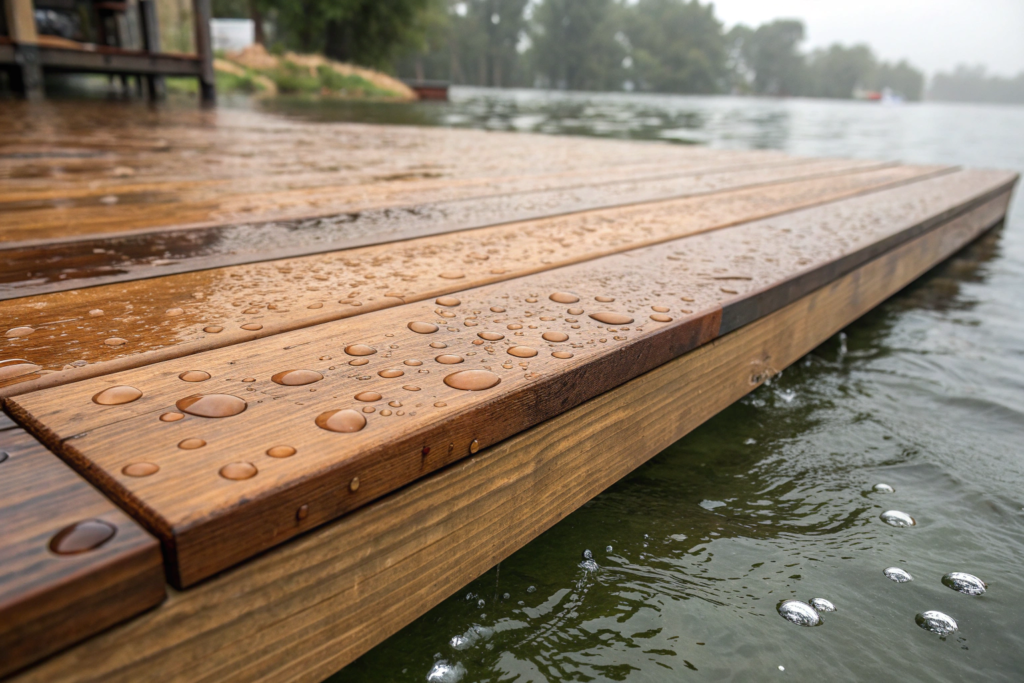
Plywood requires marine sealing because continuous moisture and salt quickly break down wood fibers and adhesive bonds.
Saltwater penetrates wood faster than freshwater and leaves salt crystals behind as it dries. These crystals expand and damage internal structure. UV radiation weakens surface veneers, while trapped moisture causes fungal growth. Even marine-grade plywood will fail if left unsealed. Sealing creates a continuous barrier that isolates the wood from water and oxygen, which are the main drivers of decay.
What materials are best for sealing plywood in marine environments?
Marine sealing materials must penetrate deeply and remain stable under constant moisture.
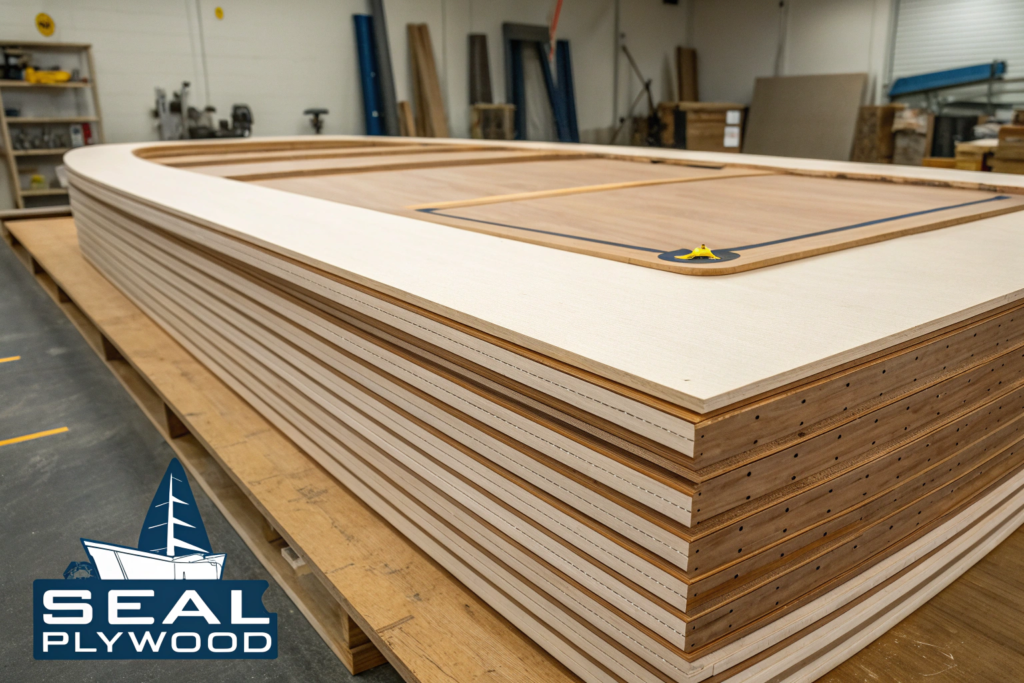
Epoxy resin systems combined with marine-grade coatings are the most effective materials for sealing plywood for marine use.
| Material | Function | Marine Application |
|---|---|---|
| Penetrating Epoxy | Deep waterproof barrier | Hulls, decks, bulkheads |
| Epoxy Filler | Seals gaps and end grain | Edges, joints, fastener holes |
| Marine Polyurethane | UV protection and flexibility | Exterior exposed surfaces |
| Marine Paint | Additional water and UV resistance | Final exterior finish |
Penetrating epoxy hardens wood fibers and blocks capillary water movement. Fillers eliminate voids that trap moisture. Topcoats protect epoxy from UV damage, which would otherwise cause chalking and degradation.
How should plywood be sealed step by step for marine use?
Marine sealing requires a strict process and sufficient curing time between layers.
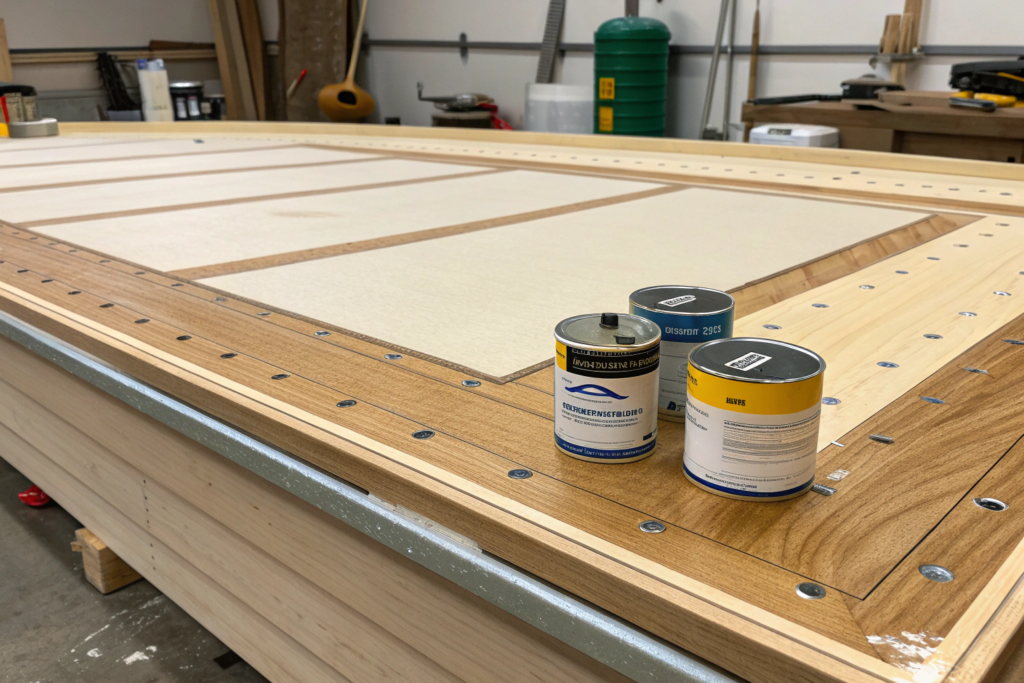
Plywood should be sanded, epoxy-sealed on all sides, edge-treated, and finished with UV-resistant marine coatings.
First, sand all surfaces and edges to remove loose fibers. Clean thoroughly to remove dust. Apply the first coat of penetrating epoxy and allow it to soak into the wood. After curing, lightly sand and apply a second coat. Edges and end grain should receive extra coats. All screw holes and cutouts must be flooded with epoxy. Once fully cured, apply marine-grade polyurethane or paint as a protective top layer. Each layer must cure fully before the next is applied.
How are plywood edges and joints protected in marine applications?
Edges and joints are the most common failure points in marine plywood structures.
Edges and joints must be over-sealed with epoxy and reinforced to prevent water intrusion under movement and vibration.
Multiple epoxy coats are applied to edges until no absorption occurs. Joints are sealed with thickened epoxy and often reinforced with fiberglass tape or cloth. This reinforcement distributes stress and prevents cracks from forming. In high-load areas, glass cloth encapsulation is standard practice. Proper edge and joint treatment dramatically increases service life in boats and marine structures.
How is marine plywood sealing handled in professional manufacturing?
Marine plywood products are sealed using controlled processes to ensure consistency and durability.

Manufacturers use vacuum impregnation, automated coating lines, and controlled curing to achieve marine-grade sealing performance.
In factory settings, plywood may be vacuum-treated to draw epoxy deep into veneer layers. Automated roller or spray systems apply uniform coatings. Controlled curing environments ensure proper chemical bonding. Quality inspections measure coating thickness, adhesion, and moisture resistance. These processes ensure that marine plywood panels meet strict performance standards before installation.
Conclusion
Sealing plywood for marine use requires complete encapsulation, not surface-level protection. Penetrating epoxy forms the foundation by blocking moisture at the fiber level. Reinforced edges, sealed joints, and UV-resistant topcoats complete the system. When applied correctly, this multi-layer approach allows plywood to withstand constant water exposure, salt, and sunlight. Proper marine sealing transforms plywood into a durable, long-lasting material suitable for boats, docks, and coastal structures.