
In outdoor construction, landscaping, marine projects, and humid environments, choosing the right wood species is essential to resist fungal decay, insect attack, and moisture degradation.
The most rot-resistant woods are species with high natural durability due to dense heartwood, natural oils, resins, or extractives that prevent microbial breakdown and structural weakening over time.
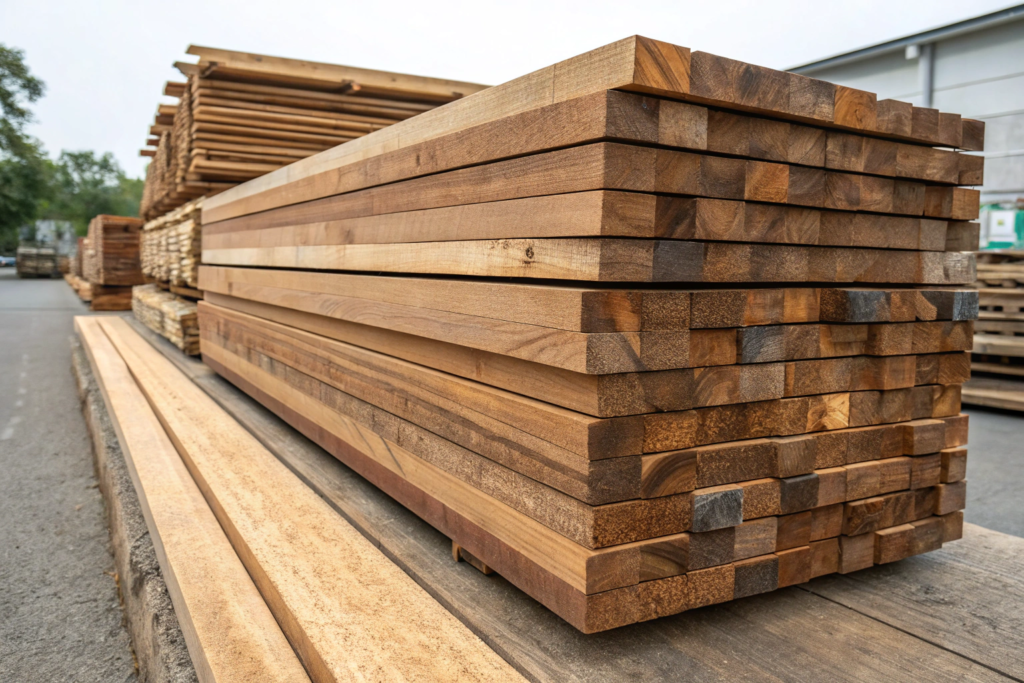
These species offer long-term performance even when exposed to ground contact, water, or uncoated outdoor conditions.
Ipe: The Industry Benchmark for Durability
Ipe (Handroanthus spp., often called Brazilian Walnut) is widely considered the most rot-resistant wood used in modern construction.
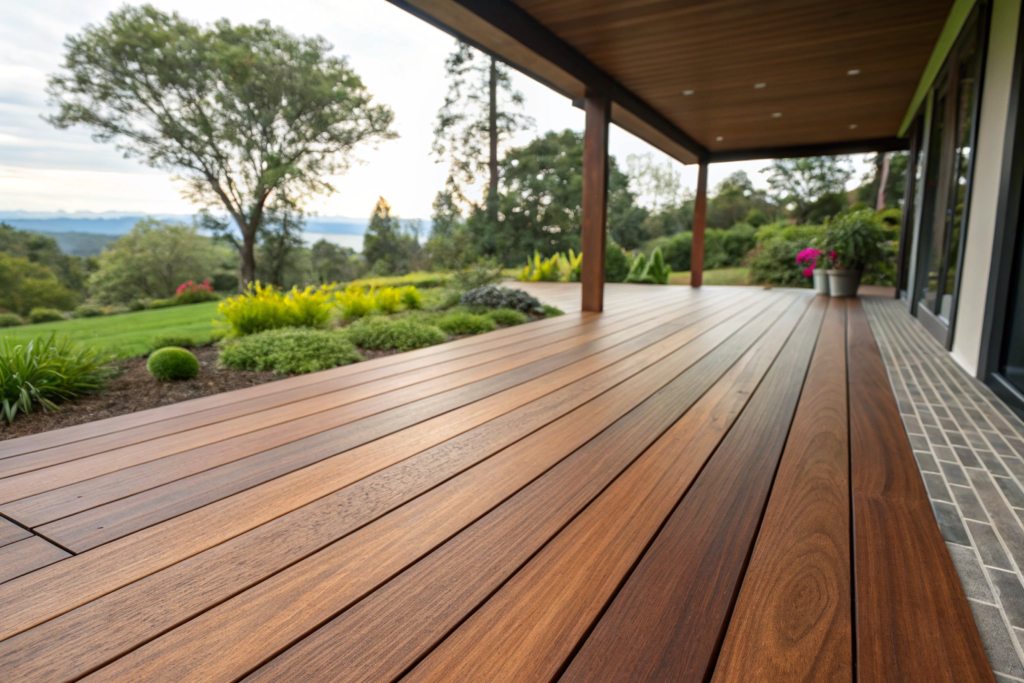
It features extreme density (over 1,000 kg/m³), tight grain, and high oil content that naturally prevents fungal growth and insect damage.
Performance Summary
| Property | Value |
|---|---|
| Density | Very high (~1.08 g/cm³) |
| Lifespan (outdoor use) | 25–40+ years untreated |
| Resistance | Rot, termites, fire, abrasion |
| Common Applications | Decking, boardwalks, bridges, cladding |
Due to its hardness, Ipe requires pre-drilling for fasteners and carbide tools for machining.
Teak: Premium Rot Resistance with Workability
Teak (Tectona grandis) is one of the most stable, weather-resistant hardwoods, prized for outdoor furniture and marine use.
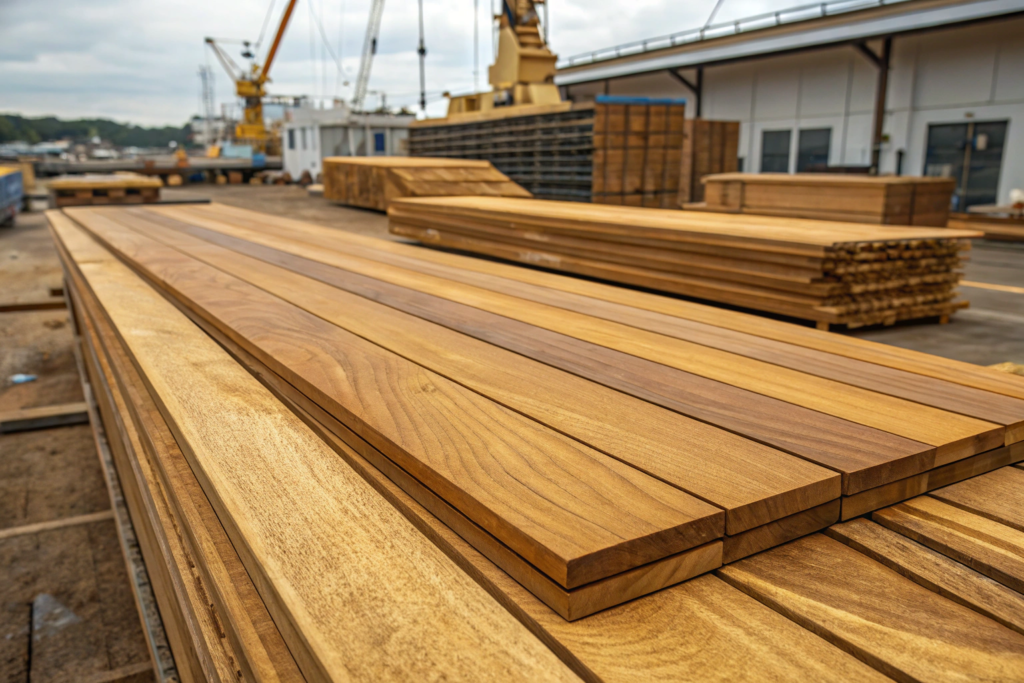
It contains natural silica and oils that inhibit fungal decay, even in tropical or saltwater conditions.
Key Advantages
| Feature | Value |
|---|---|
| Oil content | High, self-preserving |
| Dimensional stability | Excellent |
| Lifespan | 20–30 years outdoors untreated |
| Typical Uses | Yachts, furniture, architectural millwork |
While more expensive than most tropical woods, Teak is easier to work than Ipe and offers a warm, golden-brown finish.
Black Locust: The Most Durable Domestic Hardwood
Black Locust (Robinia pseudoacacia) is a naturally rot-resistant hardwood native to North America.
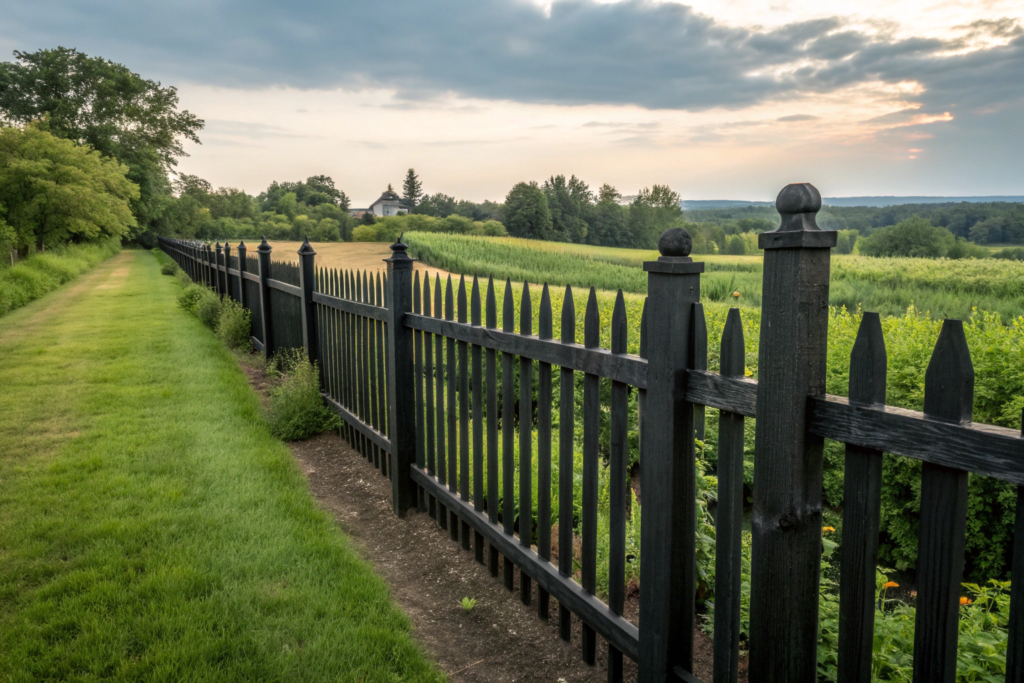
Its dense heartwood resists decay and insect attack, making it ideal for outdoor structures and ground contact applications.
Strengths and Use Cases
| Characteristic | Performance |
|---|---|
| Lifespan (in ground) | 25–40 years |
| Shrinkage | Low |
| Uses | Fence posts, decking, vineyard stakes |
| Sustainability | Locally grown, fast-growing species |
Black Locust combines ecological advantages with exceptional rot resistance, often used in sustainable projects.
Cedar and Redwood: Softwoods with Natural Protection
Western Red Cedar (Thuja plicata) and California Redwood (Sequoia sempervirens) are popular softwoods with natural decay resistance due to aromatic compounds in the heartwood.
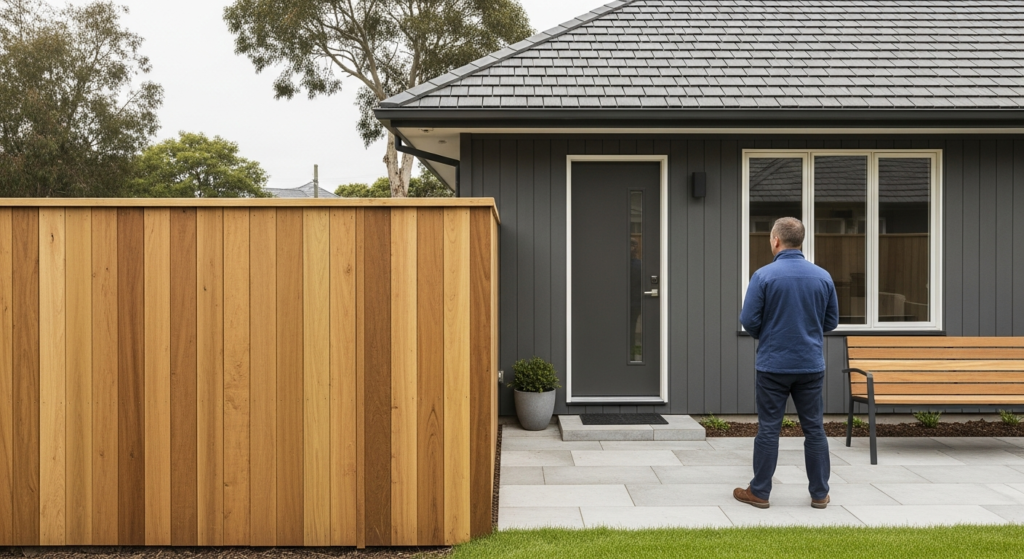
They are ideal for exterior cladding, fencing, and pergolas where moderate moisture resistance is required.
Properties at a Glance
| Wood Species | Lifespan Untreated | Application Range |
|---|---|---|
| Western Red Cedar | 15–25 years | Siding, fencing, outdoor furniture |
| Redwood (heartwood) | 20–30 years | Decking, trim, cladding |
Both species are lightweight and easy to work but benefit from surface sealers for enhanced performance.
Thermally Modified Wood: Heat-Enhanced Durability
Thermal modification is a non-chemical treatment process that improves rot resistance and dimensional stability.
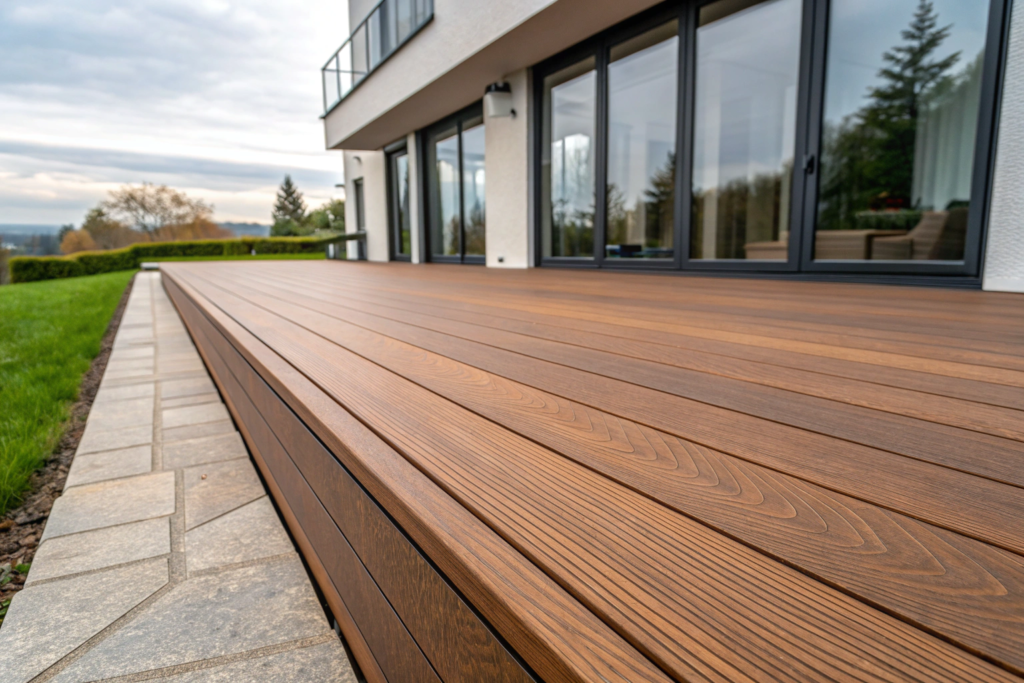
By heat-treating wood at 160–220°C in a controlled environment, the sugars and hemicelluloses that fungi feed on are degraded, making the wood more durable.
Benefits of Thermally Modified Wood
| Feature | Value |
|---|---|
| Rot resistance | Comparable to tropical hardwoods |
| Weight | Reduced by moisture loss |
| Dimensional stability | Strong improvement |
| Common species modified | Ash, Pine, Poplar, Beech |
Used for cladding, decking, and siding, modified woods provide a sustainable alternative to tropical hardwoods.
Comparison Table of Rot-Resistant Woods
| Wood Type | Durability Class | Natural Oils | Working Difficulty | Typical Outdoor Lifespan |
|---|---|---|---|---|
| Ipe | Class 1 (very high) | Yes | Hard | 25–40+ years |
| Teak | Class 1 | Yes | Moderate | 20–30 years |
| Black Locust | Class 1 | Moderate | Moderate-hard | 25–40 years |
| Cedar | Class 2–3 | Moderate | Easy | 15–25 years |
| Redwood | Class 2–3 | Moderate | Easy | 20–30 years |
| Thermo-Modified | Class 1–2 (treated) | No (enhanced) | Moderate | 15–30 years |
Conclusion
The most rot-resistant woods are species with dense heartwood and natural chemical compounds that inhibit decay. Ipe and Teak stand out globally for unmatched durability in harsh conditions, while Black Locust offers a high-performance local alternative. Western Red Cedar and Redwood are lighter, easier to work softwoods with moderate natural resistance, suitable for aesthetic outdoor use.
Emerging technologies like thermally modified wood further extend the range of rot-resistant options, offering improved performance without chemical preservatives. Selecting the right species depends on cost, local availability, workability, and intended use—from high-traffic decks and marine projects to fences and exterior wall systems.
Choosing rot-resistant wood not only increases service life and reduces maintenance but also improves sustainability and performance in outdoor environments. Proper sealing, ventilation, and installation detailing further enhance the lifespan of these naturally durable materials.