
Subfloors serve as the foundational layer beneath finished flooring systems and must withstand heavy loads, foot traffic, and environmental movement. Plywood is one of the most commonly used materials for this layer due to its strength, dimensional stability, and availability in multiple grades and thicknesses.
The most suitable plywood thickness for subfloors depends on joist spacing, flooring type, and load-bearing requirements. In most residential applications, 3/4 inch (18–19 mm) plywood is considered the standard for optimal performance.
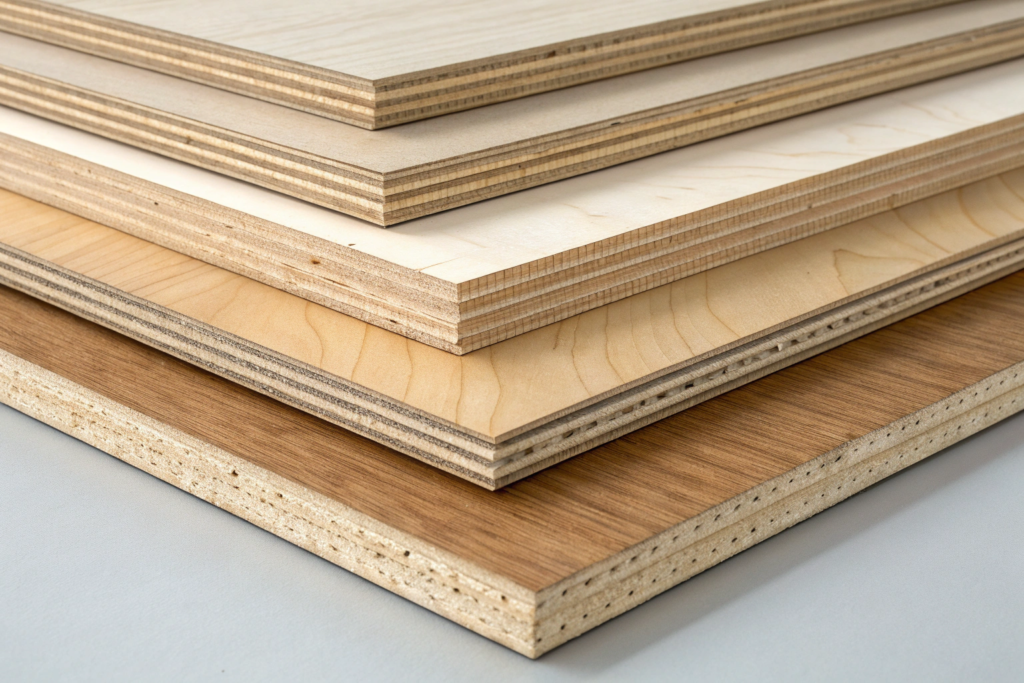
Proper thickness ensures minimal deflection, better fastener retention, and resistance to squeaking or joint separation over time.
Standard Thickness Recommendations
Industry guidelines and international building codes provide benchmarks for selecting plywood thickness based on spacing between floor joists and the expected load type.
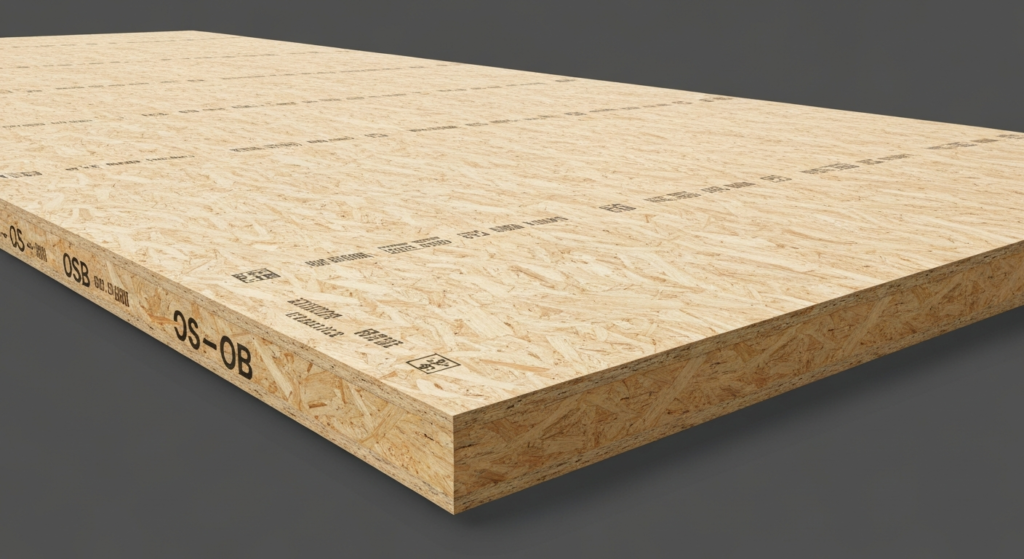
For general construction, the minimum acceptable plywood thickness is 5/8 inch (15–16 mm), but 3/4 inch (18 mm) is widely preferred for stability and durability.
Common Applications by Thickness
| Plywood Thickness | Typical Application |
|---|---|
| 5/8 inch (15 mm) | Light residential use with joist spacing ≤ 400 mm |
| 3/4 inch (18 mm) | Standard homes and commercial use |
| 1 inch (25 mm) | High-load zones or wide joist spacing (≥600 mm) |
| Multi-layer (e.g., 1/2 + 5/8) | Tile finishes or subfloor reinforcement |
Thicker panels reduce flex, especially when joist spans are larger or finish materials like tile require stiffer bases.
Impact of Joist Spacing
Joist spacing directly influences how thick the subfloor needs to be to avoid deflection under foot load.
Closer joists allow thinner plywood. Wider joist spacing (e.g., 24 inches) demands thicker sheets or layered systems to support consistent load distribution.
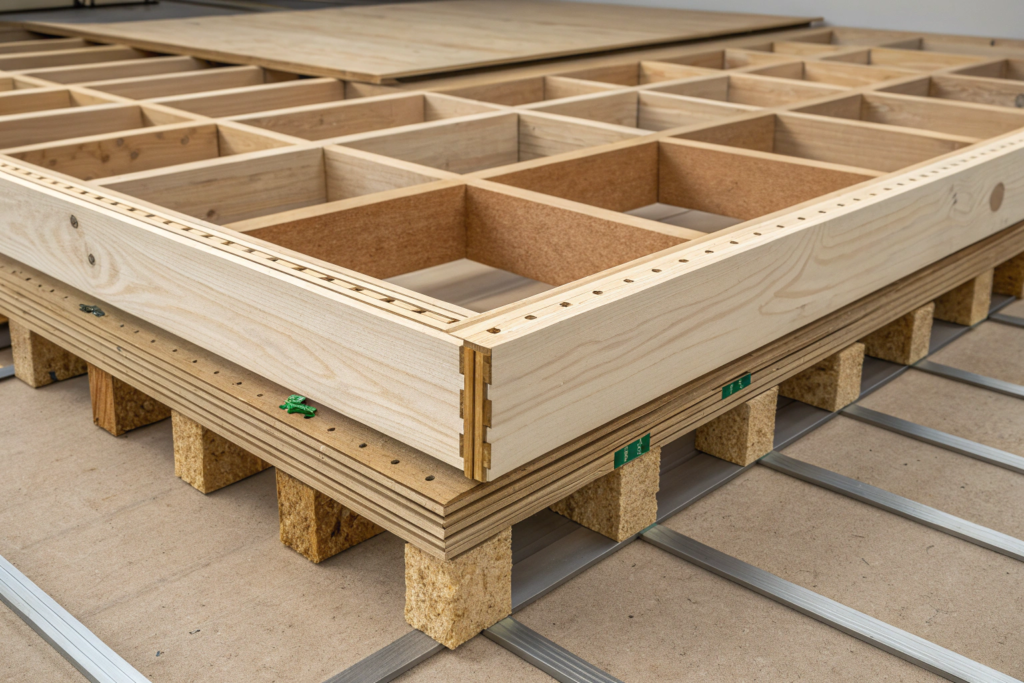
Guidelines by Joist Interval
| Joist Spacing | Recommended Plywood Thickness |
|---|---|
| 12″ (300 mm) | 5/8″ or 3/4″ |
| 16″ (400 mm) | 3/4″ minimum |
| 19.2″ (480 mm) | 3/4″ with added underlayment |
| 24″ (600 mm) | 7/8″ to 1″ preferred |
If finish materials include ceramic tile or stone, underlayment layers or subfloor stiffeners should be used regardless of joist spacing.
Factory Grade and Calibration
Not all plywood is suitable for subflooring. The panel’s grade, veneer uniformity, and factory calibration affect installation and long-term performance.
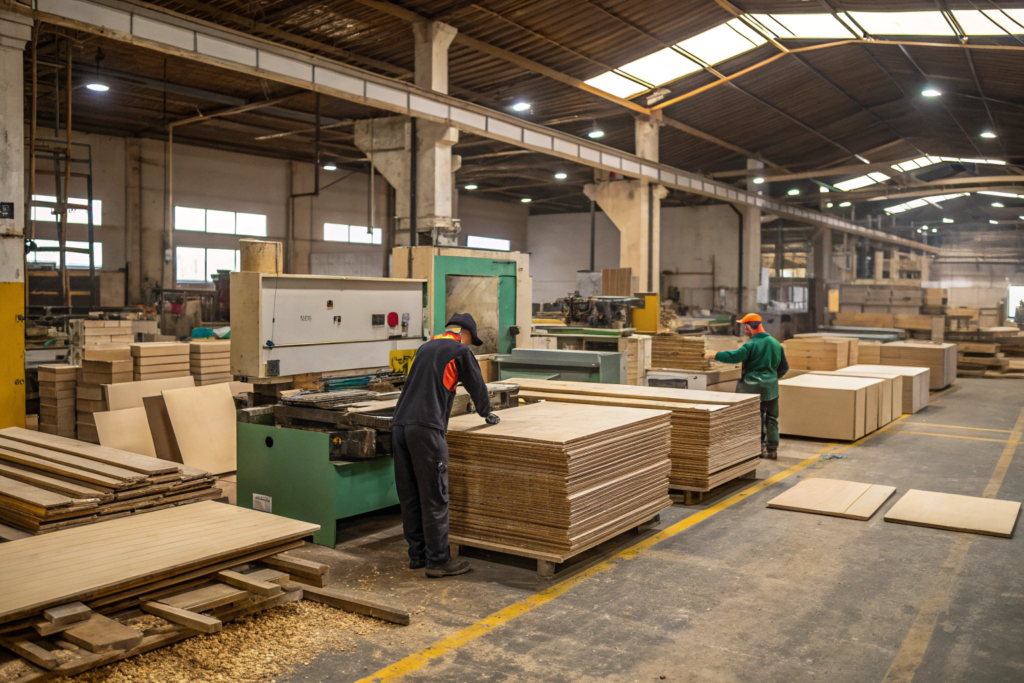
Subfloor-rated plywood should be made with waterproof glue (Exterior/BWP grade), have minimal voids in the core, and come with precise thickness tolerance for even panel joints.
Preferred Manufacturing Features
| Feature | Performance Benefit |
|---|---|
| Calibrated thickness | Uniform fit between panels |
| Phenolic adhesive | Moisture resistance in humid environments |
| Sanded surface | Ready for glue, underlayment, or finishing |
| T&G edge profiles | Reduces joint movement and squeaking |
Subfloor panels often come with tongue-and-groove edges to lock panels tightly and reduce seam movement under stress.
Considerations for Tile and Stone Floors
Hard surface finishes like tile or stone require rigid, stable substrates to avoid cracking.
For these applications, it’s recommended to use a thicker plywood subfloor or a two-layer system to enhance load distribution and minimize deflection.
Dual-Layer System
| Layer | Thickness Recommendation |
|---|---|
| Base subfloor | 3/4″ minimum |
| Underlayment | 1/2″ or cement board layer |
| Total System | 1 1/4″ or more (≥32 mm total) |
Proper fastening and adhesive application between layers ensure the system behaves monolithically under point loads.
Moisture and Edge Sealing
Plywood subfloors near bathrooms, kitchens, or ground-level slabs may be exposed to ambient or incidental moisture.
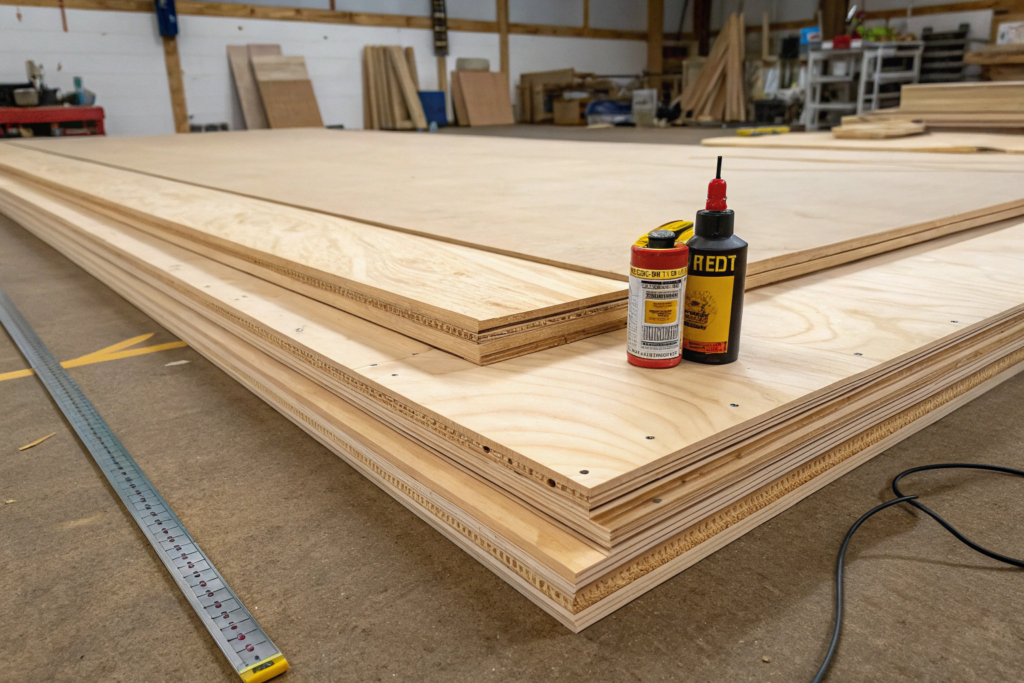
Edge sealing and the use of moisture-resistant adhesives help maintain panel integrity over time. In some cases, subfloor adhesives are applied during installation to bond the panels to joists and reduce squeaks.
Key Protection Measures
| Element | Role |
|---|---|
| Edge sealant | Prevents moisture entry from gaps |
| Panel adhesive | Binds plywood to framing, reduces noise |
| Vapor barrier below | Protects from rising damp |
| Finish compatibility | Prevents delamination under tile/glue |
Moisture-resistant panel design extends lifespan and reduces maintenance costs.
Conclusion
The ideal plywood thickness for subfloors balances structural strength, installation flexibility, and compatibility with finish flooring. In most cases, 3/4 inch (18–19 mm) plywood is the industry standard for residential and light commercial use due to its ability to span joists efficiently and resist deflection. Heavier or more sensitive applications—such as tile installations or wide joist spans—may require thicker panels or multi-layer subfloor systems.
Factory-produced subfloor panels with calibrated thickness, waterproof adhesives, and reduced core voids offer enhanced performance over generic plywood. Moisture management, edge sealing, and proper installation techniques further improve durability and reduce future service needs.
Specifying the right subfloor thickness ensures structural soundness, quiet floor performance, and compatibility with all types of modern flooring systems. Selecting certified subfloor-grade plywood supports long-term reliability and better user experience in both residential and commercial projects.