
Plywood is widely used in furniture, construction, formwork, and exterior installations. In many applications, plywood must withstand moisture to avoid swelling, delamination, rot, or bond failure.
Waterproofing plywood correctly involves choosing the right panel grade, applying surface coatings or treatments, sealing edges, and managing moisture in installation details. These combined methods dramatically extend service life in wet or exterior environments.
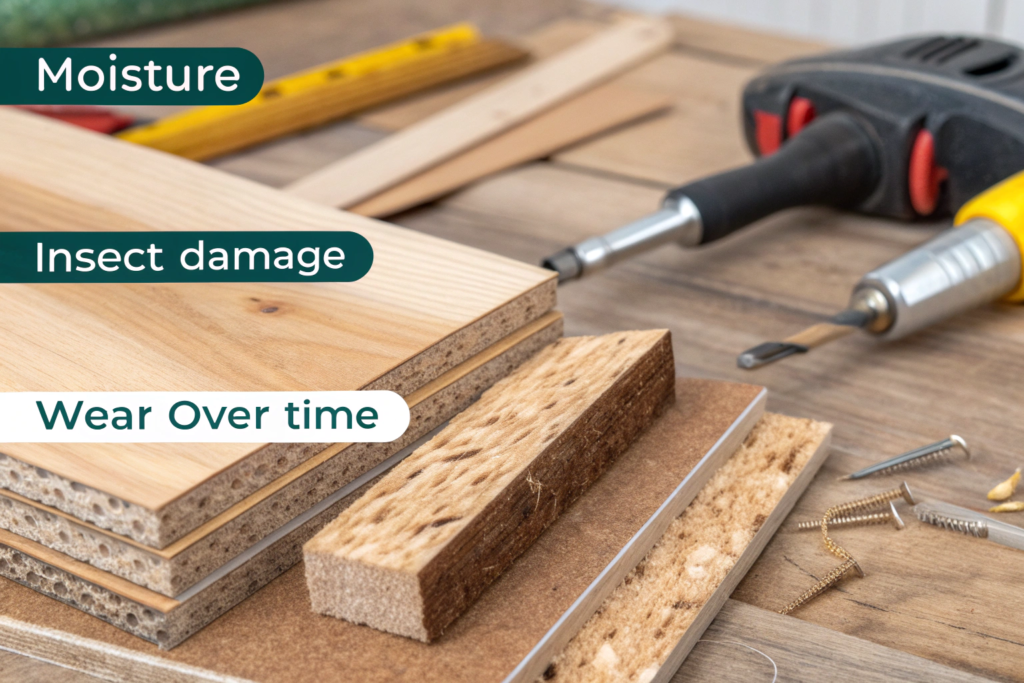
Waterproofing enhances the panel’s resistance to water ingress and protects internal glue lines. The best approach depends on exposure conditions and performance expectations.
Select the Appropriate Plywood Grade
The first and most effective step toward waterproof performance is selecting a plywood panel suited for moisture exposure.
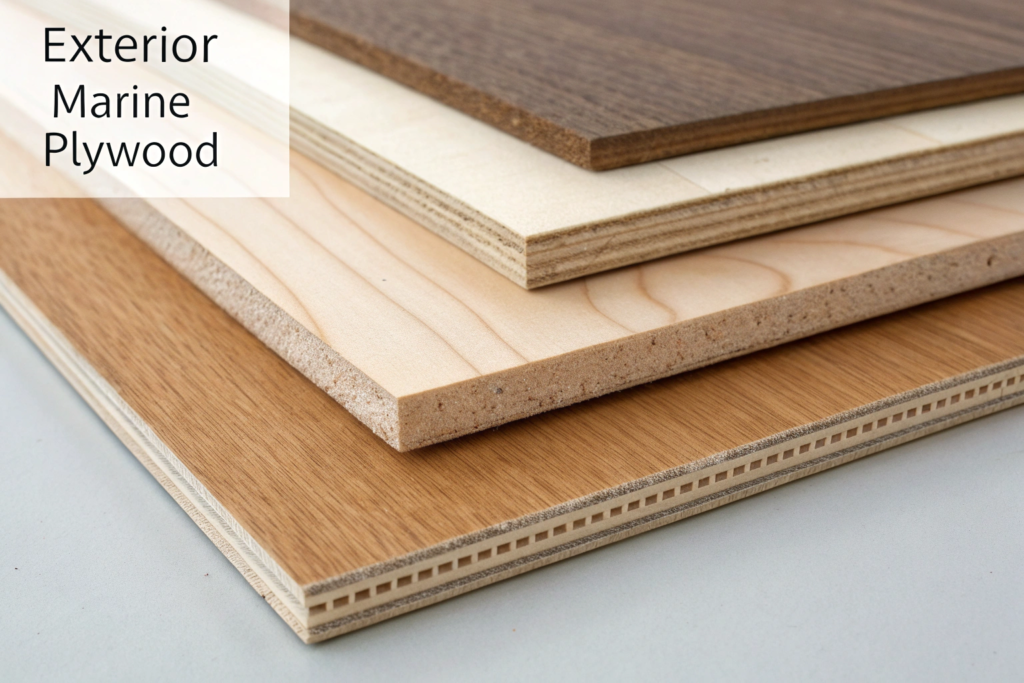
Exterior-grade (BWP) and marine plywood are bonded with waterproof phenolic resin. Marine grade uses high‑quality veneers and strict core criteria to resist water penetration and bond failure under cyclic wet/dry conditions.
Plywood Grades for Moisture Resistance
| Panel Type | Adhesive Type | Moisture Resistance | Typical Use |
|---|---|---|---|
| Interior (MR) | Urea‑formaldehyde | Low | Dry indoor environments |
| Exterior / BWR / BWP | Phenol‑formaldehyde | Medium to high | Outdoor under cover |
| Marine Grade | Phenol‑formaldehyde | Very high | Boat interiors, humid exposures |
| Film‑Faced Plywood | Phenolic film coating | Very high with edge seal | Concrete formwork, heavy duty |
Panels designed with waterproof adhesives and void‑free cores form the foundation for any further waterproofing effort.
Apply Surface Coatings and Sealants
Surface coatings act as primary waterproof barriers by preventing direct water contact with wood fibers and glue lines.
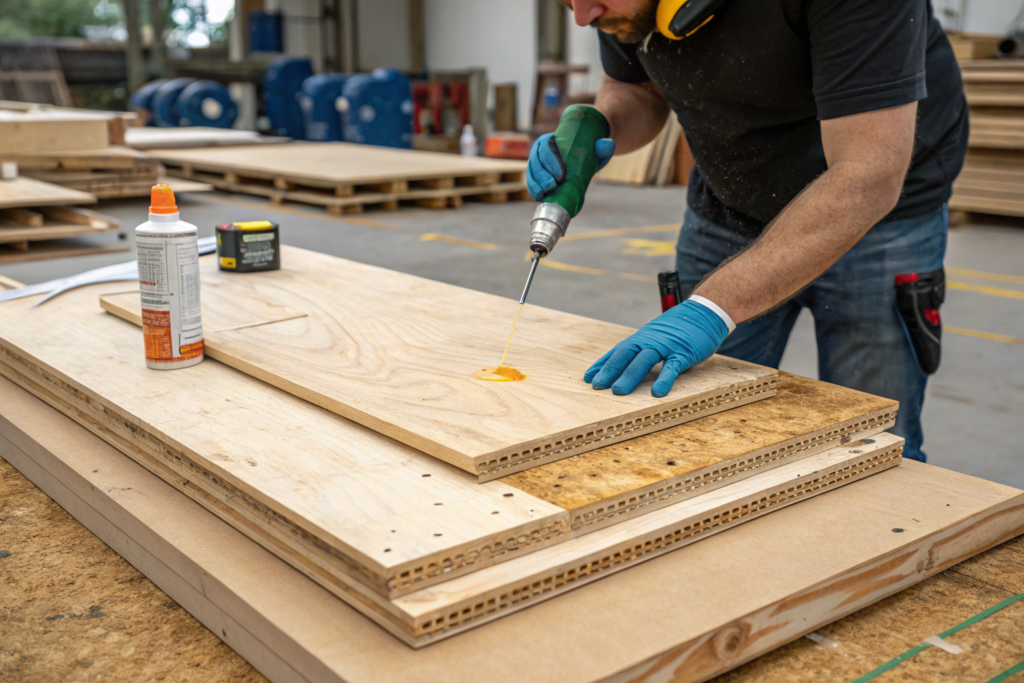
High‑quality exterior primers, paints, clear waterproof sealers, epoxy coatings, or resin barrier systems form a continuous film on plywood faces and help prevent water absorption.
Common Surface Treatment Options
| Treatment Type | Key Properties |
|---|---|
| Exterior Primer + Paint | UV and water protection for above‑ground panels |
| Clear Waterproof Sealer | Preserves wood appearance, repels water |
| Epoxy or Resin Barrier Coat | Strongest moisture barrier, good for splash zones |
| High‑Build Marine Coating | Resists constant humidity and marine spray |
Proper surface preparation—cleaning, sanding, and priming—increases adhesion and improves the effectiveness of waterproof coatings.
Seal Edges, Cutouts, and Fastener Holes
Edges, cutouts, and fastener holes are the most vulnerable areas for moisture ingress. Waterproofing these locations prevents water from entering through exposed end grain.
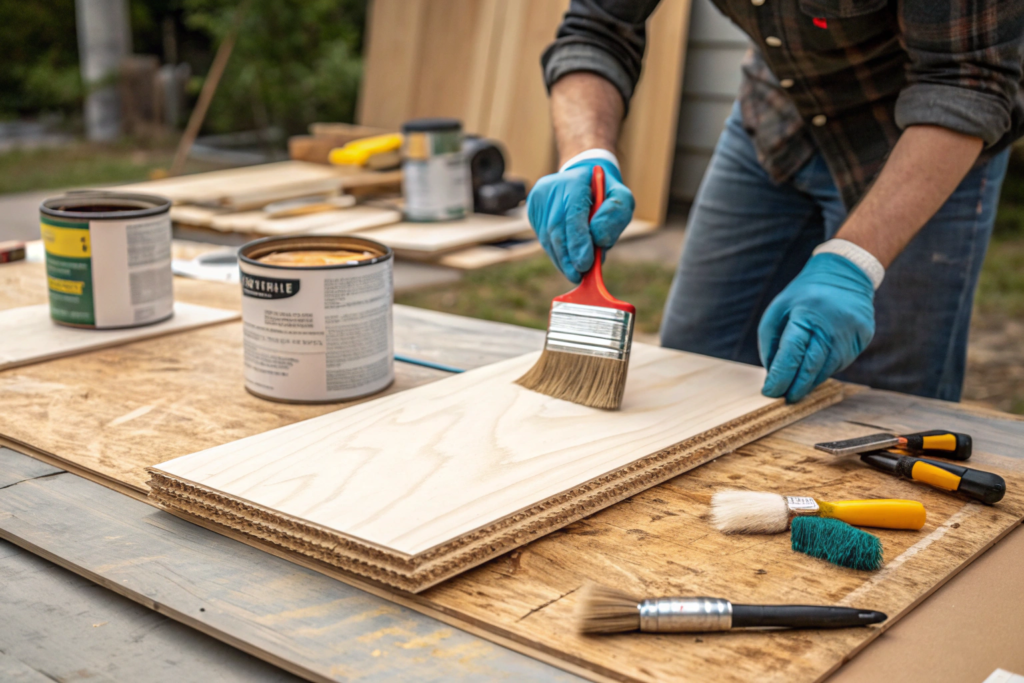
Sealing exposed edges with paint, sealant, resin, or specialized edge coats stops capillary water uptake and greatly reduces internal moisture penetration.
Edge and Detail Sealing Techniques
| Detail Type | Sealant Method |
|---|---|
| Exposed edges | Exterior paint, resin edge sealer |
| Cutouts & openings | Brush‑on sealant, epoxy around openings |
| Nail/Screw holes | Waterproof caulk or sealant |
| Panel joints | Flashing tapes or rain screen membranes |
Edge sealing is essential even for marine plywood, as glue lines alone are insufficient to block moisture at cut surfaces.
Use Laminates or Film‑Faced Panels
For applications where frequent wetting, abrasion, or chemical exposure is expected, factory‑applied laminates or film facings provide robust waterproof performance.
Film‑faced plywood has a phenolic film bonded to the panel surface during production, creating a hard waterproof skin that resists water, abrasion, and chemical exposure.
Laminated or Factory‑Finished Panels
| Panel Type | Waterproof Performance |
|---|---|
| Film‑Faced Plywood | Very high – water, abrasion resistant |
| HPL/Veneer with Barrier | High – decorative and durable |
| PVC/Plastic Faced Panels | Moderate to high – easy to clean |
| Resin/Polymer Coated Panels | Very high – often used in splash zones |
Factory finishes applied under controlled heat and pressure result in more uniform waterproofing than many site‑applied coatings.
Control Moisture at the Installation Level
Even the best waterproofing methods fail without proper installation detailing. Moisture management must be integrated into the design.
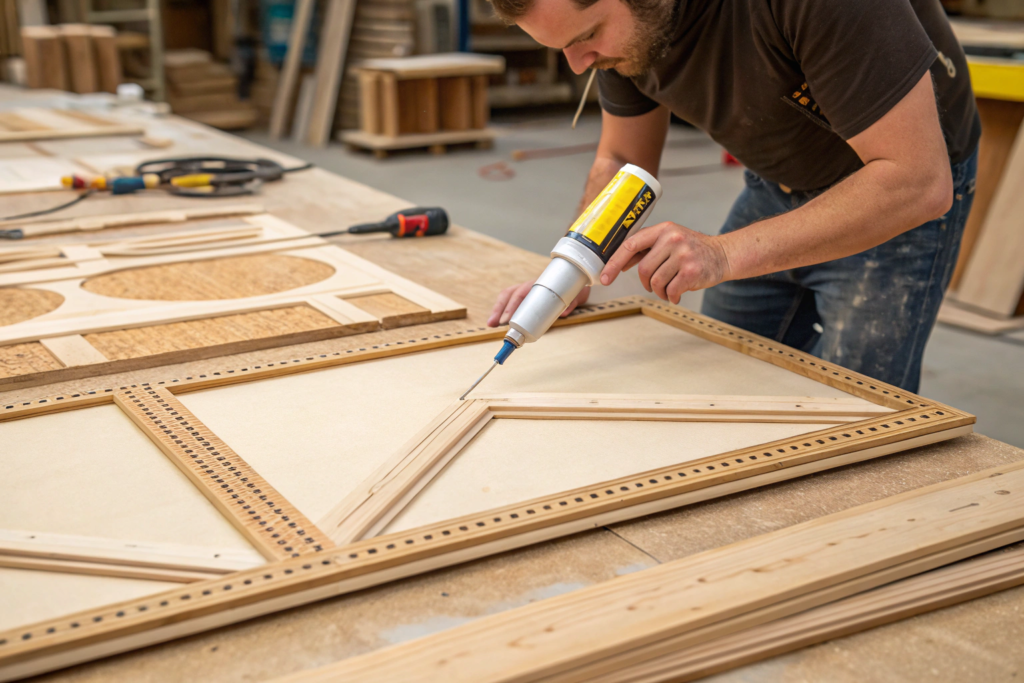
Use flashing, overhangs, drainage planes, and ventilated cavities to prevent water from sitting on plywood surfaces or edges. Avoid direct ground contact and ensure rapid drying after wetting.
Installation Best Practices
| Practice | Benefit |
|---|---|
| Flashing and drip edges | Keeps water away from surfaces |
| Elevated mounting | Avoids moisture wicking from ground contact |
| Ventilated air gaps | Facilitates drying |
| Proper slope or drainage | Prevents pooling and standing water |
Moisture control through design reduces stress on waterproof coatings and significantly extends service life.
Factory Processing and Quality Control
Waterproof performance begins in the manufacturing facility. Panels produced with consistent glue application, moisture‑controlled veneers, calibrated pressing, and surface sanding perform better when sealed.
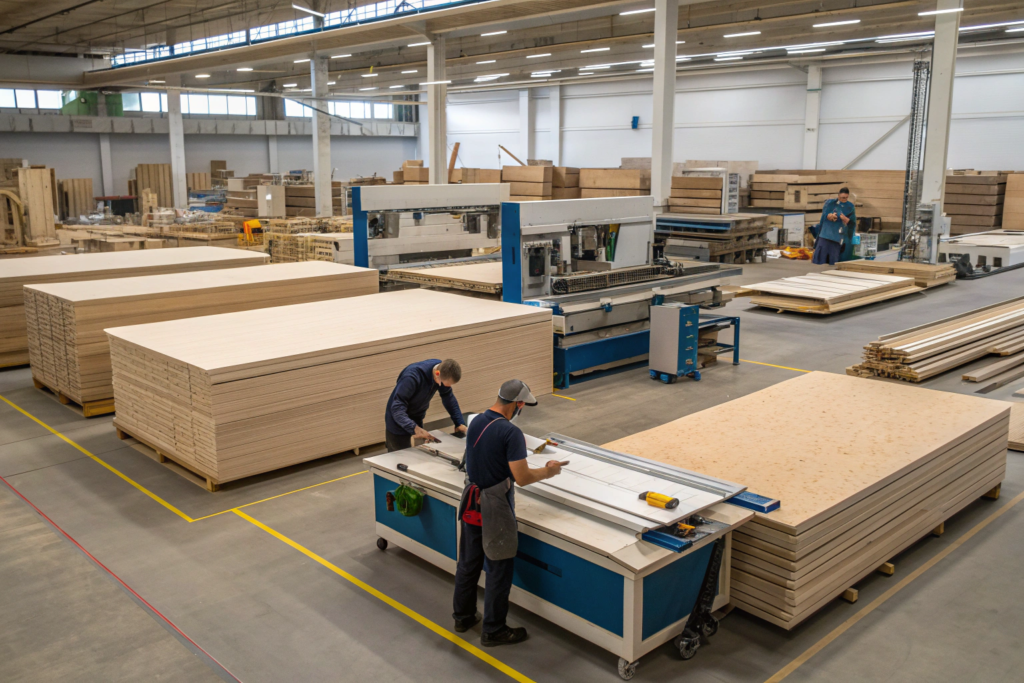
Controlled production ensures uniform glue penetration and minimal core voids, improving bond retention under wet/dry cycling. Post‑production inspection identifies flaws before panels reach the job site.
Production Controls That Improve Waterproofing
| Process Step | Impact on Long‑Term Moisture Resistance |
|---|---|
| Veneer moisture control | Reduces internal stress and swelling |
| Adhesive spread calibration | Ensures strong glue lines |
| Hot pressing stability | Produces void‑free cores |
| Surface sanding | Improves coating adhesion |
| Inspection & QA | Detects defects before shipping |
High factory quality reduces field corrective work and enhances the effectiveness of site waterproofing measures.
Conclusion
Waterproofing plywood effectively requires a combination of the right material, surface protection, edge detailing, and installation strategies. Selecting exterior (BWP) or marine plywood with waterproof adhesive systems provides a solid foundation for moisture resistance. Applying appropriate surface coatings—such as exterior primer and paint, clear waterproof sealers, or epoxy barrier systems—creates durable barriers against water contact.
Sealing exposed edges, fastener holes, and cutouts prevents capillary moisture uptake. For high‑demand conditions such as splash zones and heavy wear environments, factory‑finished panels like film‑faced or resin‑coated plywood offer excellent waterproof performance with minimal site work. Proper installation practices, including flashing, ventilation, drainage, and avoidance of ground contact, reduce prolonged water exposure and support long service life.
Waterproof performance begins in the factory with controlled glue application, veneer moisture regulation, calibrated pressing, and quality inspection. Panels produced with consistent quality and void‑free cores bond more effectively with waterproof coatings and maintain structural integrity under cyclic wet/dry conditions.
Integrating factory quality control with site waterproofing and moisture management ensures plywood panels remain stable, durable, and functional in demanding environments. The best waterproofing strategy balances panel grade, protective treatments, edge sealing, and installation detailing to achieve long‑term performance and resistance to moisture‑related failure.