
Choosing between softwood and hardwood depends on the intended application, performance needs, manufacturing processes, and long‑term durability expectations. Neither is universally “better” by itself; each category offers unique benefits and limitations.
Softwood and hardwood are classifications of wood based on botanical differences and tissue structure. Softwood generally comes from coniferous trees, while hardwood comes from deciduous trees. Their density, strength, workability, cost, and application results vary significantly.
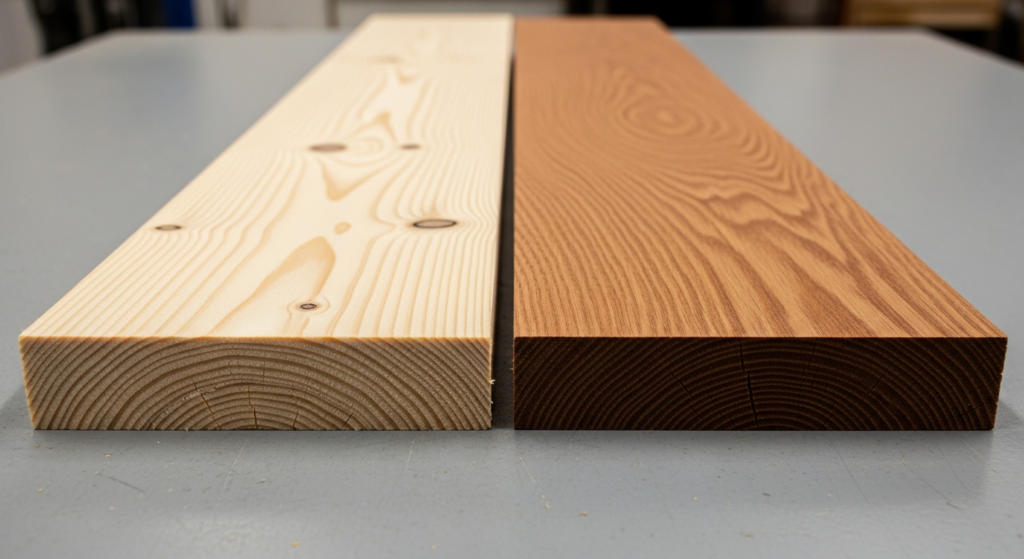
Understanding how each performs in structural uses, machining, surface finishing, and service life helps in specifying the correct material for furniture, interior, exterior, and engineered wood products.
What Are Softwoods and Hardwoods?
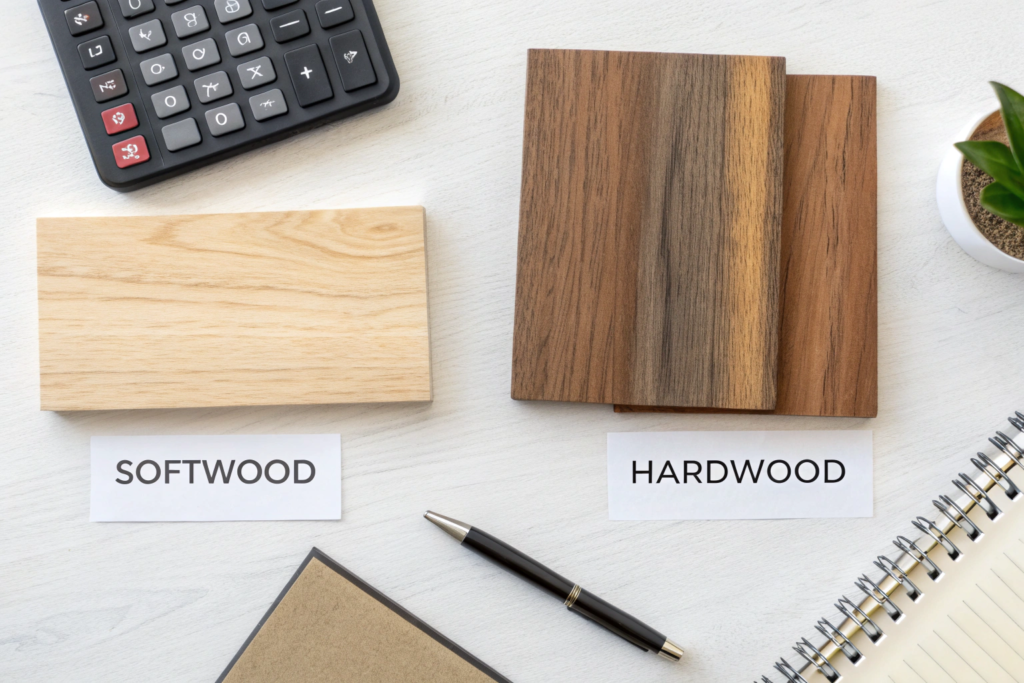
Softwoods come mainly from gymnosperm trees such as pine, fir, spruce, and cedar. These woods typically grow faster and have simpler cell structures.
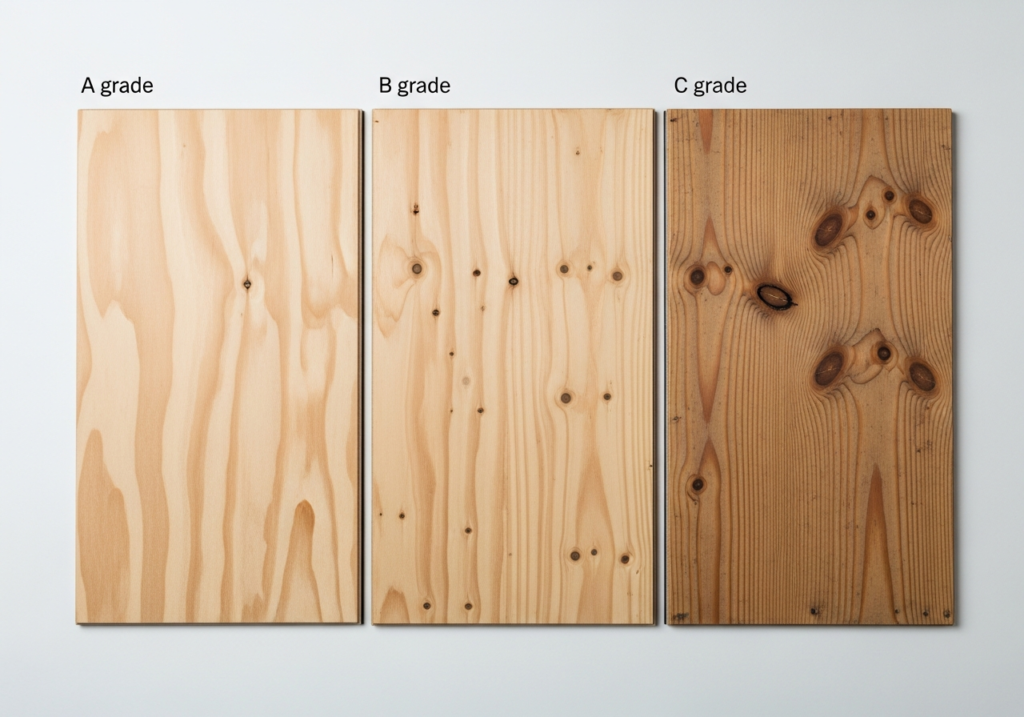
Hardwoods come from angiosperm trees like oak, maple, walnut, and birch, with more complex cell structures that often yield higher density and greater mechanical strength.
Botanical Differences
| Feature | Softwood | Hardwood |
|---|---|---|
| Tree Type | Coniferous (needles, cones) | Deciduous (broad leaves, seeds) |
| Growth Rate | Faster | Slower |
| Cell Structure | Less complex | More complex |
| Typical Density | Lower | Higher |
| Common Use Cases | Construction, framing, general woodworking | Furniture, flooring, high‑load parts |
These intrinsic differences influence density, hardness, and strength, which are foundational to material selection.
Strength and Durability Comparison
Hardwoods are generally denser and stronger than softwoods due to their cellular structure, but specific species vary widely in performance.
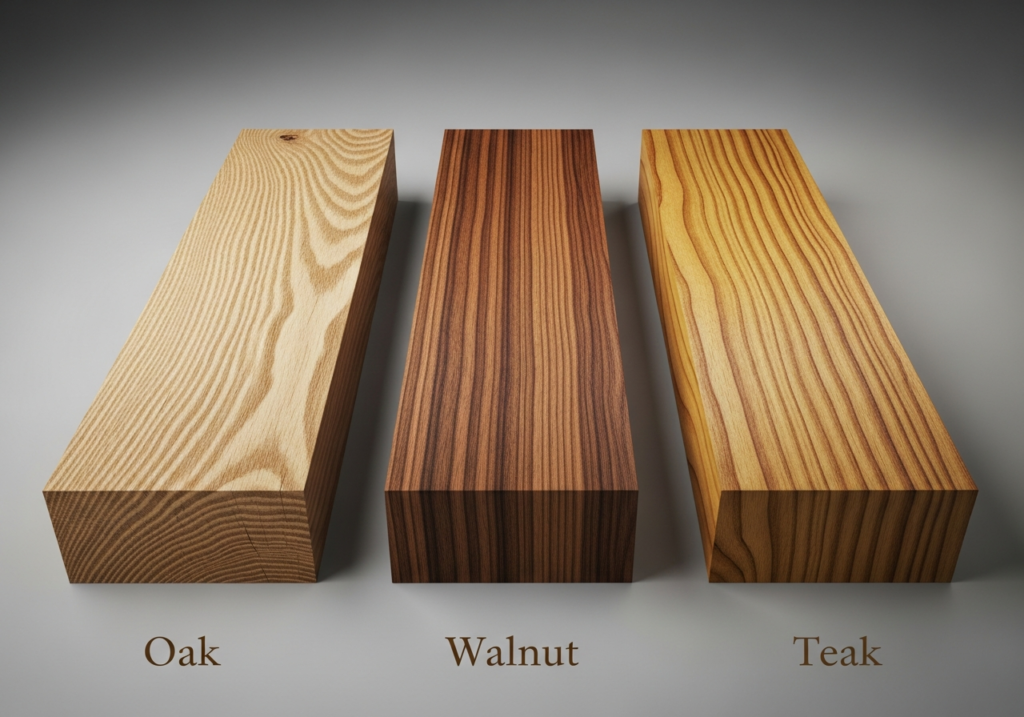
Hardwoods typically outperform softwoods in bending strength, compressive strength, and surface abrasion resistance. Softwoods, however, often provide adequate performance in structural framing and large‑panel applications.
Mechanical Properties
| Property | Softwood | Hardwood |
|---|---|---|
| Density | Lower | Higher |
| Bending Strength | Moderate | High |
| Compressive Strength | Moderate | High |
| Impact Resistance | Moderate | Typically higher |
| Wear Resistance | Lower | Higher |
Hardwoods like oak or maple are chosen where high traffic, load, and surface wear are expected, whereas softwoods like pine and spruce are common in structural framing and non‑load interior components.
Workability and Manufacturing Considerations
Wood manufacturing processes—such as veneering, CNC machining, sanding, and finishing—interact differently with softwood and hardwood. Surface quality and tool wear are key considerations.
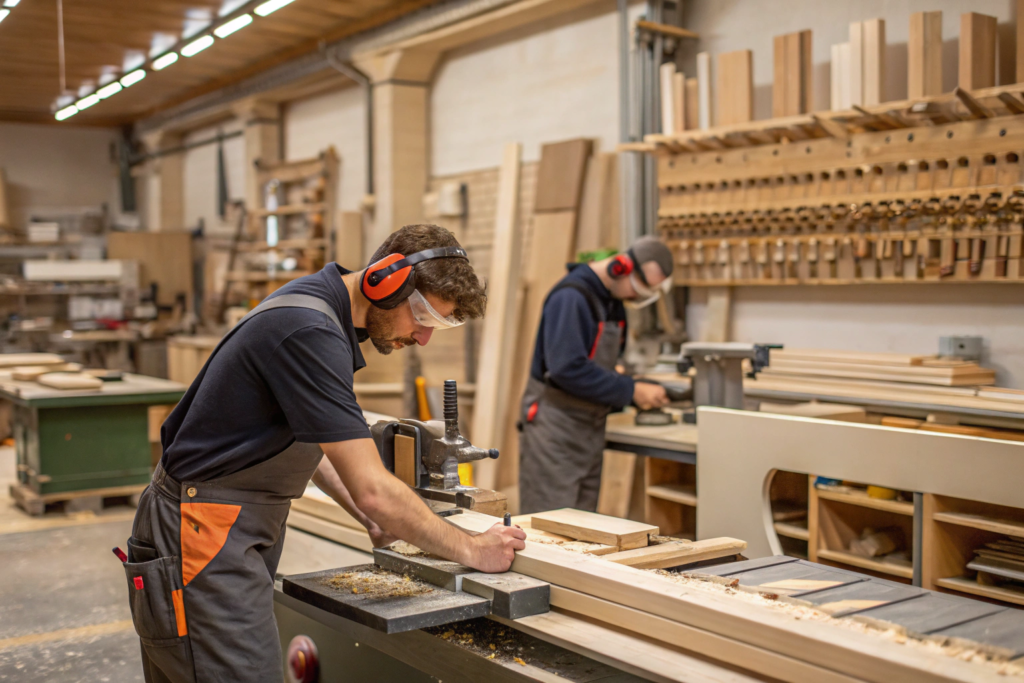
Hardwoods generally require sharper tooling and slower feed rates due to higher density, whereas softwoods cut more easily but may dent or tear out more readily.
Workshop and Tooling Impacts
| Factor | Softwood | Hardwood |
|---|---|---|
| Ease of Machining | Easier cutting and shaping | Higher tool wear, slower feeds |
| CNC Routing | Smooth though tear‑out possible | Better detail retention, more power needed |
| Sanding and Surface Prep | Quick sanding | More passes needed for smooth finish |
| Planing | Easier, less heat buildup | Requires sharp blades and feed control |
| Glue Bonding | Good | Excellent with proper preparation |
Hardwood veneered panels and engineered products often use precision factory processes (moisture control, grading, adhesive calibration) to ensure uniform performance in furniture and architectural finishes.
Cost, Availability, and Sustainability
Softwoods are typically more abundant and less expensive than many hardwoods because conifers grow faster and yield higher volumes per hectare.
Hardwoods are often more costly due to slower growth, longer rotation periods, and higher demand for decorative or structural quality.
Economic and Supply Factors
| Aspect | Softwood | Hardwood |
|---|---|---|
| Cost per Volume | Lower | Higher |
| Growth Cycle | Shorter | Longer |
| Resource Availability | Widely available | Varies by species and region |
| Sustainability Programs | Common plantation models | Requires careful forest management |
Certification systems (FSC, PEFC) and legal traceability support sustainable sourcing, especially for hardwood species with sensitive supply chains.
Best Applications for Softwood vs Hardwood
Selection should match performance requirements, expected load, and design intent.
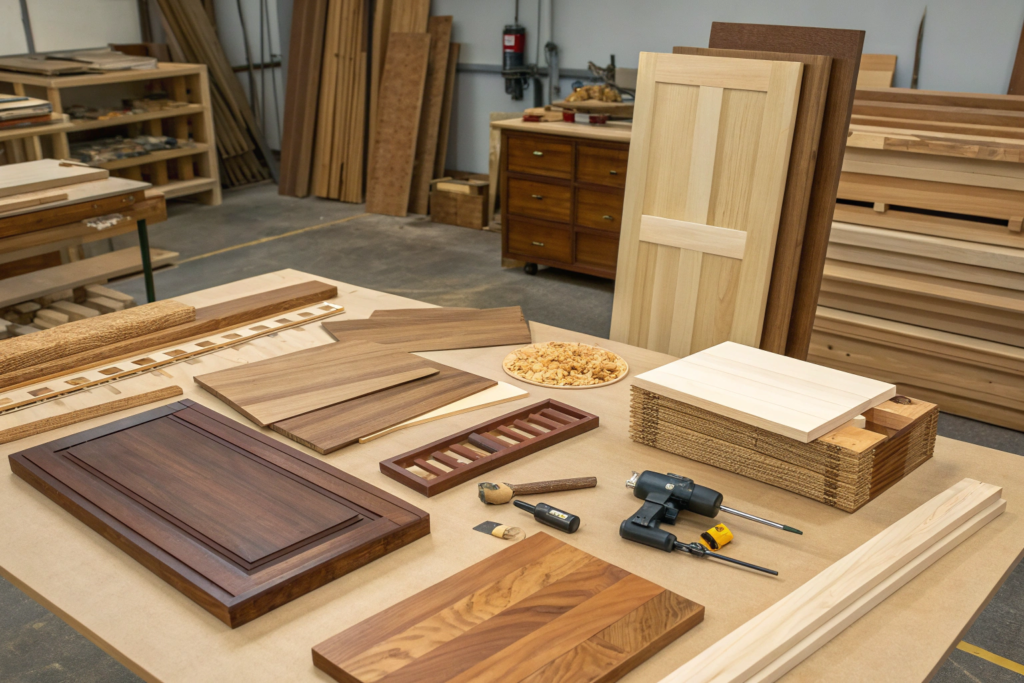
Softwood is preferred for structural framing, panel cores, plywood/OSB cores, temporary construction, and painted interiors. Hardwood is preferred for premium furniture, high‑traffic flooring, decorative millwork, and components requiring wear resistance.
Typical Use Cases
| Application | Preferred Material |
|---|---|
| Structural framing | Softwood |
| Subflooring / sheathing | Softwood panels (e.g., plywood core) |
| Fine furniture | Hardwood |
| Hardwood flooring | Hardwood |
| Decorative veneers | Hardwood or selected softwood veneer |
| Painted interior joinery | Softwood or MDF core with veneer |
Engineered panels blend softwood cores with hardwood face veneers to combine cost‑efficiency and surface performance where appropriate.
Conclusion: Which Is Better?
Softwood and hardwood each have advantages tied to performance, cost, workability, and intended use. Softwoods excel where ease of machining, cost control, and high volume supply are priorities—particularly in structural framing, large‑panel products, and painted finishes. Hardwood excels where density, surface durability, and premium finish quality are priorities—especially in furniture, flooring, and architectural interiors.
Manufacturing and processing quality—such as moisture conditioning, adhesive systems, precision grading, and calibration—play a key role in how either type performs in service. Softwoods are often used as cores for engineered panels (plywood, LVL, particleboard cores) that marry structural performance with surface quality. Hardwoods are selected for visible surfaces and high‑wear applications where their density and grain characteristics enhance durability.
The best material choice depends on application demands, environmental exposure, installation detail, and life‑cycle performance. In contexts requiring balanced strength, broad availability, and lower cost, softwood is often preferable. In contexts prioritizing wear resistance, fine finish, and high load capacity, hardwood is typically superior. Combining both—in engineered and laminated products—allows optimization of performance and cost across diverse woodworking and construction applications.